


Review: Herfstdood/Karv – Schemerfluisteringen (I) / La Mythe de Sisyphe
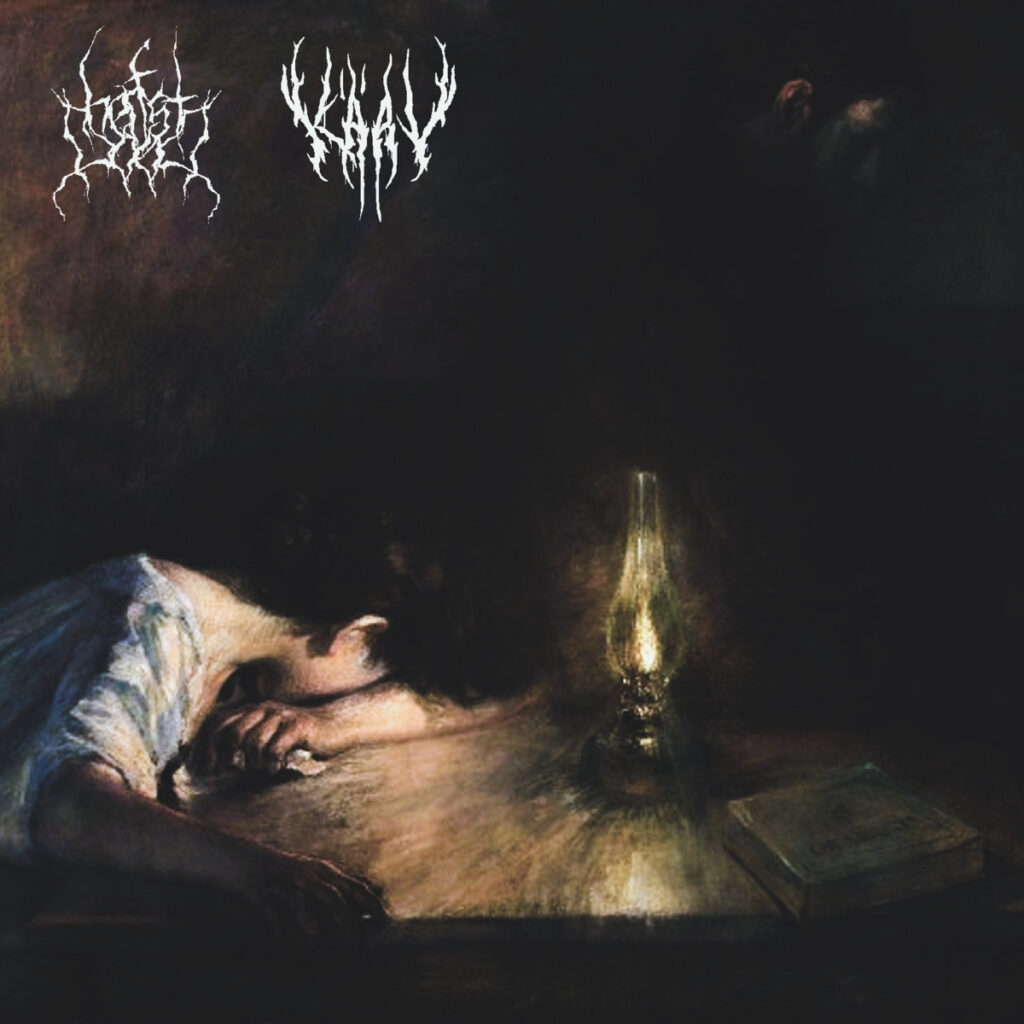
When two of the leading lights of contemporary Christian black metal join forces on a new split, you know I’m going to be all over it. Split between three tracks each, the Netherlands’ Herfstdood and Sweden’s Karv have jointly released Schemerfluisteringen (I) / La Mythe de Sisyphe on the indomitable Sneeuwstorm Produkties label. Let’s dive right in.
Those who have read any of my work on here at Heaven’s Metal will know that I’ve been a champion of Herfstdood ever since I discovered 2024’s Lijdensweg, a masterpiece of folkish/melancholic black metal if there ever was one. Outnumbered by a vast swath of power metal, metalcore, heavy metal and thrash, it was the sole black metal album on our list of the top 25 Christian metal albums since 2010, and probably had more than a few readers wondering who in the world Herfstdood even was. Fast-forward two years or so, and we’re treated to this act’s much-welcomed return.
For those unfamiliar with Herfstdood’s style, it’s one that is usually cited as falling into “post-black metal” (think of acts like Altar of Plagues and Agalloch) and/or “blackgaze” (think of bands like Deafheaven, Alcest and Daygraves) territory; for myself, I simply view it as atmospheric black metal. Hair-splitting aside, Herfstdood’s sound is essentially very similar to post-hiatus Duister Maanlicht (when the band essentially became a solo project of Heidendoder, who is also the man behind Herfstdood, under the mysterious pseudonym of “A.”) – primitive and raw, but also possessed of melodic undertones reminiscent of those you might hear from Burzum or Judas Iscariot. With Herfstdood, however, a clean guitar tone is added in that rises above the murky guitars below, giving the sound a sense of both beauty and sadness all at the same time.
Forgive me a brief tangent for illustration. Back in the 2000’s, during the garage-rock revival, the Strokes released their sophomore album, Room on Fire. After their critically-praised debut, Is This It, Room on Fire arrived to much fanfare, but also hit a bit of a snag with some critics – in short, the accusation was made that Room on Fire simply recycled the same ideas and sounds of their debut and offered nothing really new. Now for the record, I love Room on Fire and think it’s a better record than Is This It – but my point is, as good as it was, it really did simply offer more of the same sound.
So it is here with Herfstdood’s material on Schemerfluisteringen (I). If you loved Lijdensweg as much as I did and wish for more of that album’s sound, well, here you go. The three tracks on here, roughly translated as “Apogee,” “Black Sky,” and “Without a Name/The Hidden God”) all pick up exactly where Lijdensweg left off. “Apogeum” in particular begins with chiming guitar notes before kicking into its extra-overdriven guitars and hypnotic drums, all overlaid by the agonized vocals of A. “Sine Nomine/Deus Absconditus” is the highlight for me, its clean guitars sounding like the closest translation I can think of of falling snow transcribed into actual notes. It’s pained, driving and relentless, and possessed of that deep melancholy that is conjured up so well by Herfstdood’s music. My only complaint – seriously – is that Schemerfluisteringen (I) does nothing new (though the guitars feel more distorted and the drums clearer) stylistically; it’s the same chiming guitar notes over streams of emotionally evocative, primitive black metal. It works on every level, mind you, but if you’re expecting some kind of progression or evolution in the band’s sound, you won’t find it here.
The second half of the split sees Sweden’s much-lauded Karv hit the listener with three tracks of prime melodic black metal. Named after the ill-fated figure of Greek mythology who is forced to push a rock endlessly up a hill only to have it roll back down near the top, The Myth of Sisyphus is also the title of a famous work by the absurdist/existentialist philosopher Albert Camus.
Karv’s sense of aggression tempered with melody offers the best of both worlds to listeners who love their black metal fast and nasty, as well as those who prefer the more atmospheric, introspective side of the genre. Opening track “Weave of Nyx” is a far cry from the epic sonic assault heard on older tracks like “In the Earthen Womb” from What the Dunes of Hidden, showcasing a slower, softer side to the band’s sound far more reminiscent of American black metal acts like Vials of Wrath than to the noise of fellow Swedes like Shadows of Paragon or Skald in Veum. That said, as soon as “Into Erevos” kicks in, Karv goes for a much more Swedish style – aggressive and forceful, but also possessed of the melodies one can hear in the approach of bands like Dark Funeral and Crimson Moonlight, tempered with the anthemic sounds post-Thrice Woven Wolves in the Throne Room. Grisha’s vocals particularly sound like the strained, sneering shrieks of Emperor Magus Caligula (formerly of Dark Funeral), though they never grate or overwhelm the music. The post-black metal stylings come back with final track “Ipnos,” which boasts some elegant clean guitar work near its end, and sees Karv at it’s most melancholic-sounding.
All in all, this is absolutely one of those records you really need in your collection if you’re a black metal fan. Despite my one criticism above, this short split presents two of the Christian black metal scene’s best artists at the top of their game. Pass this one by, and you’re going to miss out in a big way.
Check it out HERE.
For Fans Of:
(Herfstdood) – Duister Maanlicht (later), Jordskaelv, Altar of Plagues, Judas Iscariot
(Karv) – Dark Funeral (later), Altar of Plagues, Wolves in the Throne Room (recent), Vials of Wrath, Crimson Moonlight
About Author
