


Comic Book Christianity: How Heavy Metal Inherited the Devil
By Seth Metoyer
In the 1980s, the Devil seemed impossible to escape. He appeared on heavy metal album covers, in horror films, and in the warnings of television evangelists. Parents feared his influence in backmasked records, Dungeons & Dragons campaigns, and even Saturday morning cartoons. During the height of the Satanic Panic, Satan became one of America’s most recognizable villains, appearing everywhere from church pulpits to MTV. My Youth Group painted the Devil as a master villain hiding around every corner, waiting to pounce.
Heavy metal certainly embraced this imagery, but it didn’t create it. By the time Mötley Crüe released Shout at the Devil in 1983 and Stryper responded with To Hell with the Devil three years later, both bands were drawing from a character Western culture had been shaping for nearly two thousand years. Although they interpreted that character in radically different ways, they relied on a shared cultural understanding. Audiences already believed they knew who “the Devil” was.
As someone who grew up immersed in Christian metal, I remember how powerful that imagery felt. To Hell with the Devil was more than an album; it was framed as a declaration of spiritual power. Looking back now as both a theologian and a lifelong metal fan, what stands out is how both Christian and secular bands drew from the same cultural mythology. One side used the Devil as a warning, while the other used him as provocation, yet both assumed their audience shared the same mental picture.
The more compelling question, then, is not whether Satan exists (Scripture addresses that) but how our modern image of the Devil became so familiar in the first place.
The Devil We Picture
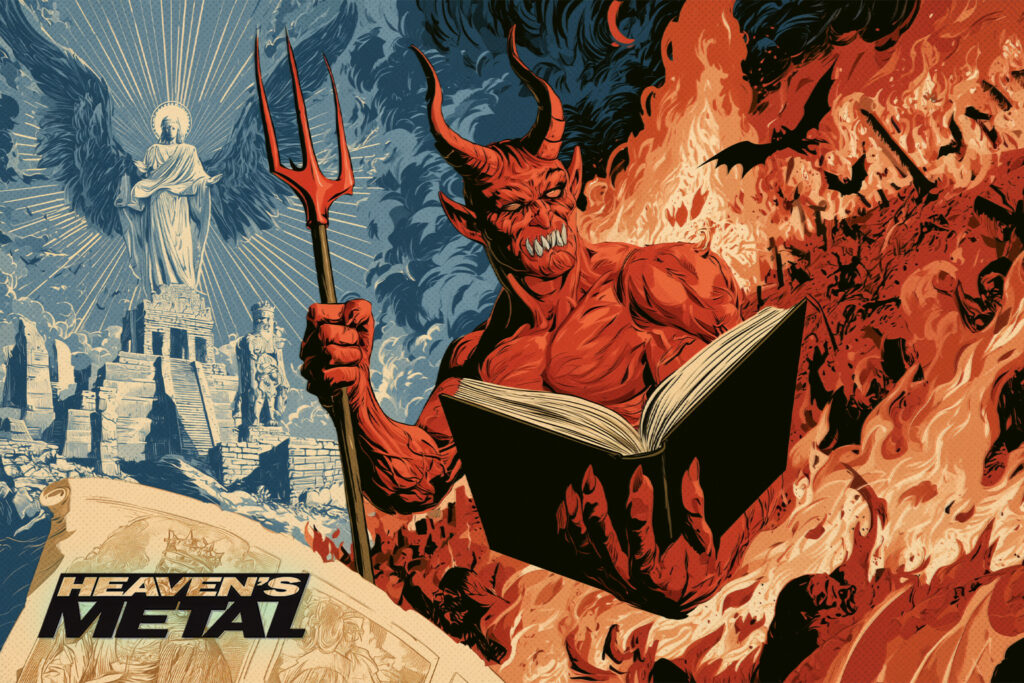
Ask someone to describe Satan, and the answers tend to follow a familiar pattern: Lucifer, the fallen angel cast out of heaven for pride, ruler of hell holding a pitchfork (or maybe looking like a Balrog from Middle Earth), surrounded by demons, horns, pentagrams, and fire. Whether these images come from Sunday school lessons, horror films, heavy metal, or Halloween decorations, they often merge into a single, cohesive portrait that feels almost biblical.
Yet the Bible’s descriptions of Satan are more restrained. While Scripture clearly presents him as God’s adversary, many of the details commonly associated with him developed over centuries through interpretation, literature, art, and popular culture. Western civilization gradually constructed an image that extends far beyond any single biblical passage.
In this sense, the Devil has become something like Christianity’s first comic book supervillain; a figure shaped as much by storytelling as by theology.
Even Lucifer Has a Backstory
Consider the name Lucifer. Many Christians assume it is the Bible’s original name for Satan, but the text itself tells a more complex story. The term appears only once in the King James Version, in Isaiah 14:12. The original Hebrew phrase, Helel ben Shachar, translates to “shining one” or “morning star, son of the dawn,” and the passage is directed toward the king of Babylon, using poetic imagery to describe the downfall of an arrogant ruler.
Early Christian theologians later connected this passage with others, such as Ezekiel 28 and New Testament references to Satan’s fall, interpreting the Babylonian king as a reflection of a deeper spiritual rebellion. When Jerome translated the Bible into Latin in the fourth century, he rendered hêlēl (הֵילֵל) as lucifer, a common Latin term meaning “light-bearer” or “morning star.” Over time, Christian tradition transformed this descriptive term into a proper name for Satan.
Literary works further solidified this interpretation. Dante’s Inferno and, more significantly, Milton’s Paradise Lost helped cement Lucifer as the fallen angel in the Western imagination. This development does not diminish Scripture but instead illustrates how theology, translation, and literature collectively shaped the image of the Devil that persists today.
Then Hollywood Cranked the Volume
By the twentieth century, the Devil had moved beyond theological discourse and into mainstream entertainment. Films such as Rosemary’s Baby, The Exorcist, and The Omen introduced Satan to audiences who might never engage with formal theology. These portrayals gave him a visual identity and a dramatic presence that resonated widely. Television, novels, and even seasonal traditions like Halloween reinforced his role as a cultural icon.
Heavy metal emerged during this period of heightened fascination. Musicians quickly recognized the power of Satanic imagery to capture attention. Some used it for shock value, others for storytelling, and still others as symbolic language. In many cases, the music itself did not align with the assumptions surrounding it.
Iron Maiden’s “The Number of the Beast,” for example, depicts a narrator witnessing an occult ritual with fear rather than celebration. Mötley Crüe’s “Shout at the Devil” calls for confrontation with evil, not allegiance to it. Slayer often employed apocalyptic imagery to explore themes of violence and human depravity rather than literal Satan worship. Even King Diamond’s association with LaVeyan Satanism reflected an atheistic philosophy centered on individualism rather than belief in a literal Devil.
During the Satanic Panic, however, these distinctions were largely ignored. Horror, occultism, heavy metal, role-playing games, and Satan himself were often conflated into a single, overarching narrative. American culture assembled these elements into a unified myth that blurred important differences.
Stryper Flipped the Symbol
Within this context, Stryper’s success becomes particularly noteworthy. To Hell with the Devil resonated because audiences already understood the symbolism. Michael Sweet didn’t need to define the Devil; listeners brought their own assumptions to the music.
Stryper took the same figure that dominated horror films and metal imagery and reversed its meaning. Instead of glorifying darkness, the band emphasized Christ’s victory over it. In doing so, they demonstrated how deeply embedded this shared imagery had become.
Both Stryper and Mötley Crüe relied on the same cultural vocabulary, even as they delivered opposing messages. One confronted the Devil, while the other declared his defeat. Their differences highlight the flexibility of a symbol that had already taken firm root in Western consciousness.
To Hell with What?
Understanding the origins of our image of the Devil doesn;t necessarily weaken biblical faith; it enhances biblical literacy. Scripture benefits from careful reading, and church history offers valuable insight into how believers have interpreted challenging passages over time. Literature and popular culture, in turn, reveal how those interpretations spread beyond the church and into broader society.
Heavy metal didn’t invent Satanic imagery; it inherited it. Recognizing this shifts the conversation. Rather than asking whether the genre created these symbols, we can see how it adapted one of Western civilization’s most enduring characters for its own purposes; whether for shock, storytelling, theology, or marketing.
The Devil has become a kind of cultural language, widely understood across different contexts. Perhaps the greatest irony is that, for decades, Christians and heavy metal appeared to stand on opposite sides of a spiritual divide, yet both often envisioned the same figure. Shaped by Scripture, expanded through tradition, immortalized in literature, amplified by Hollywood, and projected through stacks of amplifiers, the Devil’s journey through Western culture is as complex as it is enduring.
About Author

Well-written and well thought out, as always!