


Feature: Growing Up Yellow and Black – Tara Fox Finds Her Own Frequency
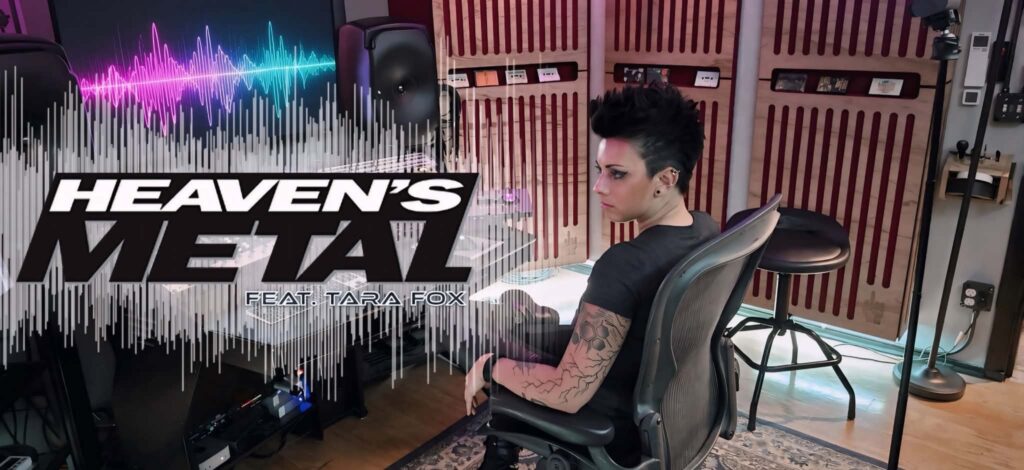
By Seth Metoyer, Heaven’s Metal Magazine
For most Heaven’s Metal readers, the name Oz Fox carries more than four decades of history. Stryper. Yellow and black. Arena stages. Twin-guitar harmonies. Records that helped define an entire generation of Christian hard rock and metal.
For Tara Fox, Oz Fox has always carried another title first: Dad.
Growing up around Stryper gave Tara a unique view of that world few people ever experience. She saw the musicians, rehearsals, effect of road life, fans and inner workings behind a band whose history stretches back to the early Los Angeles metal scene. She also knew the far more ordinary version of Oz Fox that existed beyond the stage lights.
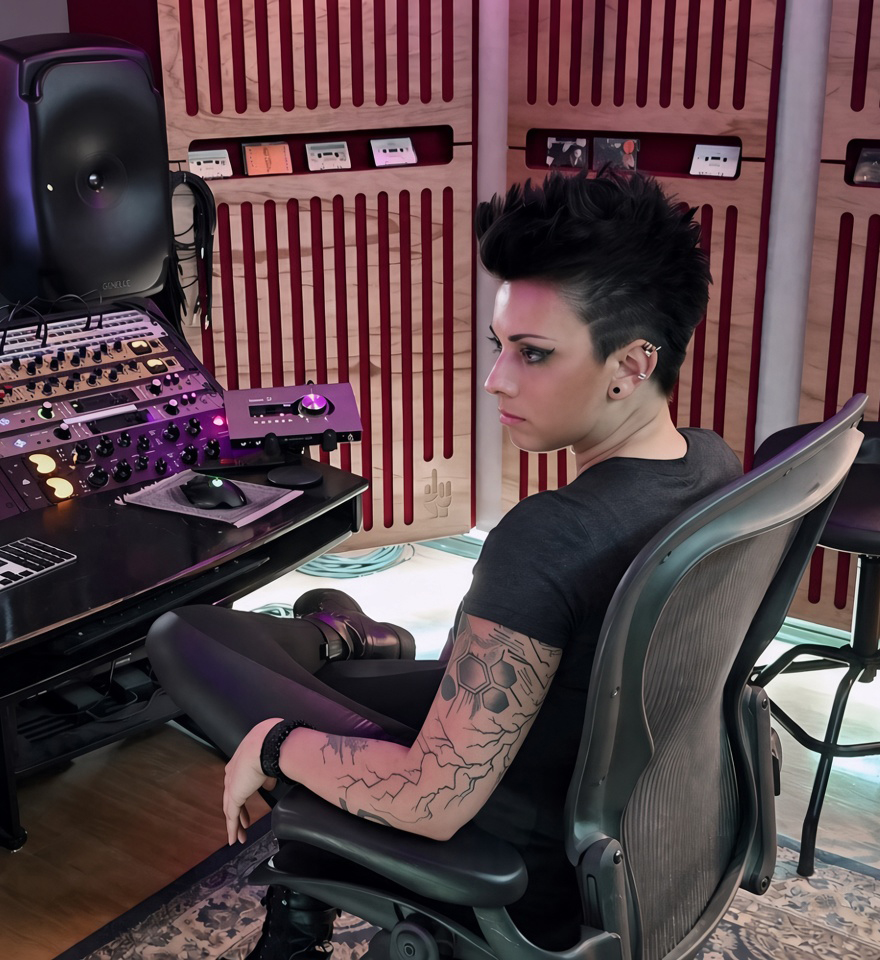
Today, Tara has developed a creative identity of her own through music, photography, modeling, visual design and her RoboFox work. Her projects frequently begin with music, then expand into images, characters and complete visual environments. She’s also a musician who has recently dropped a couple of new singles. If you’re interested in musical styles other than metal (in this case, cyber-punk), you should check them out. You can find them everywhere you stream or purchase music.
Our own creative paths recently crossed when Tara created the visualizer for my industrial reworking of Stryper’s 1988 ballad “All of Me.” Oz played guitar on the original recording. Nearly forty years later, his daughter built the visual world surrounding an entirely reconstructed version of the song.
That strange little circle through Christian metal history gave us plenty to talk about.
Growing Up Around Stryper
Before Stryper became a piece of Christian rock history, the band existed as part of Tara’s childhood landscape. Albums, touring, and musicians surrounded the much more recognizable experience of simply growing up with her father. Below you will find an interview with Tara, along with some of my thoughts mixed throughout.
HEAVEN’S METAL: You grew up with Oz Fox as your dad, which also meant growing up around Stryper and a music scene that carries an enormous history for our readers. What are some of your earliest memories of that world?
TARA FOX: A child doesn’t measure the uniqueness of their surroundings—they absorb them. It wasn’t until I was older that I could look back and understand how uncommon the world around me actually was. The Stryper family and the music were always part of my life, so to me, it was my normal. I remember being around rehearsals, shows, guitars, gear, and the people who came with that world. I also spent time on tour with my dad, which gave me a behind-the-scenes view most people never get to experience. Some of my favorite memories, though, are the quieter moments in between—traveling and simply being together as a family.
As a kid, I was just spending time with my dad while he worked. I didn’t fully understand Stryper’s history or what the band meant to so many people. As an adult, I have a much deeper appreciation for how unique that upbringing was. Being surrounded by music and creativity from such a young age naturally became part of who I am and helped shape the creative path I eventually found for myself.
HM: How aware were you as a kid that your dad and Stryper were famous? Was there a particular moment when you realized other people saw your family very differently than you did?
TF: I grew up knowing my dad was in a band and that people knew the name Stryper, but fame was at the time an abstract idea to me—something the outside world understood long before I did.
I think some of the moments that started putting it into perspective were being at shows and seeing the size of the crowds. The band or my dad would sometimes bring me out on stage to wave hi to everyone, and I remember looking out and seeing all those people. When you’re that young, you don’t necessarily process the significance of it. I was just excited to be up there with my dad. As I got older, I started to understand that the way I knew him and the band was very different from how fans around the world knew them. At home they were family, but to a lot of other people, their music was a meaningful part of their lives.
For fans, a band can become mythology. Records freeze musicians into specific eras, photographs and songs. The family sees the human beings who keep living after the stage lights go dark.
HM: What is something about your dad that people who only know Oz Fox from the stage might never realize?
TF: If people follow him on socials, then it may not come as much of a surprise just how down to earth he really is. There’s Oz Fox on stage with the guitars, the hair, the lights and all that energy, but then there’s just Dad. He’s always had a goofy sense of humor, and he’s someone who really values his family and the people close to him.
Growing up, I never really thought of him as this larger-than-life rock musician. I just knew him as my dad, and I think that’s a side of him fans don’t always get to see behind closed doors. Our father-daughter relationship has always been built around music and nerding out over new technology. A lot of my early memories with him involve him introducing me to different ways of creating—whether it was making music, teaching me design, a new sound, experimenting with computers, or just showing me something new he thought was cool. He’s extremely tech-savvy, and I think that’s something we really share.
As artists, we’re both naturally curious and always experimenting with new technology and new tools that enhance what we are trying to convey. I think that curiosity for both music and technology definitely rubbed off on me and became a big part of how I create today.
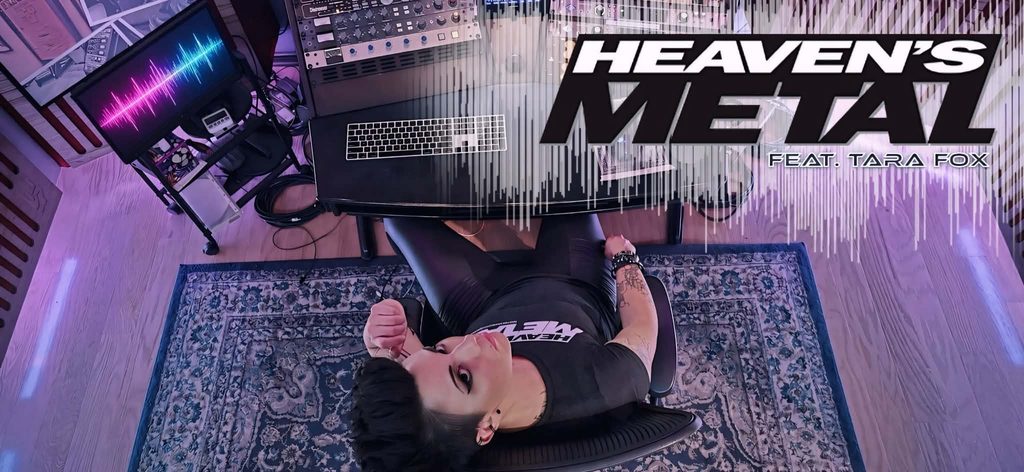
What You Learn From Watching the Work
Stryper’s longevity tells its own story. More than forty years into the band’s career, the records and concerts remain the visible part. Behind them sits the less glamorous architecture of a working musician’s life: rehearsing, traveling, recording, maintaining relationships with fans and continuing to create long after most bands from the same era disappeared.
Tara grew up watching that process from close range.
HM: What did you learn about being a working artist simply from watching your dad over the years—the rehearsals, touring, recording and everything happening beyond the stage?
TF: I think one of the biggest things I learned from watching my dad is that being an artist takes a lot more work and dedication than what people see on stage. There are rehearsals, traveling, recording, interviews, meeting fans, and constantly having to show up and put in the work year after year. I watched him continue doing that through all the different stages of life.
It taught me that if you really love creating, you have to be willing to keep going even when it isn’t glamorous or easy. Talent is obviously important, but so are consistency, discipline, and having a genuine love for what you do. Sometimes it comes with the sacrifice of time, and a lot of yourself, but when you truly love and believe in what you’re creating, it becomes more than something you do. It becomes a part of who you are and, in a way, what you feel you were meant to be doing here all along.
I think I carry a lot of that into my own creative work now.
HM: As you developed your own creative life, did you begin recognizing parts of your dad’s personality or artistic instincts in yourself?
TF: Definitely. Looking back, I realized it at a very young age. The older I got, the more I started building my own creative path. I began recognizing a lot of the same curiosity and drive in myself. My dad’s always loved music, but he’s also someone who likes experimenting with technology and figuring out new ways to create, and I’m very much the same way. I also recognize his persistence in myself. When I believe in something creatively, I can become completely immersed in it and keep pushing until I bring the idea to life. I think we both have that need to create and evolve rather than stay in one place. I may express it differently through my own music, visual art, and technology, but I can definitely see where some of those instincts came from.
That inheritance doesn’t mean following the same road. Tara’s creative world has developed across a very different cultural landscape, with photography, music, digital production and visual storytelling constantly intersecting.
Finding Her Own Frequency
Tara’s work moves easily between mediums. Photography can lead into character design. Music can become a visual environment. A single image can develop into something cinematic.
She recently described her process to me in a simple sentence that explains much of her work: “Most of my work starts from a visual perspective forming around the music.”
That immediately raised another question.
HM: When you hear a piece of music and the visual process starts, what actually happens in your imagination? Do you see scenes, colors, characters, movement or something else entirely?
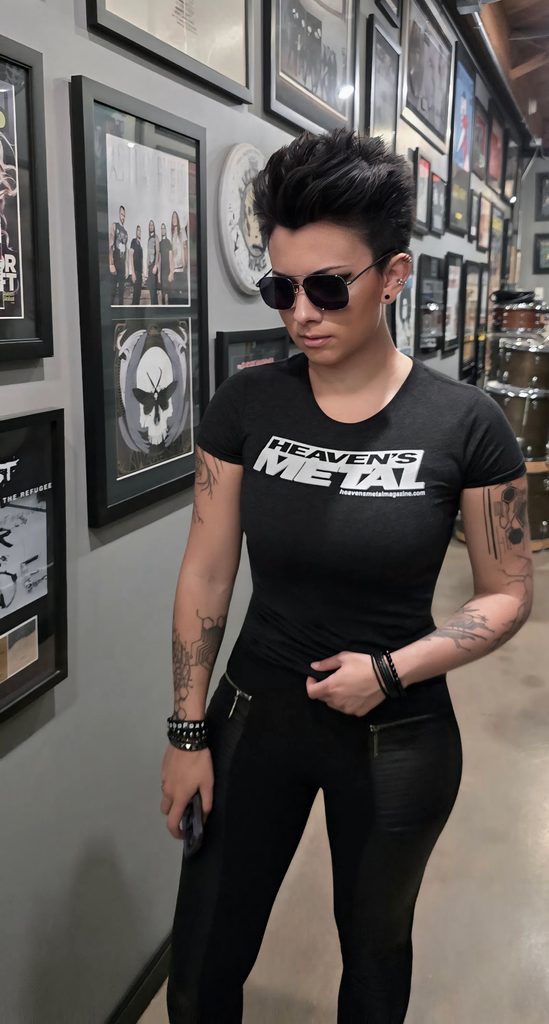
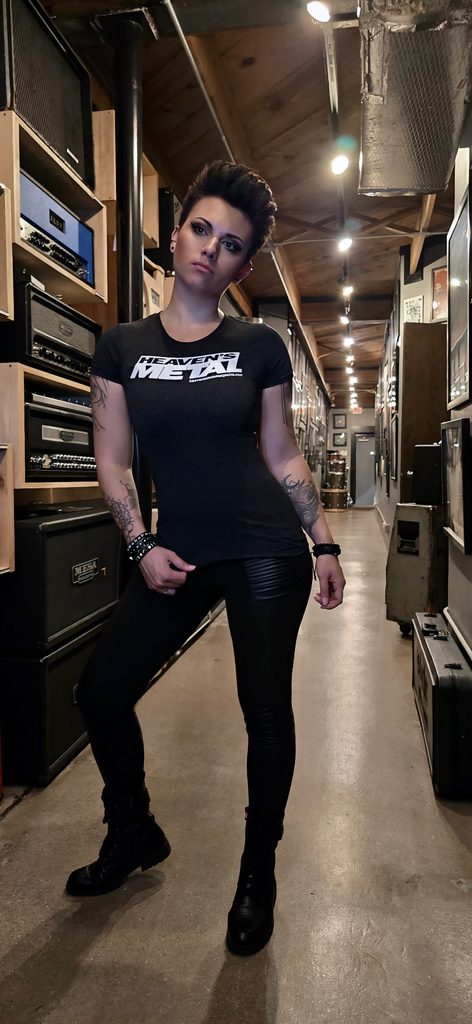
TF: I usually start visualizing a whole world or environment inside my head when I hear music. It can be colors, lighting, a location, a character, or even just a certain kind of movement that matches what I’m hearing. Interestingly, I’ll even start seeing specific poses in my head, which ties into my modeling background and the artist merchandise I’m wearing. I’m thinking about how the pose, clothing, environment, and music can all work together to tell the same visual story.
Sometimes it feels almost like scenes from a movie playing in my imagination. From there, I start thinking about how I can actually bring pieces of that world into something real through photography, video, character design, or whatever medium makes the most sense.
A lot of it is based on feeling too. I’m not always trying to literally illustrate what the lyrics are saying. I’m trying to capture what the music feels like visually. Sometimes one small image or idea is enough to start building an entire world around a song, and that’s probably my favorite part of the process.
Tara also creates music herself, which gives that relationship between sound and image another dimension.
HM: How does your visual imagination affect the way you approach your own music and the identity surrounding it?
TF: My visual imagination is a huge part of how I approach music because I rarely hear a song as just a song. I’m usually building the world around it at the same time—the colors, atmosphere, character, movement, and overall feeling. Sometimes the visual idea actually comes first, and the music begins forming around that. That is how I identify with what I am hearing.
That’s helped me create an identity that feels very much like my own. I love blending futuristic and nostalgic elements, technology, fashion, photography, and storytelling with my music. I want someone to be able to see an image or visual from one of my projects and recognize the world it belongs to before they even hear the song. For me, the music and visuals aren’t really separate—they’re different parts of the same story.
Reimagining “All of Me”
Her instinct became especially interesting when Tara and I began working together.
Stryper originally released “All of Me” on To Hell With The Devil in 1986. I recently took the melodic ballad apart and rebuilt it as an industrial metal piece, replacing much of its original atmosphere with mechanical textures, heavier beats and a darker sense of space. My version understandably divided fans. Then Oz Fox’s daughter created the visualizer. How cool is that?
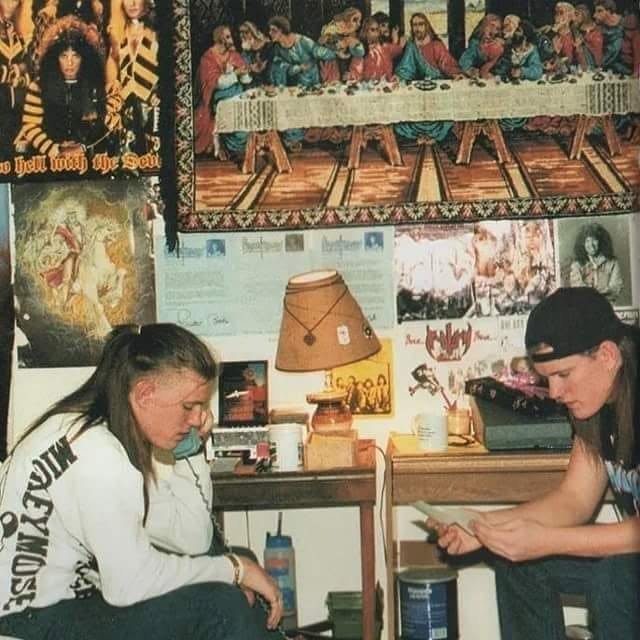
On a side note, Oz was a guy who lived on my wall back in high school. My brother Kris Olson (the bass player on my solo music, including “All of Me”) and I were huge Stryper fans. Go figure. Below is a photo of my bedroom from around 1992, where you can spot Oz and the Stryper guys in the poster, along with an old yellow-covered Heaven’s Metal magazine on the wall.
The finished visualizer of “All of Me” moves through a cyber-industrial landscape filled with machines, prayer, electricity, wings, transformation and religious imagery. Tara combined photography, original characters, digital manipulation and contemporary creative tools to build something that responds to the song while existing as its own visual statement. Check it out below.
HM: When you first heard my industrial reimagining of “All of Me,” what was your reaction? You obviously have a unique relationship with the original recording through your dad.
TF: I thought it was really interesting hearing something I’ve known my entire life taken into such a different world—especially one that, creatively, feels so much like where I belong.
There’s obviously a personal connection to the original because of my dad, so I know that version almost instinctively. But instead of feeling like the reimagining was trying to replace what was already there, I heard it as another way of experiencing the song.
The industrial sound immediately started giving me visuals—the mechanical textures, darker atmosphere, electricity, but also the spiritual side that was still underneath it all. I wanted the visualizer to respect where the song came from while allowing myself the freedom to interpret this version through my own creative lens. In a strange way, it became this really cool bridge between something connected to my childhood and the cyber-industrial world I create now.
HM: The visualizer became this strange cyber-spiritual world of machinery, electricity, wings and religious symbolism. Where did that imagery come from, and what were you trying to communicate through it?
TF: A lot of that imagery came from the contrast I heard in the track. It felt heavy and mechanical, but there was still something deeply spiritual running through it, so I wanted those two sides to exist together rather than choosing one or the other. The machinery and electricity represented this almost artificial, constructed world, while the wings, prayer, and religious symbolism brought something human and sacred into it.
I think I was ultimately exploring the idea that faith and humanity can still exist in a world that feels increasingly technological. Whether we like it, believe in it, or are ready for it, our civilization is going to continue advancing with or without our permission. What matters is how we choose to rise with those changes, adapt to them, and still hold onto the things that make us human.
There’s transformation happening throughout the visualizer, but I didn’t want to explain every symbol or give everything one specific meaning. I like leaving some of that open so people can interpret what they’re seeing through their own experiences and beliefs.
The project also reflects the rapidly expanding toolbox available to visual artists. Photography, compositing, traditional digital editing and generative technology can now occupy the same workflow. The interesting part comes from how an artist decides to use them.
HM: Your process can combine photography, original characters, digital manipulation, artificial intelligence concepts and post-production. How do you decide which tools belong in a project while keeping the final piece distinctly yours?
TF: I usually choose the tools based on what the idea needs rather than trying to fit every technology I have into a project. Sometimes the strongest starting point is a photograph, sometimes it’s something I’ve designed or created digitally, and other times newer tools can help me push an idea somewhere I couldn’t have taken it before.
What keeps it mine is that I’m still making the creative decisions throughout the entire process. I’m deciding the concept, the composition, the characters, the photography, what stays, what gets removed, and how everything ultimately comes together in post-production. I look at technology as an extension of the artist rather than the artist itself. The tools will continue to change, but having your own perspective and knowing what you want to communicate is what gives the finished work its identity.
Music, Art and What Comes Next
Tara’s connection to Stryper gives her an unusual place within Christian metal history, though her current work continues moving outward into her own music and visual language.
She also has new music on the way.
HM: What are you working on now, and what can Heaven’s Metal readers expect from the next chapter of your music and creative work?
TF: Right now I’m continuing to build out my own sound, which I’ve been calling Cyberwave—a mix of synthwave, cyberpunk, cinematic elements, and the visual storytelling that has become such a big part of my work. I have new music in development that expands on that world, and I’m experimenting more with the idea of each song having its own setting, story, and visual identity rather than simply releasing music on its own.
I’m also continuing my photography, modeling, visual projects, and collaborations with other artists. I don’t really want to limit myself to one medium because I’ve found that they all feed into each other. I think the next chapter is really about bringing those pieces closer together—music, technology, visual art, and storytelling—and seeing how far I can take it while still keeping a human heart at the center of everything I create.
Final Thoughts
With that answer, it feels like the right place to leave the door open.
Tara Fox grew up close enough to Christian metal history to see the human beings behind the mythology. Now she creates in an era where the boundaries between musician, photographer, filmmaker, digital artist and designer continue dissolving.
There is something fitting about Oz Fox playing on “All of Me” in 1986, followed decades later by Tara creating the imagery surrounding its industrial mutation. Music travels. Families carry pieces of it forward. Technology changes the vocabulary.
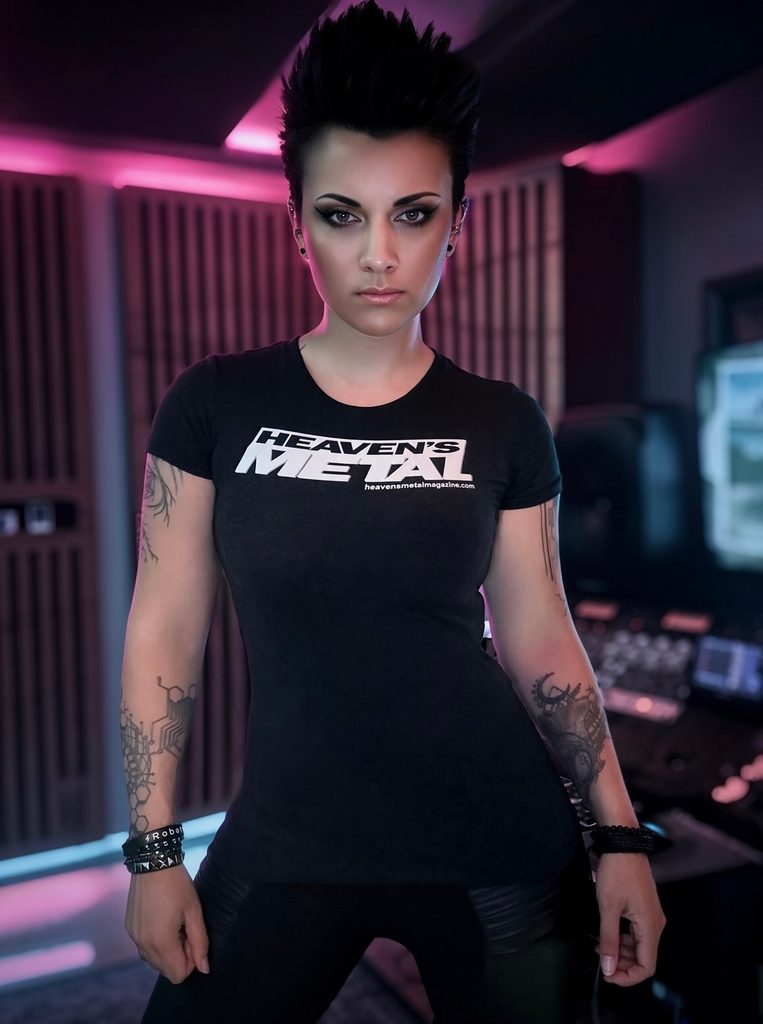
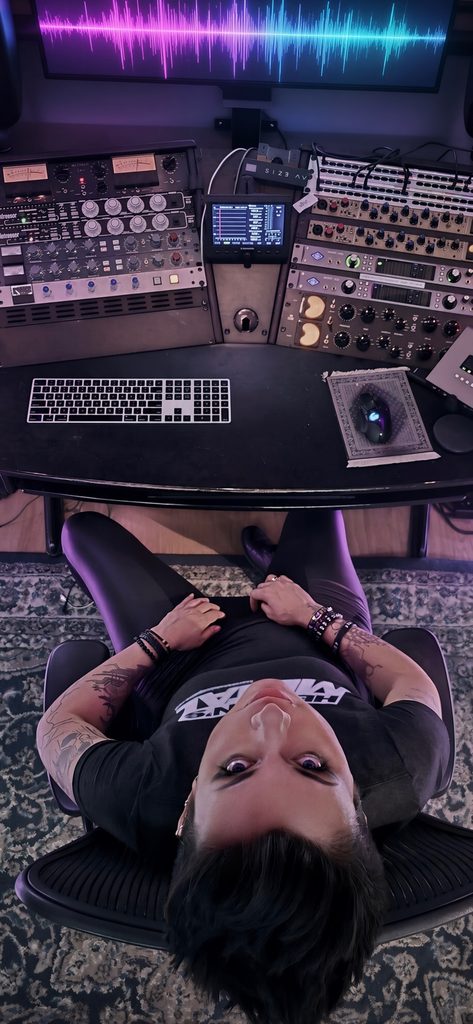
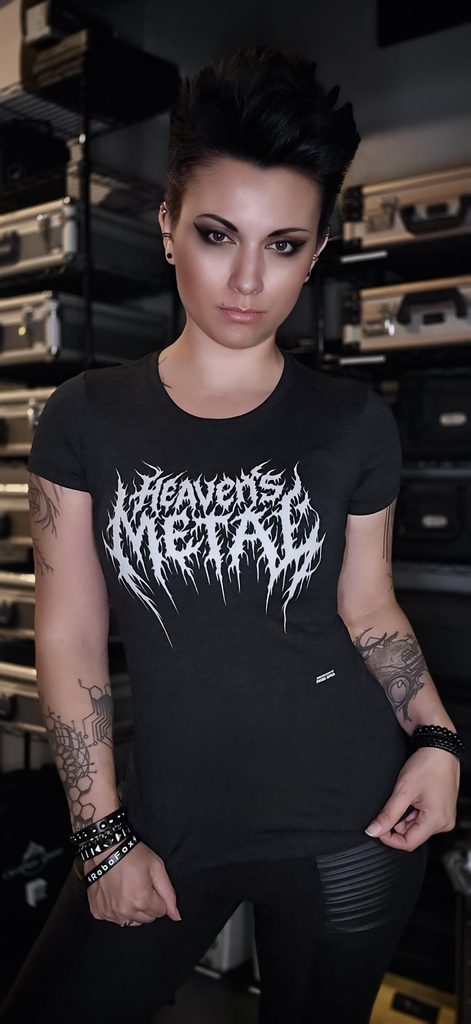
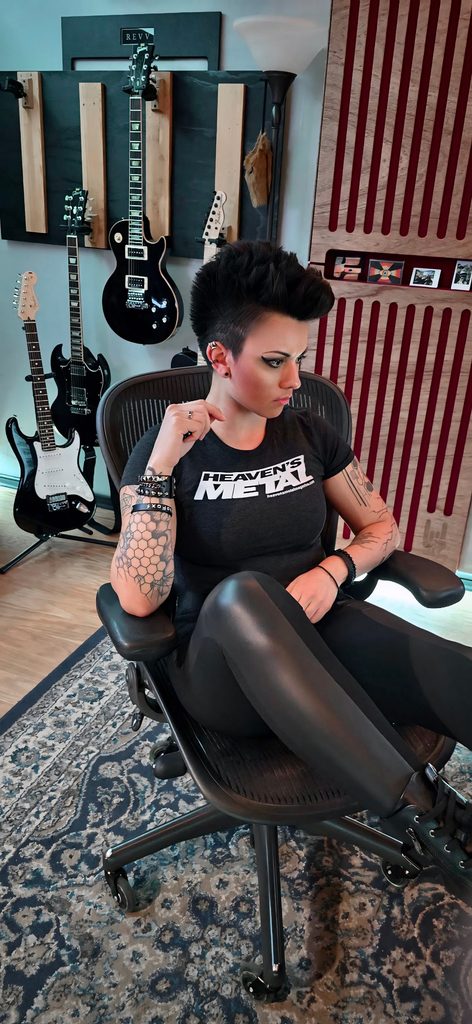
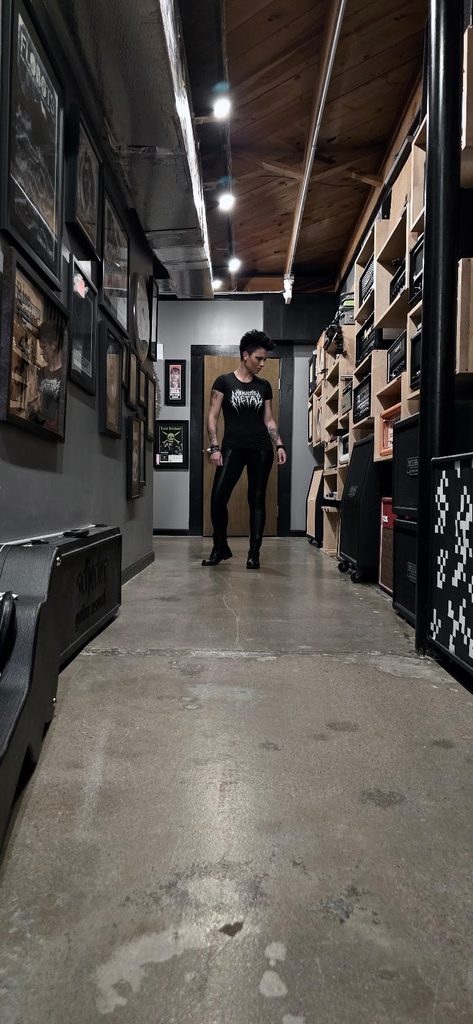
In this feature, Tara is repping designs from the current Heaven’s Metal Magazine apparel collection in collaboration with Metal Crawlspace. Readers can support Heaven’s Metal and check out the available shirts and merchandise through the Heaven’s Metal store here.
Follow Tara Fox and RoboFox at:
Facebook
Instagram
Spotify
You can watch the industrial reimagining of Stryper’s “All of Me” and Tara’s accompanying visualizer here and pick up a copy of the Roxx Records vinyl tribute to Stryper’s 40th anniversary of To Hell With the Devil (while supplies last, as this is a one-pressing salute to the album, which features the industrial version of “All of Me”).
Get Heaven’s Metal Magazine Merch HERE
About Author
