


Feature: What Klayton Says…

In his first appearance on these pages in nearly 3 decades, multi-instrumentalist/vocalist/producer Klayton chronicles the journey from the formation of an independent music label/brand to the reacquisition of rights to his early Circle of Dust music to his latest release.
Read on about the genesis of his various musical incarnations, the state of humanity, new music, melody, lyrical and thematic inspirations and ultimately his purpose and motivation for sharing his gift with the world.
The Label
First, congratulations on FiXT Music. Your love for independence from the “music industry” is well established. I’ve listened to many of your artists over the past two decades and been impressed by the collaborative nature of the entire label – musically, graphically and logistically. Would love to hear some of your inspirations for the genesis of the label and thoughts on what it has evolved into over the past two decades. Started 2006, right?
Genesis
Yes, technically the label started in 2006 and was a natural extension of where I was heading as an independent artist. The record label paradigm had failed me and I was in a position to either give up the dream of pursuing music full-time or learn how to survive on my own. After many years of trial and mostly error, FiXT was born to not only support me but other artists that I could plug into all of the relationships and systems I had built just to keep myself alive.
I was managed in the early 2000s by Tyler Bacon (who I met at my first label REX Records.) Together we figured out these systems to create merchandise, manufacture CDs and other physical merchandise, mailing lists, newsletters and beyond. Though these things seemed basic, I found there were many other artists that didn’t know how to do any of it.
Road to Rhodes
Enter James Rhodes, who had been a fan of Circle Of Dust. He would consistently ask if there was any way he could help and I was too much of a control freak to ever let anything go. When I finally relinquished control of one small thing, he took it 10 times further than I ever could have. I gave him a little more and he 10X-ed that and in short order was my first employee ever. After several years of more trials and more errors, James and I would brainstorm ideas about forming a label and in 2006 it became a reality. The sound of the label has certainly changed over the years, but the core mission has always remained the same.

The Diverse Soundscape
As many of your fans are aware, the music of Klayton represents a wide soundscape of genres within the realms of ambient, cinematic, synthwave, rock and even metal electronic music. This diversity of musical interests has manifested itself in the distinctive entities which are Celldweller, Scandroid, FreqGen and of course, Circle Of Dust. Please elaborate on this diversity and why it is apparent that you don’t allow yourself to be pigeon-holed into one genre of music.
Genre Confusion
Obviously, I was aware of the idea of “genre,” but for some reason there was a wire that was never connected in my brain to make me think that anything I created had a fit into only one of those. I found that many artists were comfortable picking a single genre and just living in it, and that just never made sense to me.
I didn’t venture into music concerned about whether people were going to like it or how many fans I would have or how much money I would make. I was fairly convinced that I would have no fans, would be broke and ultimately flipping burgers for the rest of my life, so I had nothing to lose. I just painted the soundscapes that I heard in my head onto a musical canvas the best way I knew how, which wasn’t very well in the beginning that’s for sure.
Consolidate
For any of you familiar with my early projects, like Circle Of Dust, Argyle Park, and beyond, I used many pseudonyms, and I sometimes was several band members on the same album, all for anonymity’s sake. When I finally got to the stage in my life, where I decided to put all that to rest and focus on a new project called Celldweller I made a conscientious decision that any genre or any style I wanted to pursue would just exist under this banner instead of creating pseudonyms and confusing people more than they already were. Metal, drum and bass, psytrance, trip, hop, breakbeats, orchestral arrangements and even acoustic guitar-oriented tracks – it all lived in the same space in my head with no genre boundaries to limit it.
Diversify or Die
“So now, why do you have four or five active projects if you were creating all your music under the Celldweller banner?” Well, I’m glad you asked (smiles). The march of technology and the way people consume music finally made me wave the white flag and separate a few of my focused musical outlets into separate projects that would be easier to digest. I didn’t really get into this business to fight algorithms and at some point that’s all we do, so I just decided to make it easier on myself and other people by carving out things like Scandroid and FreqGen into their own lanes.

The Arsenal of Output
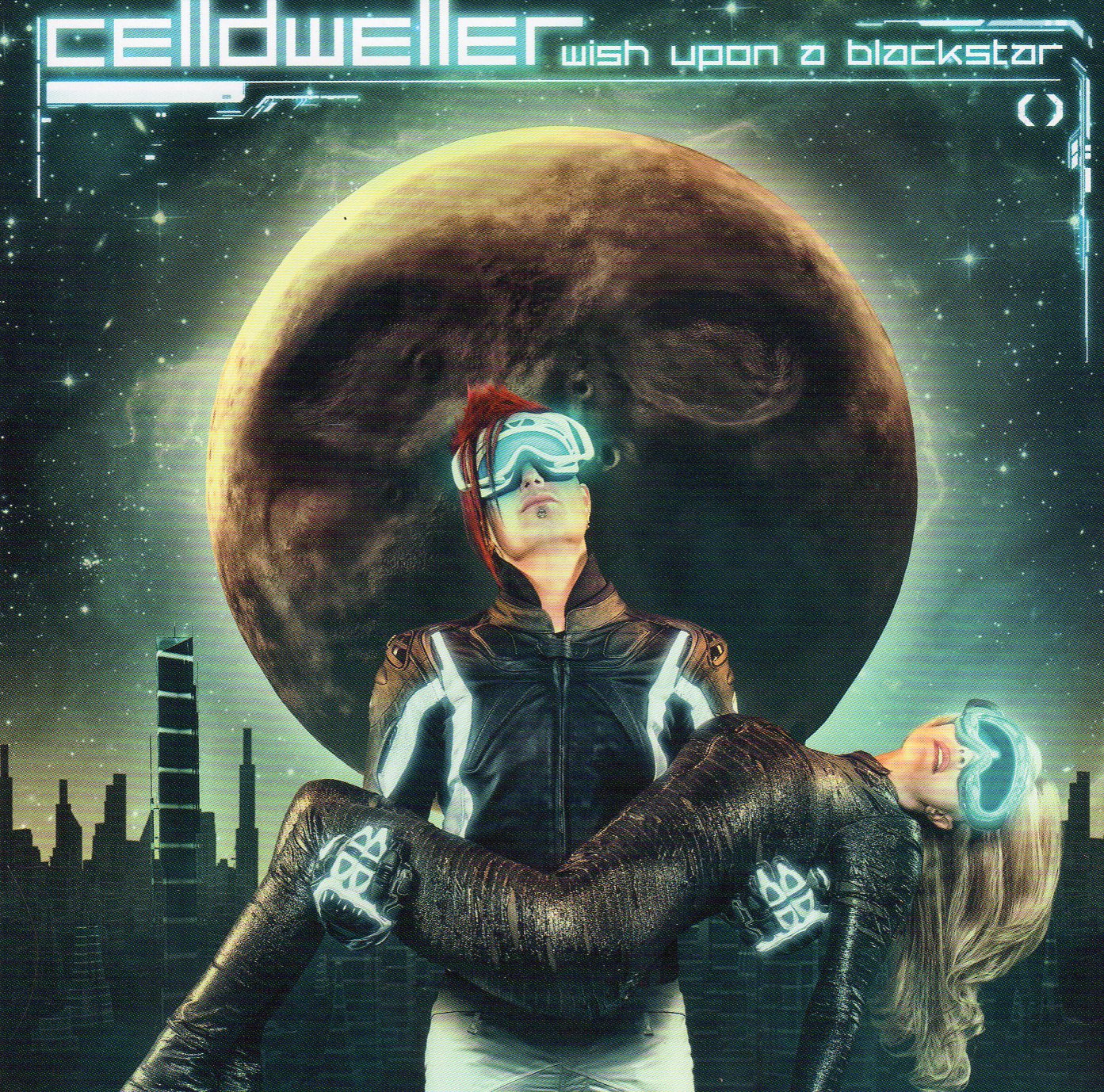
[Arguably, the two Klayton-created musical entities which have made the most impact would be Celldweller and Circle Of Dust (although Scandroid is brilliant in its own right). The self-titled Celldweller debut (2003 and recently released 2025 definitive edition) and Wish Upon a Blackstar (2012) are brilliant works of electronic rock art – I’ve not heard anything in the genre their equal, perfect albums both. Similarly, the self-titled COD and follow-up Brainchild may be less refined but are massive slabs of electronic-infused metal.
Celldweller has since gone on to release 3 volumes of Soundtrack for the Voices in my Head, End of an Empire (2015), Offworld (2017) and most recently Satellites (2022), in addition to a plethora of remixes and digital only material – Doc]
I have long been impressed with not only the depth of your creativity but also the volume of your musical output. What inspires or drives you to be so prolific and to be so constantly re-crafting, re-imagining your music?
Taco Bell
I am sincere when I say this – I have an application for Taco Bell sitting in a folder in my office. I took it a few decades ago and put it away for that inevitable moment where I’d have to fill it out and submit it because my music career had failed. I keep it as a reminder of how fortunate I am to do what I do and that at any time, things could go sideways and I’d have to crack out the application, fill it out and go to work.
“I don’t make the music I think people will enjoy, I just hope they enjoy the music that I know I need to make.”
Sacrifice for a Head’s Output
I don’t take a career in music for granted, and although I starved for decades and sacrificed almost everything that I saw everyone else around me partaking in, it has paid off and I am doing exactly what I was put on earth to do. So if anything I’m doing is being perceived as prolific, it’s really just me trying to get the things I hear in my head out into the world for anyone who might enjoy them. I don’t make the music I think people will enjoy, I just hope they enjoy the music that I know I need to make.
Song Birth
Song ideas are born in no specific way. Sometimes it’s a guitar riff. Sometimes it’s a drumbeat I bang out on a live kit or a pattern I make on a drum machine. Sometimes it’s a crazy sound I pull out of my Eurorack modular system. Sometimes it’s a vocal melody that just pops into my head at 3 AM. All these little bits of inspiration constantly push me forward, and since I built my career on not having musical limitations it frees me to continue to do whatever I want.
The Circle of Dust Saga
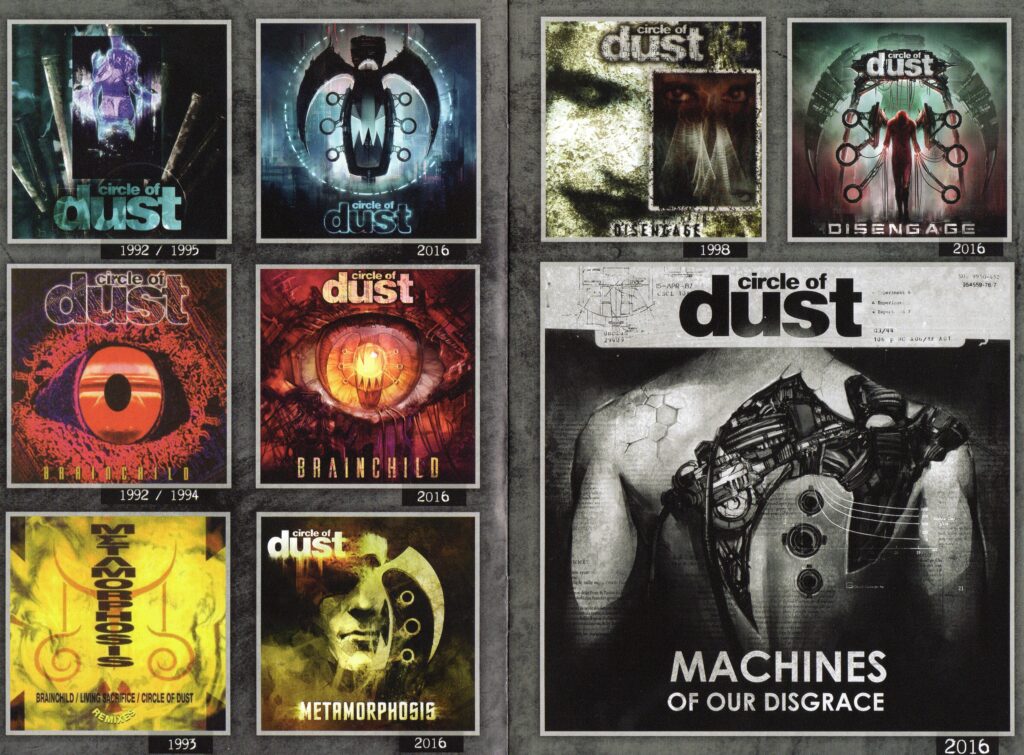
Let’s talk about Circle Of Dust. I don’t recall exactly when you regained access to the rights of your original material but in 2016 FiXT re-crafted and released the new versions of the COD back catalog (plus tons of bonus tracks) on digital (and later some on vinyl) media.
I’ve listened to (including the physical media) all this material and the quality is exceptional, especially love the vinyl renderings. And all the bonus material is so engaging and insightful into the formative years of your musical career. While it has been 9 years since those re-releases, I think many of our readers would be intrigued to know more about how this all transpired and what are/have been your original visions for the entity which is Circle Of Dust, both then and now.
[Some of this I covered in my review of the Circle Of Dust Full Circle DVD HERE and in my original Machines of Our Disgrace review HERE – Doc]

Rights to Dust
Regaining the right back to those early albums was a very long road to travel. I can’t even remember how many times we went back to the different rights holders to approach the idea, and most of the time you wouldn’t even get the decency of a reply. Then other times it was a very quickly-closed door. I do remember one conversation, where whoever owned the rights at that point told me I had owed six figures in debt and would have to come up with that amount of money if I ever wanted to buy them back.
Inflated Debt
Let me just tell you there’s absolutely no way that a little independent artist on a very tiny label racked up over $100,000 in debt. Not unless somebody was putting the money in their pockets and then assigning it to me. I sure as hell didn’t get that money. So after trying for 10 or 15 years, James Rhodes’s (my manager and president of my Label FiXT) connected some dots regarding a relationship we had with another artist, and he went to work trying to find a way to even start a conversation with the company that held the rights to my albums at that time. Somehow, through that process, he managed to plead my case with the right person and by some miracle it got greenlit.
They certainly didn’t give it back to me for free, but it also wasn’t six figures. I wanted to regain the rights to these albums so badly I was willing to risk that expense, not knowing if anyone would even be interested in me ever re-releasing them.
Re-establishing Creative Control
So, I would finally have the chance to do whatever I wanted with the content and the most obvious path initially was remastering the albums and putting them back out with bonus content. Now that Circle Of Dust was mine again I could not stop my brain from heading down the path of thinking about “what does new Circle Of Dust sound like in 2015?” I started by doing a test and reproducing my song “Exploration.” Once that was done, the floodgates had opened and I began working on what would ultimately become Machines of Our Disgrace. Anyone who read any interviews with me back in the day knew that I hated the way those old albums sounded. I had very little control over the recording, the art, the release plans…
“Ironically, some of the same subject matter I was singing about in the early 90s still applies to the time we are living in right now, just on a greater scale.”
The 25th Anniversary
The Debut Reimagined
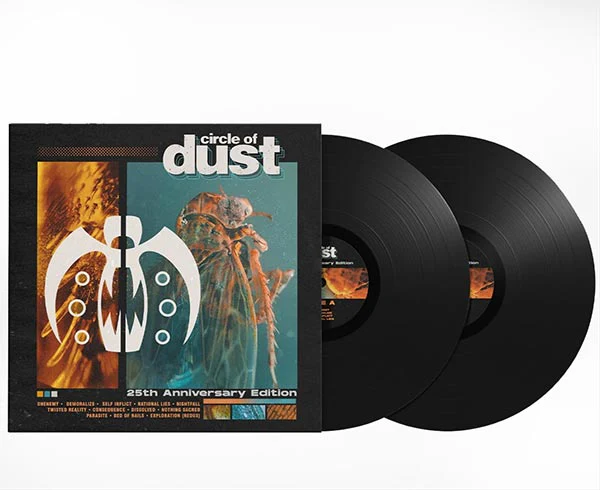
Now that I can call my own shots, produce my own music from A-to-Z, and do anything I want with it, I knew another next logical step was for me to take the original multitracks from these songs and produce them myself. The guinea pig was the self-titled debut Circle Of Dust album. The intention was not to go in, re-cut instruments, redo vocals, and reprogram synthesizers – but simply take what I had already created, bring it into a modern digital audio workstation and start producing and mixing it the way I wanted it to sound. With the exception of a few small things, the 25th anniversary of the debut album is built from all the original instruments and vocals – just mixed by me with the knowledge that I have accrued over a couple of decades.
[The 25th Anniversary Mix of the debut was released in digital download and CD in 2021 and on 2 LP vinyl in 2022. See my review HERE – Doc]

Re-engaging Disengage?
Brainchild was much more complicated, because I never had ownership of the 2-inch tapes that it was recorded to. However, I did record the entire Disengage album in my own studio at the time. So without me being completely overt, I think all the smart people reading this will understand that I just insinuated that I will most likely be readdressing that whole album (smiles).
In fact, that is an album that I am considering re-cutting guitars, vocals and other instruments to see how that experiment goes. Anyone who has the original can continue to listen to it and anyone interested can hear what a modern take on those songs would be. The clock is ticking because 2027 is the 30-year anniversary of the album, so the pressure’s on (laughs).
Circle Back
Furthermore, in conjunction with the re-releases in 2016, you released the comeback COD album Machines of Our Disgrace, a brilliant discourse on the state of the effects of digital technology, cyborg tech and AI on the humanity of humanity. What were your motivations for the subject matter on this release?
There were no motivations per se, more just observations. Looking into the future of things like artificial intelligence, social media, politics, and so many of the other modern afflictions we endure. Ironically, some of the same subject matter I was singing about in the early 90s still applies to the time we are living in right now, just on a greater scale.
The New Music
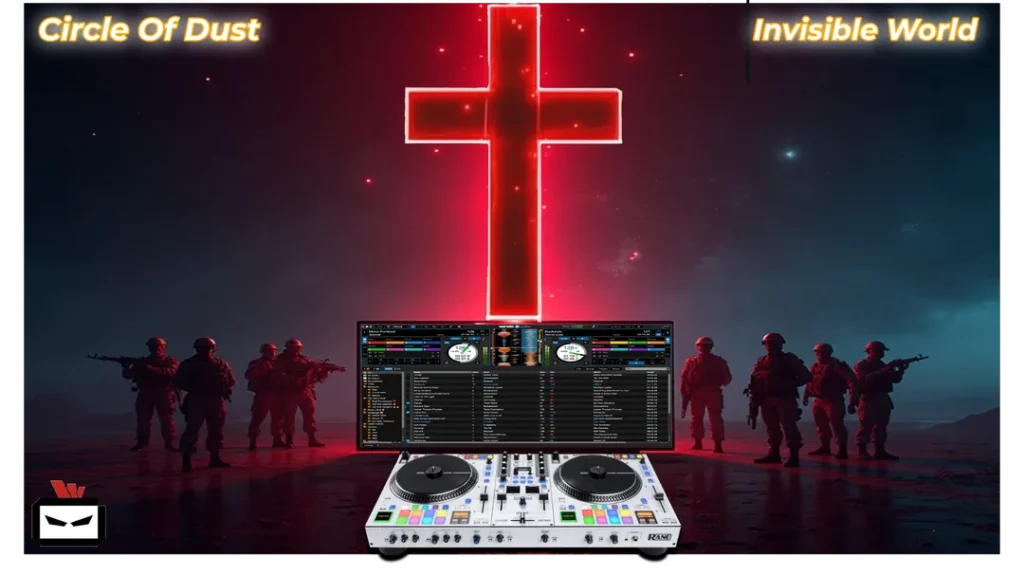
You recently released two new singles, “Digital Messiah” and “Invisible World” in anticipation of the Definitive Edition 2LP (first time on vinyl) of Machines of Our Disgrace. Please elaborate on the genesis and the synthesis of these songs. Part of a larger scheme, as has been the case with most of your songs, or just standalones?
Natural Progression
Both “Digital Messiah” and “Invisible World” started as demos that I had sitting around as early as 2012. Some of the riffs were song ideas that I never completed while writing Machines of Our Disgrace in 2015. It was a natural progression to finish these and consider them part of the deluxe version of that album.
Conspiracy Trolls
It’s funny to watch the trolls of the Internet, trying to use any modern insults to gain a little attention. I’d see a few comments here or there calling these songs ‘AI slop’ and had to laugh because they were totally right. I developed a time machine in the 90s and have been traveling to 2025, making AI write all my music, and then I simply just travel back in time and release it. It’s a beautiful thing because I don’t actually have to do any work or know how to play any instruments. I can just sit back and let machines do all the work while I get filthy rich off those crazy Spotify royalties I’m collecting … All I can say is it’s not my fault that some people are this stupid.
Idiocracy
The further irony is that a lot of my subject matter revolving around Circle Of Dust is exactly about these very things – technology, its abuse and the inevitable path to the dumbing down of humanity. Scroll social media for 10 seconds and you can easily see how stupid people have become. I’m not smart, but now it’s easy to see that there are a lot of people that are a lot dumber than me out there doing really stupid things all the time. That’s why I love Mike Judge’s “Idiocracy” so much – it’s obvious he built a time machine, traveled to 2025, saw what the world had become, grabbed his camera and made a great documentary (smiles).
The Depravity
I hear references to Christian themes in these tracks as well as it relates to the control exerted on humanity by the “machines.” Interested in hearing your thoughts on this?
Well Christianity for me doesn’t have much to do with machines controlling humanity as much as it sheds light on natural human depravity. ‘Machines’ (AKA social media & the like) make our depravity more easily exposed and prolific. Human nature in and of itself is not good – left to our own devices we all devolve into the Lord of the Flies – we will abuse, dominate and kill each other. Nothing proves this more than human history itself.
It is the perfect and supreme morality that Jesus Christ himself displayed not only with His words, but with His actions that keeps the evils in our hearts at bay. For those of us that believe that He is who He says He is, we have that example to follow, and it’s the opposite of the slavery I see so prevalent in our society – it is true freedom from it.
“The truth is, especially with Circle Of Dust, most of the inspiration doesn’t come from any author I may be reading or movie I may be watching, because reality is more horrifying.”
The Inspirations
More generally speaking, what are the inspirations (literary and cinematic) for these complex future/present worlds you create? I always think of the two Blade Runner movies, two of the greatest sci-fi films ever crafted.
Concept Metal
Similar to the genre conversation, it didn’t often make sense to me to just write single standalone tracks that didn’t have anything to do with each other. I mean I certainly have done that, but as more time has gone on in my career, I’ve been more and more naturally inclined to write concept albums. Probably not the brightest move in an era where people don’t listen to albums anymore and songs are all taken out of their intended context, but I’ve never been one to be concerned about what everyone else is doing I guess (laughs).
So when I write music and start thinking about lyrics, it is natural for me to tie storylines together and build worlds and characters that live in them. The truth is, especially with Circle Of Dust, most of the inspiration doesn’t come from any author I may be reading or movie I may be watching, because reality is more horrifying.
Real World Inspiration
Most of the inspiration comes from the world around me. I dug into things like CRISPR Cas9 in 2015 while working on Machines of Our Disgrace. I couldn’t believe nobody was talking about this, so I wrote about it directly in songs like “alt_Human.”
Sci-fi Love
I think growing up on and absorbing the movies and literature that I love (which is mostly based in science fiction) has helped me build the skills to create worlds, but in most cases I’m not using those resources to inspire my lyrics. (Though “Neurachem” is an obvious example of something that WAS inspired by a novel…)

The Melody
I’ve listened to a fair amount of electronic music over the past decade – much from the FiXT stable – and have been impressed by the recording quality and songwriting, but I have not heard a single artist surpass your ability to deliver engaging and complex music alongside the melodic appeal so important to the longevity of music. I think many execute the sounds with dexterity and brutality but the gift of mastering the melody, in my opinion, is one of the most important factors to the human brain which makes music “memorable.” I am interested to hear your take on this idea, that good melody (vocal and instrumental) imparts music with an indelible quality.
Noisy Melody
As much as I was inspired by artists that carried very little melody (mostly being into thrash metal and hard industrial music) it would seem logical that I would end up producing content in a similar vein. The contradiction is that I also absorbed quite a bit of music that was primarily melodic even at a very young age – orchestral music, gospel and church hymns and even early synth music like Tomita, Jean Michel Jarre and Wendy Carlos. So, melody was something I never specifically thought about – it was somehow built in somewhere deep down in my psyche, I suppose.
Paradox
When I started creating music, although my inclination was to make it as noisy and crazy and heavy as possible, the songs never felt right unless there was some semblance of melody in there to tie it together. Although I am not particularly fond of my voice, nor do I think I am the best melody writer in the world, I look back at even my earliest albums and the melodic components are the things that gave those songs a longer lifespan.
The Words and The Word
Finally, your lyrics have long been some of my favorites of any artist, electronic music or otherwise. Many of your lyrics, while not overtly spiritual, reflect the idea that humanity has a soul, influenced by elements of darkness and light for movement in one direction or the other. Please provide some insight to readers/fans as to the inspiration and intent of your lyrics.
Circling Back – The Spiritual Journey
Middle Finger
Well, specific to your magazine, I believe the last interview I did with Heavens Metal might have been sometime around 1994-95. I was told by people around me that my interview kind of came off as a big middle finger to the Christian music industry, all of its mechanisms and all of its hypocrisy. That was most likely the case. I walked away from all of it for quite a while, including God as part of that package.
Praying Parents
Fortunately for me, I have praying parents and a merciful God and eventually was able to separate the idea of man’s hypocrisies and the atrocities they commit against fellow man from God himself. They are distinctly two different things. He’s perfect and we are incredibly imperfect. When people walk around doing things in His name, it is hard for us mere mortals to separate the idea that God has very little to do with people saying and doing things in His name, especially in the modern western world.
Spiritual Dichotomy
There have always been spiritual themes in my music, even when I wanted nothing to do with God. I never stopped believing He exists, I just wanted Him and everyone claiming to follow Him to just leave me alone. So, I would wrestle with the dichotomy of believing God existed juxtaposed by the things I saw and experienced around me. I often worked through these contradictions through my lyrics, oftentimes in metaphor.
Wordshifter
Those who paid close attention would be able to see the slow shift in my lyrics over the years. Well maybe I’m the only one who noticed (laughs). The point is that I write to help exorcise whatever demons I may be battling, many times watching the world around me crumble into what seems to be the darkest stain on the timeline of my lifespan so far.
Things are pretty bleak when you look at our world with physical eyes, but there seems to be a lot more going on when you look at it through spiritual eyes. (“Invisible World”) So, inspiration has shifted over the course of my career which should be natural for any artist, any human.
Full Circle – Sharing the Gift
Unselfish Intent
However, intent has become much more clear to me in recent years. Where there is great darkness, light shines the brightest. It’s also the most needed. Nobody feels the urgency to turn on their phone flashlight at 12 in the afternoon, but midnight is a different story. I have no talents outside of the ones God has blessed me with, but I’d be a fool to hoard them or try to take credit for them vs. give those gifts back to the one who gave them to me. Knowing that Christ came to be light in a very dark world and ultimately gave His own life that we all could live, how can I know that He loves every person reading this interview THAT much and then not shine the light I’ve been given? That would be pretty selfish of me.
Walking Light, Mouth Shut
I’m not even remotely perfect but I do try to do a lot less talking and a lot more walking because the world is full of frauds, scammers and charlatans. We’ve all fallen for their lies at one time or another. So I work with the intention to walk the walk, shine the light and keep my mouth shut … ya know, unless an interviewer asks me a bunch of questions and I have to open it (smiles).
The End of an Interview
Thank you Klayton for taking the time to share your thoughts on your career and your music both past and present. I look forward to these new releases and more great music in the future.
I look forward to making a lot more music. Thanks for taking time to put together thoughtful and informed questions, Jonathan.

About Author

Harold Faltermeyer might be responsible for turning me into a full on techno head with Axel F. Loving anything electronic but being a Christian put me on a full on hunt for Christian stuff that lit up my ears like Culture Beat and Haddaway. I would comb through my “Spirit & Sound” or “Power & Glory” CD catalogues trying out anything that sounded remotely like the stuff on the “Aural Ecstasy: The Best of Techno” CD comp. So when I saw this band “Circle of Dust” described as metal with electronic beats I gave it a try. When I first spun “Onenemy” on my 5 disc changer (after just watching Jackie Chan in Rumble in the Bronx) my world was forever changed. I snapped up anything I could get my hands on that was mentioned in my HM or 7ball Magazines. This quickly led me to COD’s Brainchild and Argyle Park’s Misguided and to Klayton’s brother’s project, Level and his guitarist Klank’s “Still Suffering”. And then come to find out my favorite track on the first Tooth and Nail sampler, Chatterbox’s “Torque” – that had some Klayton Midas Touch on it too?
Well, as my music collection expanded with Blacklight Records and Flaming Fish stuff and then more with Tooth and Nail bands and N Soul Records, etc. , when I saw the direction Klayton was headed with Disengage (although BRILLIANT musically) I was just a bit sad. Celldweller sounded great, but I wanted stuff with lyrical punch of Wyrick and Mortal.
Fast Forward to 2016, the re-acquisition of his music while finally revealing decades of secrets with his Ask Celldweller and Circle of Dust segment on YouTube (hey, before social media, and in the internet’s infancy, info about bands, especially Klayton and his stuff seemed like this esoteric treasure box to seek out with little or anything to find) and my attention was turned back. Klayton is now a million times more accessible and even answered a question I sent in about the COD logo on said YouTube series. And then, of all the wildest dreams to come true, my little short video explaining my favorite COD song, got included on the end of the “Full Circle” documentary.
Now it’s really future times, haha, and my spirit is warmed to hear Klayton’s thoughts in this interview. Long live Klayton and Circle of Dust! And I hope any future Circle of Dust albums might have Klank, Buka and Level in the mix!!
Read the first interview in 7th grade. Crazy. Praise God.