


The Search for Redemption: Life’s Deep Questions at Upheaval Festival
Upheaval Festival is a rock and heavy music festival held each summer in Grand Rapids, Michigan, bringing together international headliners, rising artists, and local bands. While it is not a Christian festival, many of the artists wrestle with questions of suffering, hope, purpose, and redemption. This article explores those conversations and the different answers they offered to life’s deepest questions.
Upheaval Festival is a rock and heavy music festival held each summer in Grand Rapids, Michigan, bringing together international headliners, rising artists, and local bands. While it is not a Christian festival, many of the artists wrestle with questions of suffering, hope, purpose, and redemption. This article explores those conversations and the different answers they offered to life’s deepest questions.
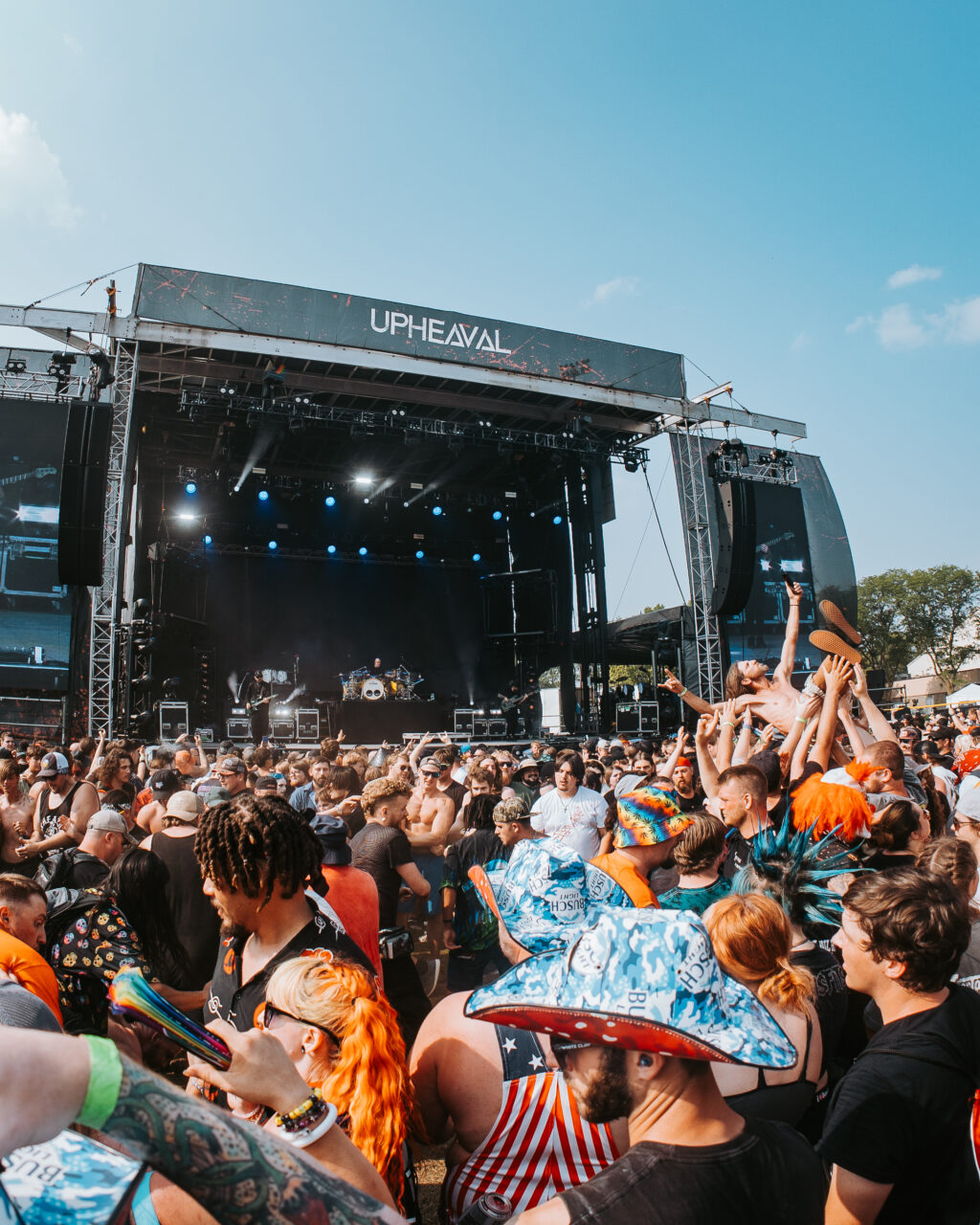
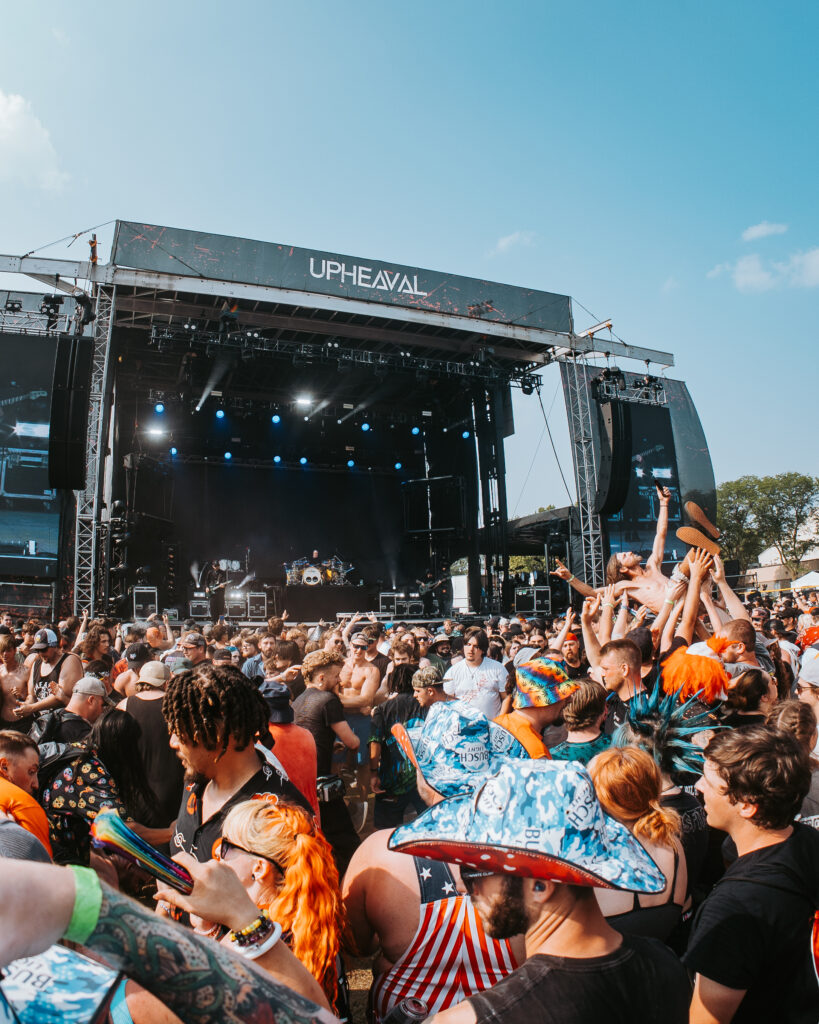
The state of Michigan is known for its beautiful beaches and pleasant weather in the summer, which makes it a popular vacation destination during the warmer months. Yet a couple of weekends ago, much like the rest of the Midwest, Michigan was covered in smoke and ash from Canada’s wildfires. A weighty murk enveloped Belknap Park in Grand Rapids as the Upheaval Festival opened, creating a hazy, almost dreamlike backdrop for two days of heavy music.
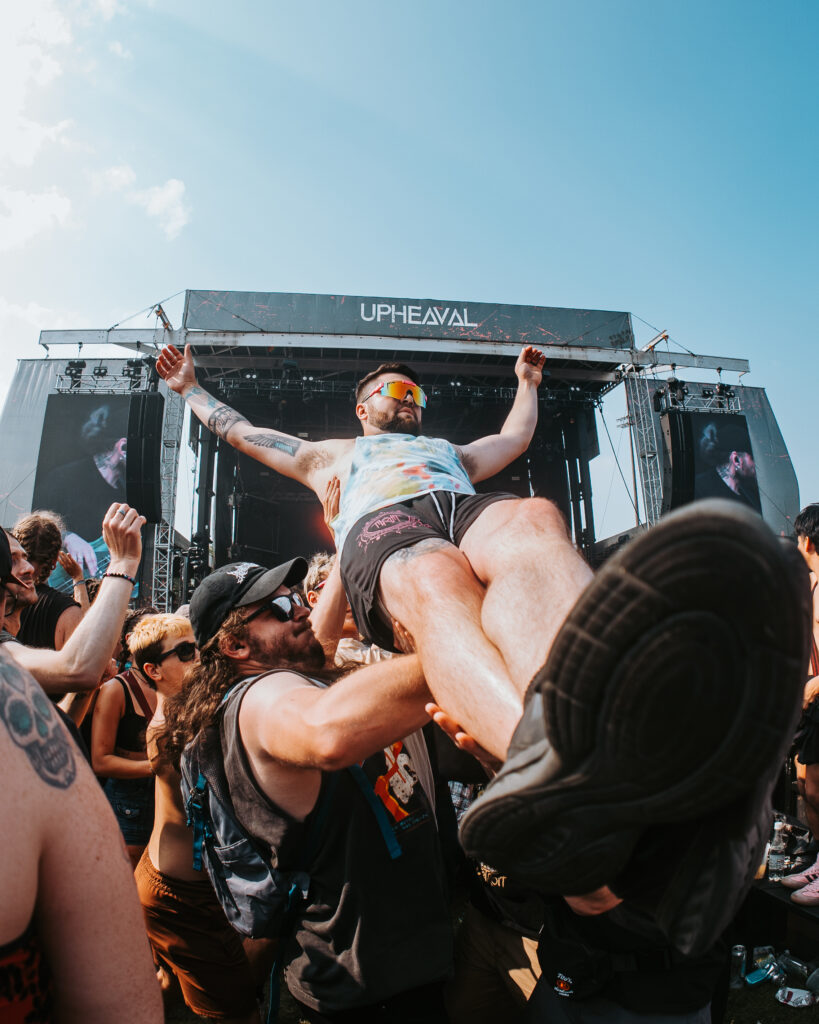
The bleak weather did little to deter the crowds. Upheaval is a quaintly sized festival that celebrates rock and heavy music, bringing together international headliners, rising artists, and local bands across three stages over two days. It is considered one of the Midwest’s premier regional rock festivals, offering an impressive variety of performers while maintaining an intimate feel. The thousands of eager fans who gathered were equipped with light clothing, water bottles, and animated enthusiasm. They proved just how highly regarded this summer jamboree has become.
The lineup reflected the diversity of today’s heavy music scene, spanning metalcore, hard rock, alternative metal, rap-rock, progressive metal, and much more. On the surface, some of these artists had little in common beyond volume, distortion, and intensity. Heavy music is often stereotyped as angry, intense, and even nihilistic. With consistent aggressive riffs, screaming vocals, and songs about pain, violence, or struggle, it can be easy to assume the genre has little to offer beyond rage.
Yet spending a weekend at Upheaval revealed something quite different. Beneath the breakdowns and distortion, many artists were wrestling with the same fundamental questions, though they often arrived at very different answers. They asked questions like: How do we make sense of suffering? Where do we find hope? What separates these bands is not the diagnosis, but the destination.
Each offers its own vision of hope, healing, redemption, and meaning through community, resilience, nature, honesty, or something else entirely. Watching artists across two days reminded me that heavy music has never stopped asking life’s deepest questions. Listening closely to these artists and the stories they tell helps us better understand the human condition, our shared brokenness, our longing for restoration, and the many ways people search for it.
The first act up on Friday was a Michigan local act called Vexatious, who explores themes of questioning religion and criticizing the establishment. Another band that played shortly after them also tackled many of the same topics in a similar way. Showing Teeth is an up-and-coming band from Nashville that has built a reputation for deconstructing faith and dealing with spiritual trauma. I had the honor of sitting down with frontwoman Addison to talk about healing and what that looks like for her.
Addison shared her insights with me and said, “I think it’s learning to forgive yourself, and then also understand what has happened to you… it’s really important, especially with trauma, to identify when you’re beating yourself up for no reason.”
Showing Teeth performed with a raw earnestness and relentless raucousness that anchored the difficult themes they write about. Their set was one of the festival’s clearest examples of finding redemption through honesty. Much of their music is fueled by rage and frustration, but Addison described heavy music as a place where painful experiences can be confronted instead of hidden. She shared, “We’re all going through it… just dedicating yourself to the thing you love does make things better. Things can still suck, but it’s so much better when you know you have something you can go to.”
For Showing Teeth, it all begins with honesty, self-forgiveness, and the community formed by people who recognize they are “all going through it.” Healing starts with being willing to name the wound instead of pretending it isn’t there.
The band that played next on the same stage had a different perspective on these same ideas. Kingdom Collapse is a Southern rock band known for its uplifting outlook and encouraging message. I chatted with founding members Jonathon and Aaron, who shared where those convictions come from.
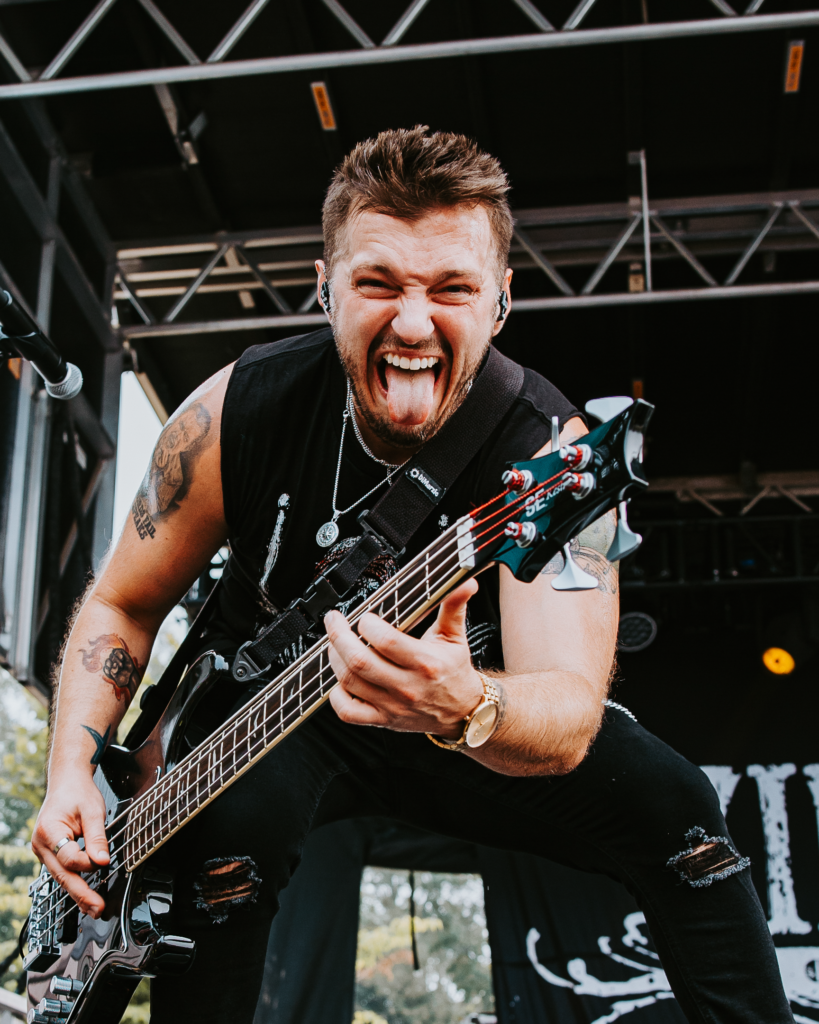
Vocalist Jonathon got personal when he shared part of his story with me and the band’s idea of hope. He said, “When I was eight years old, I saw my dad die right in front of me. Growing up in a conservative Christian home, that started my own journey of finding my way through personally. Music really helped me through a lot of that… No matter what you’re going through, there is hope. Just keep going. Don’t give up.”
Kingdom Collapse offers a different vision of redemption. Their songs acknowledge suffering, but they also remind listeners that pain is not the end of the story. For them, it comes from refusing to quit and believing that even our deepest scars can become a source of strength.
The day was filled with remarkable performances that even the heat and smoke could not deter. France’s own LANDMVRKS spiced things up with their innovative blend of modern metalcore, punk, hip-hop, and nu metal. Their energetic stage presence and emotional delivery gave off early Linkin Park vibes while still carving out their own identity. Another standout performance came from Zero 9:36, who delivered their mashup of rap and rock with vibrancy and determination. Frontman Matthew Cullen thanked the crowd and mentioned that the band would be hanging out in the tents afterward to meet fans. That simple gesture of making time for people fit perfectly with one of the recurring themes of the weekend: community.
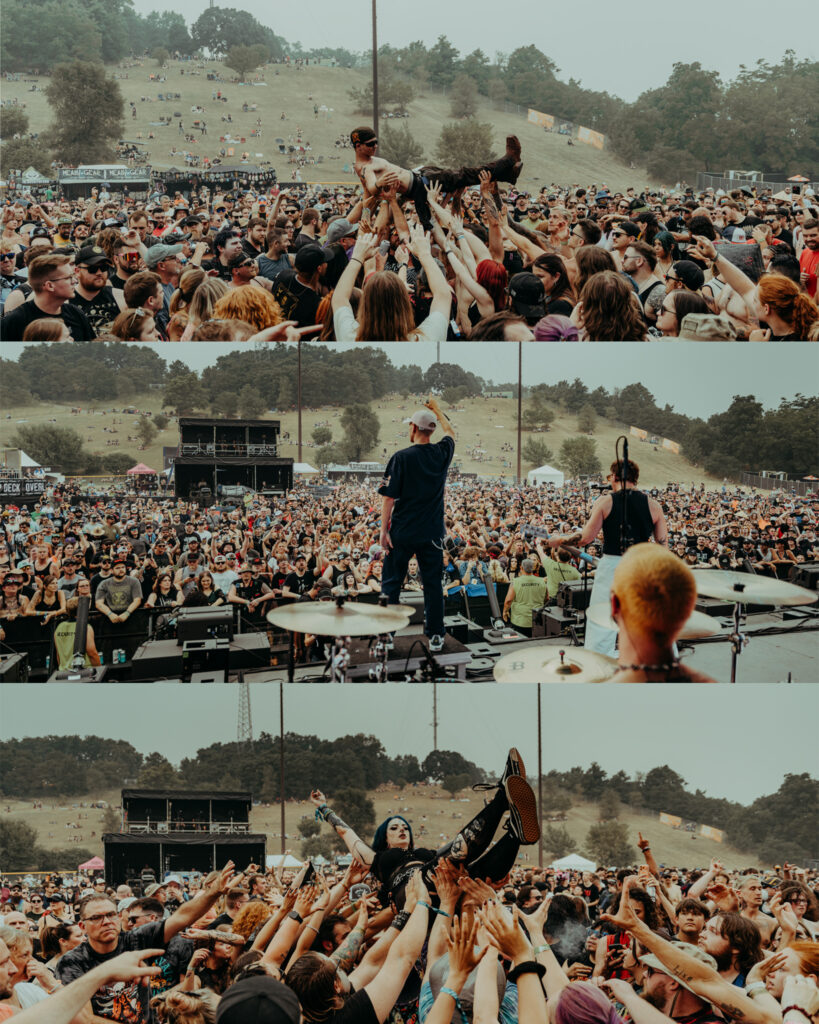
The blossoming band Izzy Reign conquered the up and coming stage and continues to prove they are a band to watch. Poppy performed without frontwoman Poppy, leaving many fans confused and disappointed since no explanation was given at the time. She later shared on social media that the smoke had prevented her from singing, but a brief announcement during the set would have gone a long way toward acknowledging the fans who came to see her perform. Before the headliners took the stage, pop rock act Magnolia Park brought an infectious energy that had one of the day’s biggest crowds singing along. Their happy-go-lucky spirit was the perfect lead into the evening’s final performance.

Gojira is doing a handful of summer festivals in the States, and Upheaval was lucky enough to land one of them. The French extreme metal giants took the stage with confident viciousness and won over the crowd by pulling from across their discography. The young and talented Luigi Paraventi filled in for original drummer Mario Duplantier, marking the first time in the band’s thirty year career they had performed without him. Like the other artists I spoke with, Gojira offered their own answer to the question of redemption. Their music often points toward nature, interconnectedness, and humanity’s relationship with the earth as a source of meaning and hope. Intense pyrotechnics, an entrancing light show, and a venomous delivery of every song made the set a triumphant close to the first day of Upheaval.

Saturday got a strong start with the chaotically rebellious Silly Goose, metalcore veterans Still Remains, and the hard hitting Dying Wish. The floor seemed to shake as each band performed in the direct sun during the very hot weekend weather. Still Remains played it cool by diving into their old works while also sharing a lot of their new material, which they released earlier this year. A lot of that work was inspired by frontman T.J. Miller’s traumatic past and his confronting of that devastation. I was able to chat with him, and he shared, “There comes a point where hope is gone and you’re left with nothing… My mother was an alcoholic and a drug addict… Eventually she passed away… I think I grieved more for the person that I wanted in my life that I never had… Now my job is to take that story and share it with people who can relate.”
He went on to say, “One thing that I try to encourage people with is that if they have an internal struggle or they’re dealing with some heavy things in their life, whether it’s music or not, you can take those things and make them into something positive… I can make it into a song, go up there and scream my heart out every night, and it can really resonate with somebody going through something similar… I can’t tell you how many messages we’ve gotten over the years saying, ‘This song helped me through this’ or ‘It saved my life.'”
His story reflects one of the many visions of hope found throughout the festival: that even the deepest wounds can be reshaped into something that brings healing to others. For Still Remains, redemption is not the absence of pain, but the willingness to carry it honestly until it becomes a source of hope for someone else.
Other acts in the afternoon were the progressive metal act Jinjer, the intense Silent Planet, and the kooky mashup act Bilmuri. The variety was a delight, going from the intricate grooves of Jinjer to the fun, pop, country, and metalcore sound of Bilmuri. Another outstanding act of the day was Autumn Kings. Amid the intensity of many of the heavier acts, it was refreshing to witness a band that radiated warmth and optimism. Their catchy choruses, sincere enthusiasm, and strong stage presence had the large crowd fully engaged. I got to speak with two of the founding members, Jake and Joseph, who had some special insights to share. This is what they had to say about themselves: “Autumn Kings is a band about empowerment and redemption… We fundamentally believe in optimism and reminding people that they have more agency and control over their circumstances than they might give themselves credit for. We try to steer people in a way where they’re not stuck in depression or anxiety and don’t let that become their full-time identity.”
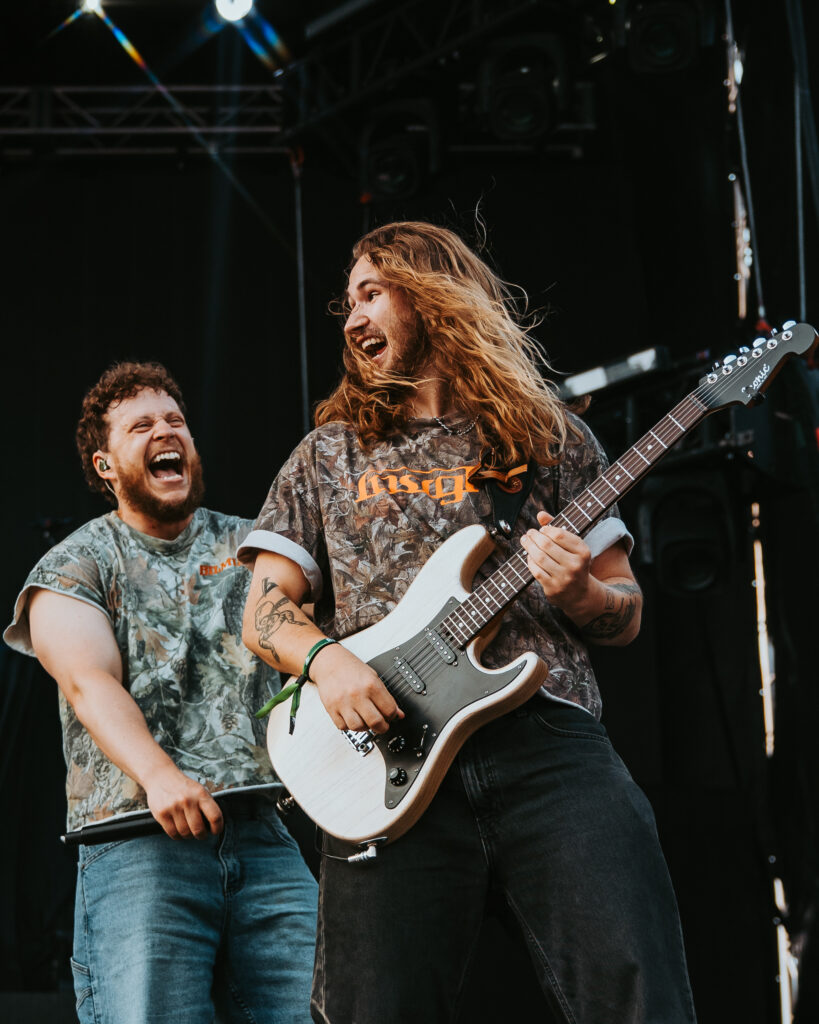
Jake, the guitarist and co-vocalist, spoke more about what he actually thinks about what this main idea means: “For me, redemption is going through something really difficult that you didn’t know how or when you would get through, and then realizing you’ve regained your footing… I used to think if I was confident enough and capable enough, everything would work out. But I kept feeling anxious. Until I finally said, ‘I’m going to trust God and truly let go.’ As soon as I did that, it felt like a weight lifted off my shoulders.”
While Autumn Kings embrace idealism and resilience, they ultimately point beyond self- reliance. Their songs acknowledge darkness but refuse to leave listeners there, offering redemption not simply as endurance, but as learning to let go of the burdens we cannot carry alone.
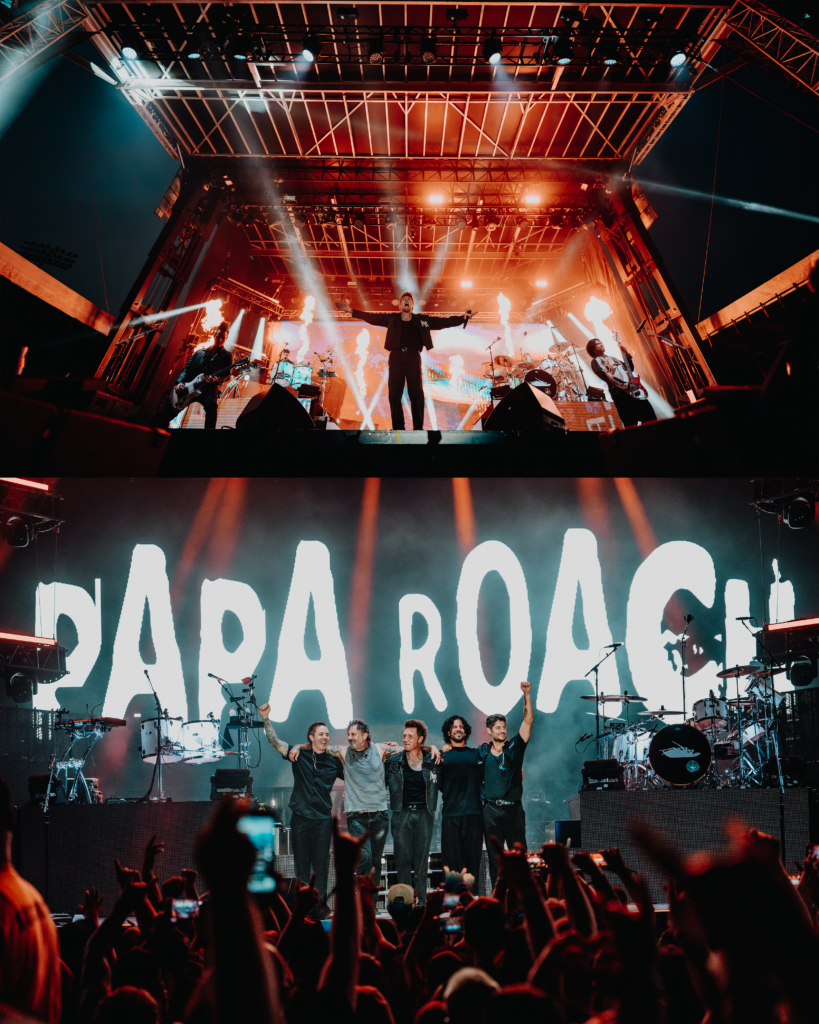
Another band that has a similar approach to these topics was the headliner of the day. Papa Roach also speaks to the idea of resilience and hope. Their set was vibrant and passionate. Frontman Jacoby Shaddix is openly a born-again believer in Jesus Christ, and that identity is evident. His positive, encouraging interactions with the crowd demonstrated the hope he lives by. Even the band’s song “Born for Greatness” points to their optimism by reclaiming identity after adversity. Their explosive, uplifting performance was a powerful way to close out the Upheaval Festival.
After spending two days listening to performances and sitting down with artists from across the lineup, one realization kept resurfacing. Beneath the distortion, breakdowns, and aggressiveness, nearly everyone was wrestling with the same fundamental questions dealing with suffering, hope, and beyond.
Showing Teeth’s Addison observed, “I think the bands that do the best get that way because they’re being the most authentic and raw, and you can really feel everything.” That authenticity was evident in many of the artists witnessed during the weekend. Whether discussing trauma, grief, addiction, disappointment, or faith, many of the bands were not interested in pretending life is easy. Heavy music remains a place where people can confront pain honestly and also look toward what comes after that opening up.
Aaron from Kingdom Collapse stated, “I think deep down, we all want more… we’re searching for something deeper… something real.”
Joe from Autumn Kings echoed that idea from another angle, saying, “I think it’s easier to talk about pain and depression in songs. It’s harder to find the hope and talk about it. But that’s what we always try to do.”
Throughout the weekend, the artists consistently acknowledged both humanity’s brokenness and its longing for something beyond it.
Heavy music gives a voice to questions many people carry and may never fully confront. It rarely offers easy answers, but it does acknowledge that everyone is searching for one. Over the course of the weekend, I was reminded that heavy music is not simply a genre that celebrates darkness. While some artists choose to remain in that place, many others wrestle with it, challenge it, and ultimately search for a way to overcome it.
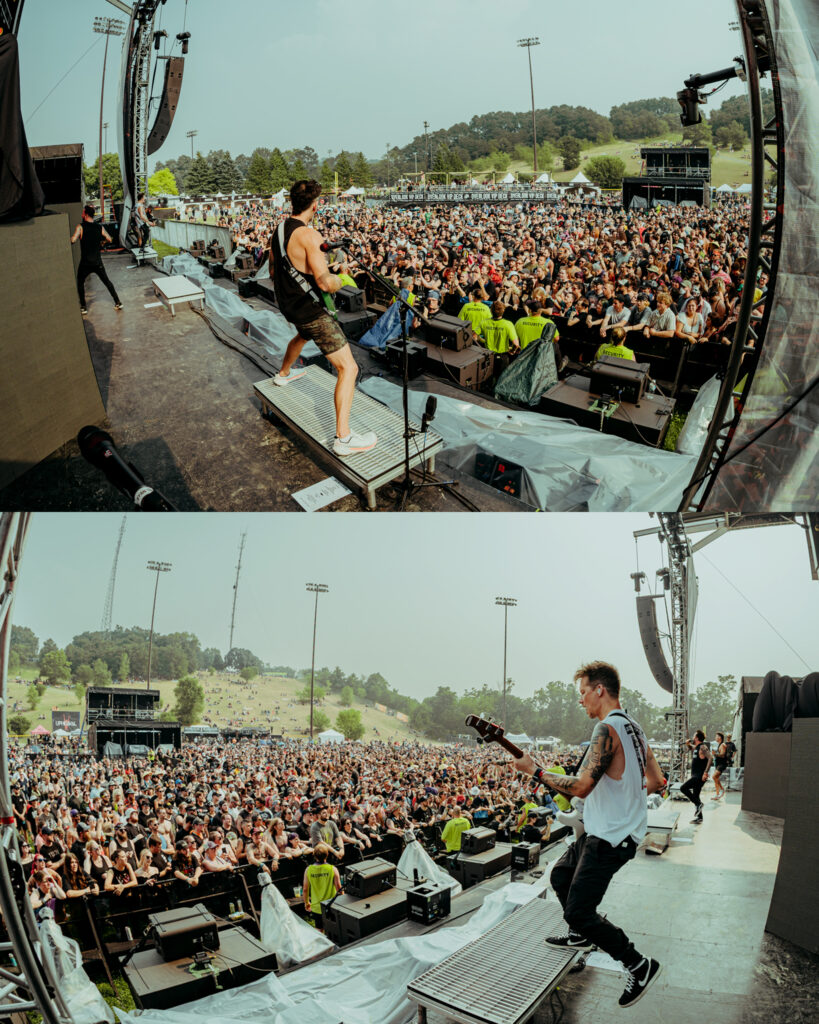
Music has always been more than entertainment. It gives voice to humanity’s deepest questions, and heavy music in particular has a way of amplifying the struggles of pain, hope, the search for healing, and more. At Upheaval, those questions echoed from every stage. What differed from artist to artist was not the longing itself, but the answers they found or a continued search.
Some looked toward cosmic spirituality. Others found meaning through resilience, human connection, or the rejection of religion altogether. Others pointed toward faith as the source of hope. Together, the festival became a portrait of the many ways people attempt to make sense of pain and find something worth holding onto in the middle of it.
As a Christian, these searches ultimately point toward a deeper reality: the human longing for redemption finds its fulfillment in Jesus Christ, who is Lord and Savior. So, engaging with artists whose answers differ from my own is not about dismissing their questions. It is about recognizing the universal ache behind them and understanding the places people are looking for hope.
Perhaps that is one of the greatest gifts of music: it invites us to listen. Not only to the songs themselves, but to the stories, struggles, and questions behind them. When listening, we are reminded that every search for meaning reveals something about the human heart and the honest longing it actually has.
(Photo credits from top to bottom: Elisemarie, Elisemarie, Elisemarie, Shootyourshot_bert, Shootyourshot_Bert, Elisemarie, Elisemarie, Elisemarie, JustinRoseMedia, Shootyourshot_bert)
About Author

I know a non-Christian band with mostly positive lyrics that I found on YouTube called Lovebites. Lovebites Is an all Japanese female power, thrash, speed and Neo-classical metal band. If you would like to look them up on YouTube, try these two videos-Dystopia Symphony + Beethoven’s Moonlight Sonata live. This is a song about Beethoven’s loss of hearing during his composing years. Next is a music video-Reaper’s Lullaby-released by Napalm Records. It supposedly reaches 240BPM. Also, all singing is a classical style and in English.