Sdug Bsngal Interview: Black Metal, Faith & Redemption
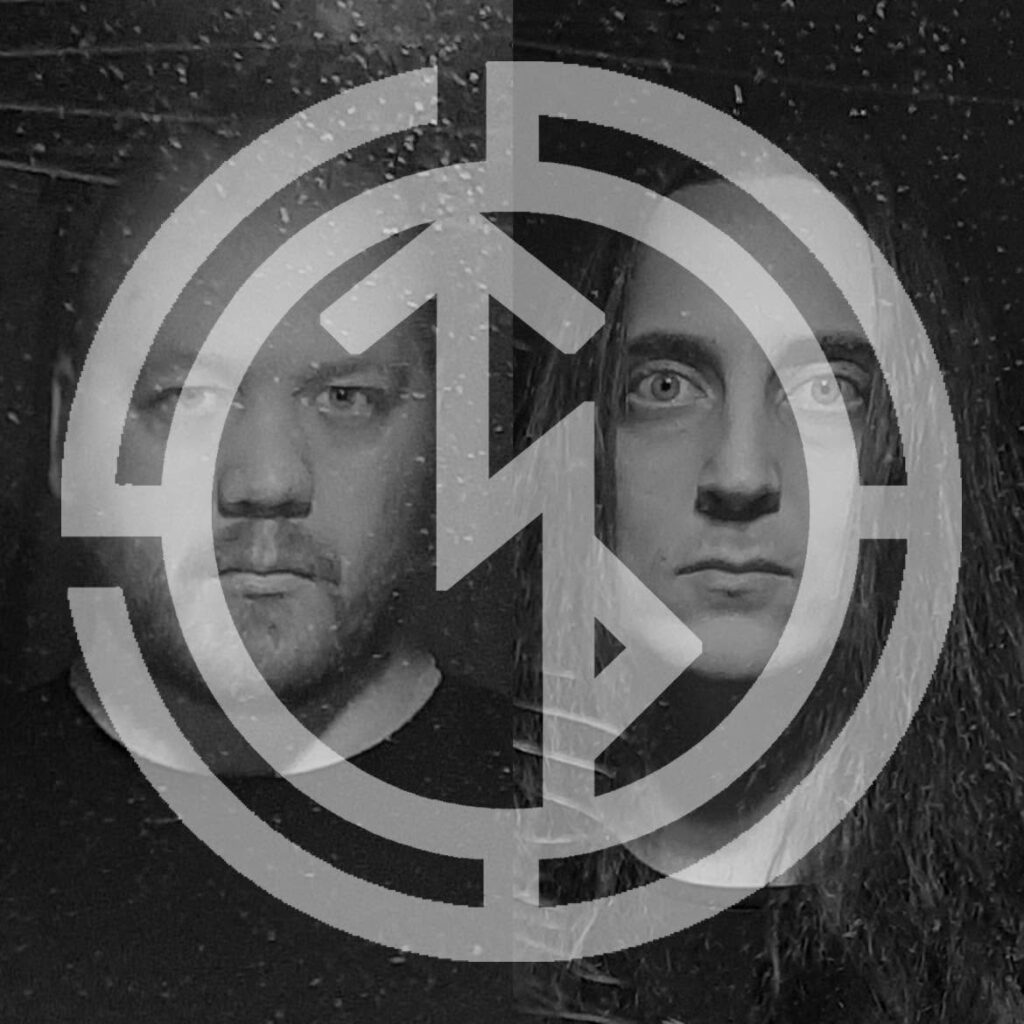
By Jillian Drachman| Heaven’s Metal Magazine
EDITOR’S NOTE: The following interview contains frank discussions of childhood trauma, sexual abuse, self-harm, suicidal ideation, and personal experiences with mental health treatment. These subjects arise within a broader conversation about faith, suffering, artistic expression, and spiritual transformation.
The views and personal experiences expressed by the interview participants belong to the individuals speaking and reflect their own journeys and convictions. Heaven’s Metal Magazine presents this conversation in the spirit of thoughtful dialogue and encourages readers to approach these sensitive subjects with care.
If you or someone you know is experiencing suicidal thoughts or emotional distress, help is available. In the United States, call or text 988 to reach the Suicide & Crisis Lifeline.
Interview: Johan Eddebo & Rickard Gunnerfeldt Discuss Sdug Bsngal & More
Sdug Bsngal represents the shared vision of geniuses Johan Eddebo of the wildly superb Reverorum ib Malacht and Rickard Gunnerfeldt, celebrated for the pioneering Lifelover. The enigmatic entity’s banner is Tibetan for suffering, and Sdug Bsngal presents a transformative walk through the blackest nights of unfathomable pain. Their creative universe is intensely difficult to face, yet, once one does, it’s impossible to turn away from. Sdug Bsngal’s art is infinitely rewarding and serves as a beacon of light and hope — a testament to the willpower, resilience, brilliance, and intellects of both its creators.
Sdug Bsngal’s story dates back to 1998, though Johan would not, despite being a friend to Rickard, enter the picture as a collaborator until the mid-2010s. Johan impregnates the project with Roman-Catholic mysticism while Rickard takes the approach of Jungian autobiography. In 2021, the pair unleashed their punishing miracle of a debut, Πάθει μάθος, and Pathei-Mathos II followed in 2024. The act of listening to these emotionally overwhelming albums becomes a revelatory spiritual exercise that does not allow listeners to remain passive. As Sdug Bsngal’s jaw-dropping effect demands speechlessness, so too does their material blow the mind wide open so that the mysteries explored by the duo may enter and occupy. Let it be known: Professor Eddebo holds his PhD in the philosophy of religion.
I’ve covered music for over five years, and I honestly can’t remember making such a beautifully unusual discovery; disturbingly innovative, Sdug Bsngal, while welcoming elements of various genres into their gorgeously organized chaos dubbed “anti-music,” takes a delightfully and uncompromisingly genre-hostile attitude. Yet, this formidable entity, above all, has clearly forged their own style. Rawness and piano-laced elegance entwine, for example, and the spirit of the unexpected lingers within each moment.
Even before learning of Sdug Bsngal, I already had the utmost respect for Rickard; due to their objective strength, Lifelover has remained one of my favorite bands of all time since I first stumbled upon their work. Moreover, “Höstdepressioner,” for which LR penned the lyrics, is still one of my favorite songs — a natural consequence of the specificity of mood and memories it evokes. Rickard was right there with the powerhouse from almost the beginning, having contributed to two of the first three songs created for Lifelover’s studio debut Pulver, “Nackskott” and “M/S Salmonella”; Pulver is currently celebrating its 20th anniversary.
While I’ve only become aware of Reverorum ib Malacht more recently (a fact I find perplexing, as I used to have a black metal column), I can say that they’re by far the best Christian Black Metal act I’ve ever heard. As is the case with Sdug Bsngal, Reverorum ib Malacht’s darkness is only equal to that of the finest black bands, yet it hits deeper than essentially all belonging to the movement, thanks to the collective’s focus on what is eternal, real, and Higher; Reverorum ib Malacht artfully cultivates arcane and immersive atmospheres with even more magic than the majority of those fierce and, for the cameras, unsmiling underground legends. Their offerings awaken awe and an existentially useful sense of anxiety that does not leave truth-seeking ears with that disgusting feeling caused by listening to tedious screaming glorifying a false image of Satan.
Of course, I was delighted to have the opportunity to converse with Rickard and Johan (through written means) and to be the recipient of their eloquence, wisdom, and honesty. These inspiring gentlemen were both incredibly generous with what they thoughtfully shared, thus I know that our conversation will prove enlightening to readers as well.
(Thank you to Zazen Sounds, Bardo Methodology, and Musique Machine for your informative interviews, which helped with the questions.)
Jillian: Would you like to provide any details concerning your evolution as a scholar, person of faith, and artist, Johan?
Johan: As for most people, that’s a long story full of incomprehensible tangents that later on seem to have taken on a disproportionate significance, a cup of tea and a chance meeting at the right time cascading over the years and such. I grew up a Christian in the protestant Church of Sweden, I became active in apologetics in my teens (since the culture was incredibly hostile to the faith), and I think my attachment to the arts started in earnest when I began reading and writing poetry around the age of ten. Something purely magical about good poetry. A kind of tacit intentionality that transcends words in the most tangible way.
This path, especially after I got stuck in philosophy, finally brought me into the Catholic Church.
Jillian: You’ve had quite a journey, Rickard, which you’re exploring on Subversion — a podcast that I urge everyone to experience on Patreon and Spotify while also following on Instagram. With the help of AI to compensate for my barely existent Swedish comprehension skills, I’m in the process of listening, and I find what you have already accomplished there to be fantastic, especially given your exceptional specificity. Of course, it’s heartbreaking to think of all you’ve had to go through. However, I deeply admire how you’ve alchemized your suffering, converting it into strength, knowledge, and values — as a result, you have a special understanding of the importance of being a great parent, for example. Do you have any introductory remarks about your story and the evolution of your personal philosophy? Perhaps you could extend your own invitation into the world of Subversion to readers while you’re at it?
Rickard: Thank you so much. Subversion is an auto-biographical coming-of-age about my upbringing including different categories of childhood trauma such as foster families, a mentally ill, substance-abusing mother, an alcoholic, absent father, and a sexually abusing stepfather to name a few. Since the Subversion podcast is in Swedish, I am in the process of translating it to English for it to be available as a book as well.
Of course, I can only speak for myself but from my experiences Nietzsche was right about his famous quote, “What doesn’t kill you, makes you stronger,” and I’ve used it as a mantra in my life. Contrary to popular belief, these traumatic experiences have strengthened rather than weakened me. These four decades have indeed been challenging to this day, but also rewarding. I still fight the good fight, so to speak, and I intend to learn as much as possible from it. Life is an interesting and unpredictable adventure, for sure.
Jillian: If one takes the right attitude to it, as you’re now encouraging others to do. I’m very happy to hear about the book, by the way!
The sonic landscape of Sdug Bsngal is obviously so incredibly unique. Johan, how did this “anti-music” project surprise you as it took on a more concrete form during the creation of your debut, Πάθει μάθος?
Johan: Interesting question. That’s mostly due to Rickard / LR / R. – he really takes experimentation to new heights every time we work together. Around the mid-00s, I remember looking for someone else who didn’t want to stick within the cookie-cutter format of established “extreme music”, and I always found the commodification and neutering of alternative music paradoxical, even a personal affront. R. was the perfect answer to this. He didn’t care about anything except the art and the mystery beneath.
Jillian: Rickard, maybe you have something to add here? Perhaps you could also enlighten us as to how Sdug Bsngal transformed during the years prior to when Johan joined? You’ve known him since 1998, which is the approximate date to which Sdug Bsngal traces back under a different name. Although Johan just stated that he didn’t begin looking for a creative partner like you until later (and explains more below), did the consideration of teaming up with him ever occur to you earlier in your friendship?
Rickard: From my subjective perspective, Sdug Bsngal started in 1998 when I wrote lyrics for Sjukdom (“sickness/illness”), a punk band that I had in mind. At the time, Johan and I went to the same junior high school.
In 2002, I think, it transformed into a black metal band that I had with Thøkn of Nattstrype, but we never recorded anything. The logo for that project is the one included in the booklet of the Lifelover album with the same name, and also in the digi-CD version of Pathei-Mathos II.
In 2010, I decided to change the name to Sdug Bsngal. It was difficult to find members, though, so nothing happened. Finding suitable and reliable members for my visions has always been an issue.
When Johan moved back to this hometown of ours as well, we discussed the possibilities of making music together. The result was far better than I could have imagined. I suggested that we’d call ourselves Sdug Bsngal and gave him an explanation as to why that particular name would fit our concept.
Jillian: Johan, you and Rickard share overlapping duties, so how do you approach collaboration on Sdug Bsngal’s intensely intimate (and for Rickard, largely autobiographical) material? I know you’re in Tokyo now, but in the past when there was more of a choice, did you tend to communicate ideas through file-sharing? Were there in-depth discussions? Is it hard to reconcile your different beliefs?
Johan: It had a thematical affinity with both of our backgrounds, but his openness and desire to forge something useful out of his suffering also resonated very strongly with not only Christianity’s approach to soulmaking, but to the human universal of a sacred rite of passage that you either pass through or die, so it felt very natural in extending and communicating these experiences through a symbolic framework resonating with Christian mysticism.
Jillian: Is there anything you do to get into the right mood for composing and also recording your hypnotic and overwhelming music?
Johan: Not really. You can’t really do anything, as such, I think. It’s like David Lynch says, the ideas are out there, you just have to catch them. Or let them in.
Jillian: Rickard, given what fueled the likes of “Kάθαρσις I,” how emotionally trying was it to bring such compositions to life (— an act that I consider to be quite noble)?
Rickard: While “Katharsis I” is a vulgar recollection of one of the numerous occasions when my former stepfather abused me sexually, it wasn’t as trying to record the spoken word for it as one could perhaps imagine since I’ve processed the sexual abuse many years ago and no longer consider myself a victim. Now it’s just something that happened decades ago. To someone else almost since a lot has happened since then. I even consider having my former stepfather as a guest on my podcast.
Jillian: I’m in shock due to your ability to… it sounds like forgive and renounce vengeance, though I don’t know if you would use those words. You’re an infinitely better person than me, and thus an inspiration.
Johan, where did the opera during the finale of Πάθει μάθος come from, by the way? I know you said there were no special appearances there other than your father’s scream…
Johan: Haha, did I say that? Yeah, it’s just me. It’s an original composition with the words from the Salve Regina.
Jillian: Wow! I’m impressed you handled that yourself! How would you describe the powerful cover that graces both Πάθει μάθος and Pathei-Mathos II and features Rickard’s birth mother, in your own words?
Johan: It’s so difficult to describe. On the one hand, it’s Job, cursing the day of his birth, wishing he was one of the stillborn covered up in darkness. On the other hand, it’s the answer to his questions: the sacred image of the Nativity, the suffusion of grace throughout every facet of creation, casting everything and everyone in a redemptive light. The happy fault of Adam.
Jillian: How did the decision to use the photo in question arise, Rickard?
Rickard: After becoming homeless in my late twenties, I moved in with my mother for some time. In one of her photo albums I discovered the photograph from when I was born. So I immediately scanned it and had the idea of using it for an album cover in mind for years. I wanted a cover that hadn’t been done before. Much to my delight, Johan liked the idea when I presented it.
Jillian: Emil Lundin handled the mastering of the Pathei-Mathos albums and lent a hand with mixing too, it seems. What has his reaction been to these works of art?
Johan: We didn’t talk much about it. At first, he told me he didn’t quite get it. After mastering the first one, he told me he “actually might be getting it now.”
Jillian: I’m actually really surprised he didn’t get it immediately. For those new to your work, how would you explain your use of darkness and suffering to purify and bring us into a closer relationship with our creator and his redemptive power? What would you say to someone with a shallow understanding of theology, who might hit you with out-of-context quotes like, “God is light; in him there is no darkness at all” (1 John 1:5), or, “Every thought that brings despair and heavy sorrow is from the devil” (St. Joseph the Hesychast)?
Johan: Yeah, all of that is true. We should never seek suffering or darkness as some privileged path to God or to enlightenment – I often see this notion in the broader black metal context, almost exclusively as an expression of pride.
But the darkness will come. Often when we expect nothing. And we should run to the cross when it is required of us. “For this slight momentary affliction is preparing us for an eternal weight of glory beyond all measure.”
Jillian: Johan is certainly correct that we should not unnecessarily bring suffering upon ourselves. It can be tempting yet harmful to take the attitude “Wo aber Gefahr ist, wächst Das Rettende auch” too literally. Rickard, you’ve asserted that even voluntary suffering can be valuable (but that you don’t want your fans to commit suicide) — when we decide to bear our cross and face the consequences, that is a good example. We have all kinds of “useful” forms of what might be described as self-harm in religion: Take Saint Benedict of Nursia and Saint Francis of Assisi throwing themselves into thorns to overcome lust, as palatable illustrations. Would you care to define the boundary at which choosing to assume pain just becomes counterproductive (or, let’s say, a cause for moral guilt)?
Rickard: In Lifelover, all of us engaged in self-harm. That was sort of our thing – individually and as a band – but I haven’t cut myself since the recording of our fourth and final album, Sjukdom, and I am no longer self-destructive in any way or the other. Back then it was the right thing to do and it increased my pain threshold even more. It’s merely a vessel of flesh anyway. When one has been through as much pain and suffering as I have, a paper cut or hitting your toe on a corner is close to nothing.
Jillian: As not all of the words are audible in the context of Sdug Bengal, which heightens the sense of mystery, is there anything more you would like to say about the two albums’ themes, Johan? I love how you include Bible verses, as those recited by guest Anna Schmidt, and how you sometimes jump from one area of Scripture to another. If I’ve understood correctly, you juxtapose the Lord’s punishments with his rewards and wish for us to “rejoice and be glad”?
Johan: Yes. That’s a very good way to describe it. One the one hand, it’s simply about strength through adversity, of overcoming the impossible trial, of passing through the “soul’s breaking-point and somehow not breaking”, realizing that there’s something Else that held you.
On the other hand, it’s about the Dark Night of the Soul. Of how the Divine is infinitely beyond any punishments, rewards or consolations; how God is greater even than nothingness; how Christ literally and actually and fully died in every sense of the word (mystery of mysteries) and yet conquered, how
even the darkness is not dark to you;
the night is bright as the day,
for darkness is as light with you.
Jillian: Like in “Katabasis”! Rickard, I noticed that you thank Ms. Schmidt, whose cadence was spot-on, at the beginning of your podcast. Would you like to say some nice words about her and/or her participation here?
Rickard: Back in 2010, I planned on committing suicide. I had ordered a buffet of pharmaceuticals – painkillers, sleeping pills, benzos… – from an online drug dealer and was going to check into a hotel on a Friday. Once inside the hotel room, I would swallow the pills with alcohol, get up on a chair and put a noose around my neck and cut my wrists (down the road, not across the street), and then kick the chair away. On Sunday, the staff would wonder why I hadn’t checked out but then it would be too late for revival.
Anna talked me out of it, however. She convinced me to tell my life story before doing so, which I am forever grateful for. So having her as a guest on our sophomore album was the obvious thing to do. She also made the Moksha artwork that’s included in the digi-CD version. She’s a wonderful person who gives an incurable misanthrope like yours truly a glimmer of hope.
Jillian: I’m really glad for Ms. Schmidt then — I hear that a lot of fans have claimed Lifelover has saved their lives, so I have no doubt that your existence has helped a lot of people, and the manner in which you tell your story will obviously be a continuation of your good work.
Johan, although, again, you didn’t start creating music with Rickard until much later, you’ve known him since 1998. Therefore, would you like to say anything in praise of Rickard’s character and abilities as an artist? As said, I’m really impressed by his resilience.
Johan: He’s a bit like biting into aluminum foil. He’s had a good run of the gauntlet for sure, and the world is a better place for his courage and for how he chose to deal with it. I felt we had a special affinity way back in the 90s when we first started hanging out, but I had to grow much to even be able to communicate with him in the artistic sense – I had to pay my own dues to properly understand where he was coming from, which took a couple of decades.
Jillian: Rickard, would you be so kind as to extol the merits of Johan as a person and an artist? Obviously, your different belief systems converge on some points, but they are not always reconcilable. So, I love that you two are able to still cultivate an atmosphere of mutual appreciation for one another, by all convincing appearances.
Rickard: Since I’ve moved around in most parts of Sweden like a nomad, I’ve met plenty of different individuals, but Johan is one of the most intelligent, sincere and kind-hearted people I’ve ever come across. It’s always a pleasure to converse with him about various subjects of the deeper nature. Our friendship and partnership, respectively, are built on mutual love and respect and every single one of our meetings starts off with the most genuine of hugs.
In Sdug Bsngal, he’s the perfect collaborator. We both listen to so many different genres, and neither of us believe that boundaries should exist within the world of art. Creativity is a blessing and should therefore not be limited by such mundane matters as genres. That would simply be profane. What does matter is the essence.
Jillian: This feels like a crass question, but do you believe that Sdug Bsngal can induce ecstasy in listeners? Bataille wrote about the connection between horror and ecstasy, and there is something about the band, maybe it’s the unapologetic, radical honesty and individualism exuded by you and Johan, that truly delights me (or rather gives me hope), even though it seems wrong.
Rickard: Whether listeners are ecstatic or not when listening to Sdug Bsngal I don’t know but I would hope so. What I do know is that there is this one person who lost his appetite when he heard “Katharsis I” for the first time while eating dinner.
Jillian: To be clear, that song in particular, once I learned its meaning, has inspired the appetite for violence in me, as I do not feel those who harm children have a place in this world. If any readers think that sounds un-Christian, they can know that Father Dan Reehil, for one, said that the death penalty should exist…
On a much different topic, Johan, Rickard apparently printed his thought-provoking poems on flyers and distributed them in psych wards even before his material was used in Lifelover, leading me to wonder what kind of effect they had on patients… Do you have any comment on that brilliant and highly amusing (but perhaps slightly evil) social experiment?
Johan: I actually never heard of this, and I’m curious as to what the response might have been. I really feel that mental health services in the West in general are woefully inadequate, that there’s a massively corrupt over-emphasis on medication, and almost no emphasis on the existential and traumatic roots of all of this suffering – so whatever could break the rhythm might have been helpful, and I would guess that this was Rickard’s intuition as well.
Jillian: Great reply, Johan. I will say that Mr. Tägtgren’s “Chemical Whore” exists for a reason — to spread awareness of those abused by the system, which sometimes prioritizes income over actual mental health, leading to sometimes disastrous consequences for patients. (While I feel hesitant to mention such things, as it’s neither my business nor my place, B of Lifelover was one of those individuals wronged.) Rickard, please tell us more about those flyers. Do you know what kind of effect they had on readers?
Rickard: It does sound like something I would’ve done, but I believe that it was either Jonas (B) or Johan (1853) who did that. But yes, Jonas was most definitely a victim of the so-called mental healthcare. And I’ve had other friends who’ve entered early graves due to the psychiatry’s negligence and incompetence. I have yet to know a single individual with an overall positive experience. It’s unfortunate how they seem to prioritize medical treatment rather than therapy to solve the actual issues.
Jillian: I’m really sorry to hear about your friends.
Johan, obviously, I love Rickard’s distinctive lyrical voice very much and still find a lot of value in all the negativity he brought to Lifelover! (I know he wrote the text for one song by Apati, which I mention because David, or “C9H13N,” has gone on a really cool spiritual journey.) What can you tell us about the poetry collection of yours that Rickard published?
Johan: It’s surprising how many within the old black metal communities, especially those who really dug deeply, somehow managed to come full circle and discover the cross. My poetry collection was just a vanity project where I simply collected much of what I’d written since I was a teenager up until then. It was vaguely related to my research project on death and the afterlife, but as much as I love great poetry, I was never a half-decent poet myself.
Jillian: I fail to believe that and believe you have taken the virtue of humility too far…
Rickard, is there anything you would like to say in praise of Johan’s poems and the possible challenges of publishing?
Rickard: When Johan mentioned his poetry collection back in 2015, my immediate response was that I wanted to publish it. Unfortunately, it’s so far the only book that I’ve published through Öströms. There are several other books that I’d like to publish sometime, such as his novel La Mort de la Mort and his translation of Kaczynski’s Industrial Society and Its Future, but for the time being it’s too expensive.
Jillian: Johan, it was Rickard who connected you with Reverorum ib Malacht. Can you pinpoint exactly when and how you were welcomed into the fold there? It must have been a relief to join forces with other Roman Catholics, if you had converted by then, in a mostly Protestant country.
Johan: Oh yeah, this is another long story – both of us were actually living down south at the time, and didn’t move back up north for another few years, but that’s beside the point. I talked to Rickard about wanting to make some proper Christian black metal, and he got me in touch with Emil, who was enthusiastic about having me on Malacht’s ongoing project (Mysteriis) back in 2014.
That’s certainly a key part of what got me into the Catholic Church, and I started going to mass around 2015. Soon thereafter I started studying the works of Aquinas in earnest, and then it was basically done.
I was sort of a lukewarm protestant up until then; I had faith, of course, but it was full of compromises, unformed and shot through with bad theology. This had to be rooted out, which was quite a painful and difficult process.
Jillian: That makes me wonder if Rickard has ever attended church with you, Johan, and/or other Malacht members… Rickard, do you have any reflections you’d be able to share about introducing Johan to Reverorum ib Malacht and what he’s accomplished with that wonderful entity?
Rickard: A couple of years ago I joined Johan for the Easter Vigil, if I remember correctly, at the Catholic church to give it an honest try. It didn’t do anything for me, though.
Friends in the black metal community have told me that they think Reverorum ib Malacht is darker than the majority of black metal and I agree.
Jillian: Me Too!
Johan, please describe your role in Reverorum ib Malacht. I know you contribute vocals. In an old interview, you said you don’t write for the group. Has that changed?
Johan: I haven’t been part of the releases over the last couple of years, since starting to work in Japan, but I hope to contribute more in the future. I did write some lyrics, but not very much, and I contributed compositions (but not very much), and I guess that “littleness” was what I was trying to indicate.
Jillian: Why did you decide to go by “Johan Olof” in Reverorum ib Malacht? I know you’ve had some other names there, and that the outfit has playfully added fictitious members.
Johan: I don’t remember. That’s my middle name, and I actually have no idea how that came to be. Could be that I wanted to express the connection to Norse culture at the time, but I’m not sure.
Jillian: It is my understanding that, despite the impressive spiritual devotion of Emil and Mikael, for example, not everyone that has been involved in aiding Reverorum ib Malacht’s mission has been Christian. Does that ever make things difficult behind the scenes, or is it just something you have fun with? Is there anything we should or shouldn’t be saying to our more traditional black metal friends and associates?
Johan: No, it was always very respectful and friendly. I’ve gotten so much more disrespect from seculars or the “spiritual but non-affiliated” than I ever saw from within the black metal community or even from outright Satanists.
Jillian: On that topic, more or less, it seems that Emil was kind of disappointed that he didn’t really receive any pushback from the black metal milieu after converting and coming out as Christian, since it, of course, serves as one of the many proofs that most black metal people don’t even believe in their own flawed ideologies. Have you ever felt in danger due to other members of the black metal community, which is known for death threats, often empty but sometimes not?
Johan: No. I think everyone always had the sense that there was more in common between those who earnestly tried to get close to the Cross and those rebellious seekers within black metal that clung to the dark and disturbing. In a profound sense, black metal and Christianity alike speak the truth about the human condition and the depths of its corruption (although they naturally differ on a deeper level). Mainstream secular society, and quite often the commodified “churchianity” as well, does not as readily acknowledge this and related truths. I think a significant part of black metal’s rebellion targets this hypocrisy or false ideology (in this sense, it’s Nietzschean in a good way), but a Carthusian monk tends to be respected.
Jillian: Do you believe that some figures in the black metal scene possess black magical abilities, Johan? (It seems that a lot of the pathologically envious bipedal inferiority complexes who claim to use such powers against their brothers on earth are what one might call scared little addicts…)
Johan: This question necessitates a discussion around the definition and meaning of “magic”, and I think J. M. Greer provides a very useful approach here (see e.g. Blood of the Earth), although he’s a Neo-Platonist and not a Christian.
In brief, I believe magic is real, but it’s not about the kind of mechanistic miracle-working we tend to think of as perhaps per the Harry Potter universe, but rather something that influences the depths of consciousness, the spirit, the fragile and mysterious relational substance that is the very foundation of sentient life. In that sense, magic is both much more and much less powerful than how we tend to portray it in our post-Enlightenment caricatures – and much more ubiquitous. Ritualized mass culture; the social formation of the crowd through propaganda; life mediated through digitized representations – all of these seemingly mundane phenomena are deeply intertwined with magic in this sense, and absolutely no less associated with the demonic than the more explicit approaches one sometimes sees within the framework of black metal.
But this is a complex discussion that cannot be done much justice with a few lines like this.
Jillian: Faith is, of course, the strongest weapon with which to combat assailants. This brings me to the fact that Vad är inte sju huvud? comes with certificates allowing recipients to consider themselves ordained healers — a truly excellent idea. Have you ever seen any instances of miraculous healing in your own life?
Johan: Yes. And the Faith, precious, immutable, ineffable holy gift, should never be regarded as a means to any end, but rather the incomprehensibly and infinitely sacred presence of the Lord in the secret recesses of our very selves.
“Seek not your life from any other
His power alone is sufficient for you”
I have been raised from the very depths of darkness. While I haven’t encountered anything akin to miraculous healing of physical ailments, what I was given was something, to myself, far greater. The resurrection of the spirit from nothingness; the resurgence of life out of death itself.
Jillian: Perfect answer! Rickard, extreme physical activities and discipline can obviously be a way of strengthening the spirit. You’re a lifter, so perhaps you can take us through how that aspect of your routine has resulted in overall growth?
Rickard: No matter who you are, life is filled to the brim with setbacks. I prefer to view them as spiritual workouts. For me, powerlifting and my spiritual work complement each other. And damaging the tissue is necessary for growth. But I also enjoy hiking up mountains. It requires effort but when you arrive at the top it’s euphoric.
Jillian: Exactly!
Johan, I love that Emil has called out the hypocrisy and lack of talent in the black metal community. The supposed Satanists who define it obviously rip so much off from Christianity, including Gregorian chanting, and some of these mostly kind but malleable fellows even allow themselves to be dragged to church during holidays. It’s my understanding that you, nevertheless, perceive worth in black metal insofar as it (on rare occasions and in accordance with its founding principles) strives toward authenticity and rebellion (as you confirmed above), reflects nature, etc. (The mostly brain-dead movement does somehow manage to keep a few real scholars like Malach Adonai of Dødsengel.) Please feel free to state how you’re feeling about the genre at this current moment and/or if you still listen to any black metal bands.
Johan: Good and difficult question. I still appreciate the genre, because in some sense, it uniquely observes and hallows a certain facet of divine truth. Black metal is, in its heart of hearts, the cry from the cross, the rebellion of Christ, the Creator:
“Nay, (the matter grows too difficult for human speech,) but let the atheists themselves choose a god. They will find only one divinity who ever uttered their isolation; only one religion in which God seemed for an instant to be an atheist.” (G. K. Chesterton).
Jillian: May I solicit current thoughts on black metal, Rickard?
Rickard: Considering my past membership in Lifelover, many would perhaps be surprised that I’ve actually not once listened to what’s referred to as “depressive/suicidal” black metal (DSBM). I’ve always preferred aggressive black metal because it resonates with my rebellious nature. And while I don’t listen to black metal as often as I used to, it will always have a special place in my heart. Black Metal is full of different personalities but I think that the common denominator is rebellion. There are, of course, many tourists who don’t belong and it shows.
Jillian: For readers, I’ll just add that I don’t consider the term DSBM to apply to Lifelover, which was such a complex entity, capable of making audiences feel all types of emotions. Lifelover wasn’t like any of the other so-called “depressive” bands or really any band.
But speaking more of black metal rebellion, I’ve read that you’re an anarchist, Johan. Would you agree with Novalis, to whom Horna semi-recently paid tribute, here, “True anarchy is the generative element of religion: Out of the annihilation of all existing institutions, she raises her glorious head, as the new foundress of the world”?
Johan: Yes. 🙂
Jillian: Many of us can admit that Christian Black Metal often sounds more than a bit silly — the form seems to clash with the content. However, Reverorum ib Malacht is perhaps the only band that makes it work 100%. Would you like to give your own perspective on why that is, Johan?
Johan: Thank you for the kind words. That means a lot to read, to have had the privilege of being part of something that could be considered in this way and held in such high regard.
I don’t know why. Or perhaps I do, but it’s impossible to express. It’s like describing what water feels like to someone who has never touched it, and having them understanding exactly what I mean. It’s tacit.
I don’t know why this was given to us. It was entirely undeserved, and I pray that it bears fruit and leads none astray.
Jillian: As a friend to Reverorum ib Malacht, you might have a theory explaining the band’s supremacy, Rickard?
Rickard: I need to clarify that I actually don’t know any of the other members. I had a brief correspondence with Emil maybe fifteen years ago, and I’ve had some correspondence with Johan Gustafsson in the present but that’s it really. But to answer your question: they do their own thing which hasn’t been done before so they stand out from the generic crowd.
Jillian: Johan, you and Emil have made some artfully funny statements, and fans can’t help but smile upon experiencing some of the aspects of Reverorum ib Malacht, despite the endeavor’s seriousness — the title De Mysteriis Dom Christi is a particularly amusing and noble attempt to reclaim what is “ours.” (How liberating it was to break my copies of De Mysteriis Dom. Sathanas earlier this year!) How do you perceive the connection between spirituality and humor?
Johan: Arthur Köstler’s The Act of Creation is perhaps the best work on this topic. Humor, aesthetic experience, philosophical insight – all of these are in a sense one and the same thing, just like the good and the true and the beautiful ultimately expresses the same fundamental reality. And in a very profound sense, the only proper response to bright daylight of the Gospel is nothing less than joyful (tearful) laughter.
“The tremendous figure which fills the Gospels towers in this respect, as in every other, above all the thinkers who ever thought themselves tall. His pathos was natural, almost casual. The Stoics, ancient and modern, were proud of concealing their tears. He never concealed His tears; He showed them plainly on His open face at any daily sight, such as the far sight of His native city.
Yet He concealed something. Solemn supermen and imperial diplomatists are proud of restraining their anger. He never restrained His anger. He flung furniture down the front steps of the Temple, and asked men how they expected to escape the damnation of Hell. Yet He restrained something. I say it with reverence; there was in that shattering personality a thread that must be called shyness. There was something that He hid from all men when He went up a mountain to pray. There was something that He covered constantly by abrupt silence or impetuous isolation. There was some one thing that was too great for God to show us when He walked upon our earth;
… and I have sometimes fancied that it was His mirth.”
G. K. Chesterton
Jillian: Wonderfully put! Looking back at the Swedish Black Metal scene at this point, do you feel that any moral tales can be drawn from it, as certain aging Satanists have observably degenerated into pathetic messes, on the one hand, while some rather beautiful souls have emerged, on the other, thanks to what could be described as honest strife and a philosophy embracing something akin to Goethe’s call, “Stirb und werde!”? (Note: I may have made an error in formulating this question, as the disastrously rotten apples to whom I was referring seem to be the exception and aren’t representative either of any scene or Sweden — a country that has clearly produced an especially remarkable pool of talents.)
Johan: We’re all “pathetic messes”, kid. 🙂
Yes. I think these men and women carry their strange and often repulsive crosses for reasons we will never fully comprehend in this life.
“It’s this potentiality, this incredible possibility, of the knowledge of God of such a kind as even to be sharing in his nature, which Christianity holds out to people; and because of this potentiality every life, right up to the last, must be treated as precious. Its potentialities in all things the world cares about may be slight: but there is always the possibility of what it’s for; we can’t ever know that the time of possibility of gaining eternal life is over, however old, wretched, ‘useless’ someone has become.”
Elizabeth Anscombe
Jillian: That’s a beautiful answer. I struggle though because it can be hard to think that there could be any value in those most deeply affected by the spirit of malice.
Rickard?
Rickard: “Death,” or letting go of one’s ego, is a necessary sacrifice for growth. Most people choose not to since awakening is a painful experience. But what others choose to do with their lives is really none of my concern. Neither do I have the authority to make any decisions for them, nor do I have any interest in doing so. Having serious problems with authority, I wouldn’t want anyone to interfere with my own personal path, and so I don’t think that I or anyone else should do so to others. In both politics and religion many people believe that out of eight billion people they are the enlightened ones and feel the need to convert others. A narcissistic trait in my opinion.
Jillian: I used to deem moral criticisms in the realm of art, or what we sometimes wrongly consider to be “art,” a form of ignorance. After going too far into Satanic Black Metal, which perverts the truth and enables idiocy, I naturally feel differently. As Christians, Johan, do you think we should be more mindful of what we allow to enter our hearts through our ears? Do you support the following sentiment expressed by Saint Basil the Great, “The ear should not be corrupted by shameful melodies,” or are we to avoid being too literal in our understanding of these words?
Johan: I do think we should be mindful. But we should also be open to the often incomprehensible beauty of the world. We have to, paradoxically, be wise as serpents and innocent as doves in relation to aesthetics as well as everything else in the world.
Jillian: Johan, do you have advice for Christians looking to become involved in academia and/or music on how to find “their people,” rather than collaborators and even (propagandizing) mentors who will lead them astray?
Johan: I think academia has to be rebuilt from the ground up. There’s a storm coming, and almost everything will be uprooted. Any Christian, any honest seeker of the truth, any lover of knowledge for its own sake, had better retreat into the cloister, reading books by candlelight rather than engaging with the chaotic and corrupt mess that academia has become. I think Rod Dreher’s general sentiment of withdrawing and rebuilding is the appropriate one here, in terms of academia as well as politics or any other civic engagements.
But for those who find themselves in these trenches (like myself), prayer is really all we have.
The lived expression of faith, hope and charity, as always.
And, as always, charity is the greatest of them all.
Jillian: Agreed. And those structural flaws in need of demolition within academia are precisely why, as we await reconstruction, students must view professors like you, who can provide the sense of sanity that proceeds from hearing the Truth, as a godsend.
Now, Rickard, would you like to let readers in on your exciting new project? Are there any other plans that you would be willing to reveal here?
Rickard: Last year, when I was listening to an episode of the Swedish pop culture journalist Fredrik Strage’s podcast, featuring Ordo Rosarius Equilibrio, I learnt that they now reside here in Boden. So I reached out to Tomas Pettersson and asked him if we could meet up. Since then we have a project together and are almost finished with our debut full-length album. It’s unlike anything I’ve ever done before.
Jillian: I can’t wait to hear the result. Of course, that’s amazing news!
Thank you, Rickard and Johan, for the fantastic interview.
Of course, I ask everyone to follow Sdug Bsngal on Facebook, Instagram, and Bandcamp.
In addition, Reverorum ib Malacht can and should be followed on Spotify and Bandcamp.
About Author