


Feature: The Heavy Christian Music Festival Boom
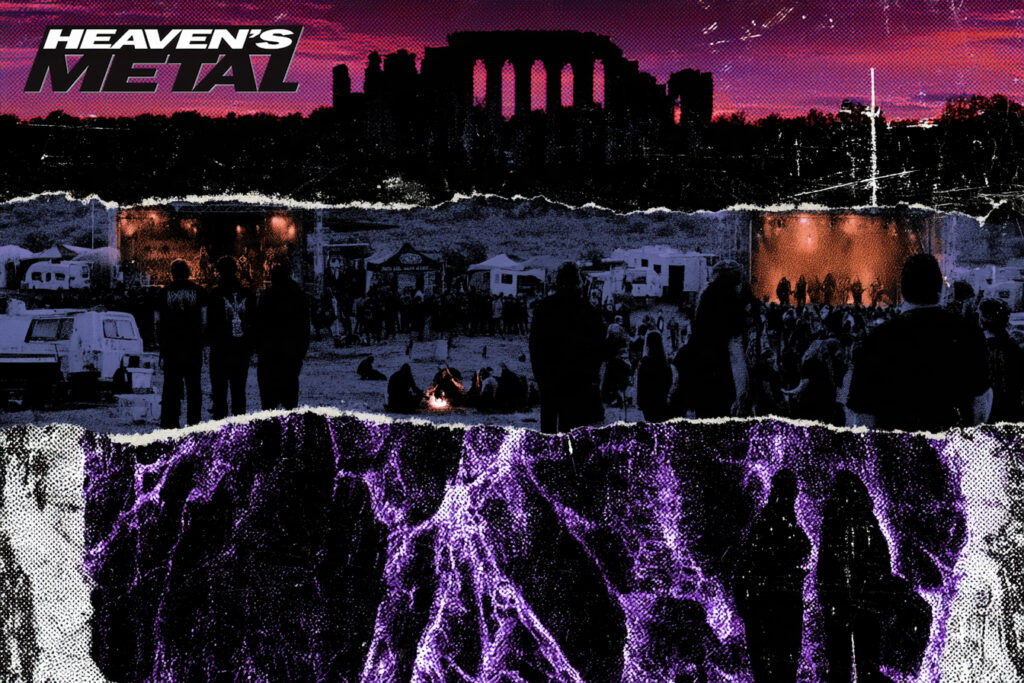
By most measures, heavier Christian music should be a footnote. It gets very little radio play, draws few arena headliners, and survives almost entirely outside the institutional machinery — labels, festivals, distribution — that built the CCM mainstream. And yet it has built a unique and thriving ecosystem of its own: highly identifiable merch, a fan base that treats social media less like promotion and more like liturgy, and a festival circuit that keeps growing. The hallmark of that ecosystem is not its size but its appetite.
Joseph Keegin, writing for Plough, traces this trend to the early ’90s, when “spirit-filled hardcore” bands were exiled to church basements rather than welcomed on stages and sanctuary halls. That exile, Keegin argues, became an accelerant rather than a setback. Denied traditional venues, the genre made its own ecosystem and the isolation that should have starved it fed it instead.
Creation Festival, once billed as the nation’s largest Christian Music Festival, closed after forty-four years in 2023, its organizers citing “many factors” and promising a “New Vision” that never quite materialized. Creation’s main stage surrounded by acres of empty fields was where old school giants of CCM performed in their prime: Steven Curtis Chapman, DC Talk, Rebecca St. James, and more. A few hundred feet south, was the “Fringe” stage which introduced alternative artists like Spoken, Disciple, Skillet, RED, and John Reuben to festival goers.
Creation’s heartbreaking closure was like the dying-off of an apex species. In its place, a torrent of others emerged: Uprise Festival in Pennsylvania, Chains Unchained Festival in Missouri, Undead Revival in Ohio, Kingdom Come Festival in Indiana, Breaking Darkness Festival in North Carolina, Immortal Festival in Ohio, etc.
The inclusion of heavy Christian artists in new or established secular festivals, like Furnace Fest and Inkcarceration, has continued to strengthen the genre’s ecosystem by splicing and absorbing new fans. Similarly, adding a “Rock” or a “Hip-Hop” stage to existing mainstream Christian festivals is becoming more common as those stages draw from similar fan bases. While none of the named Christian festivals draw Creation’s old six-figure crowds yet, all of them keep running, and new ones keep appearing.
Phil King, executive director and chief executive officer of Undead Ministries, produces the annual Undead Revival in central Ohio. King attended Winter Jam in Columbus in 2024, and after experiencing what he calls a “huge worship service with other believers,” King came away wishing there were a heavier equivalent.
Undead’s showbill and participants have grown considerably over the past three years, from four bands and 98 presale tickets in 2024, to 14 bands, two stages, and a fairgrounds venue by 2025, to this year’s 24 bands, a Friday pre-party, and a Sunday Bible study — all achieved, in King’s words, without “the pockets or resources at our disposal that other festivals do.” The success of Undead Revival, without an institutional benefactor doing the expanding for it, demonstrates an ecosystem responding to genuine appetite rather than manufactured demand.
Stephanie Jordan‘s coverage of Undead Revival captured the founders’ own framing of the event as an act of reaching “those going through life as literally ‘the walking dead,'” language that fuses evangelism with the genre’s own unique aesthetic rather than smoothing it over.
King observes that “a lot of smaller festivals” keep appearing and credits the rise to an obvious reason: no single mega-event can replicate what a regional, underground heavy/hardcore show gives a fan who wants to feel like part of “the scene/family.”
Wayne Nale, founder of Chains Unchained Ministry, offers a similar perspective. Chains Unchained Festival, rooted in Missouri, began after Nale and his team spent several years attending Kingdom Come Festival in Kokomo, Indiana, and returned home determined to “take what Kingdom Come Festival was doing, put our own spin on it.”
The region’s Christian metal scene had, in fact, already died off once: a longtime venue closed and reopened as a secular hip-hop club, ending what had been “a really strong Christian metal scene” in the area. Rather than mourning that loss, Nale’s team built a new festival in its place, and the region has since seen what he calls “kind of a rebirth of clubs doing Christian Hard Music shows.”
Nale’s numbers since 2018 track the same modest, appetite-driven growth King described in Ohio: from roughly 150 attendees in year one to 400 to 500 regular attendees now, drawing fifteen to sixteen bands across two days on an annual band budget of six to ten thousand dollars. Nale estimates that 80 percent of attendees return year after year, a retention rate he describes simply: “it is a family reunion every summer.”
That figure alone argues against reading the festival’s modest size as weak demand; it argues instead for a fan base whose enthusiasm compounds rather than churns. Nale intentionally mixes seven or eight returning acts with new bands each year to keep attendees coming back and attracting new participants. Nale rattled off a list of once-unknown names that “blew everyone away,” among them Brotality, Divided Me, Cleansing of the Temple, and Drive Thru Society. His clearest confirmation that something more than a concert was happening came in year one, when the band the Persuaded stopped its set after a single song, moved through the crowd, and began praying over people — the moment, Nale said, that convinced him “God was deep in this.”
Asked where the scene goes next, Nale is as candid as King: Christian hard music has lacked a defining flagship act since For Today stopped touring, and any single mega-festival would require box-office names the genre does not currently have. What he sees instead, and welcomes, is proliferation — “so many smaller shows are starting up” — with promoters from other regions regularly asking him how to replicate the Chains Unchained model in their own towns.
Like with everything else in this industry, money matters. According to VoxBooster, the average single concert ticket is $132.62 and stadium tickets are $216.13, whereas the price of festivals is between $70 and $200 with add-ons for upgraded experiences. A single festival ticket buys access to a dozen or more bands across a weekend, which turns the opportunity of discovering a new favorite into a guarantee rather than a gamble. Fans get access to new bands at wholesale cost and see old favorites at full volume, often on the same bill.
Data from Pollstar indicates that festival gatherings represent the single most rapidly expanding segment of live performance, outpacing traditional concerts. Valued between $41 billion and $54.5 billion heading into 2026, the global ecosystem for live music continues to expand, driven by a 17.7% surge in festival revenue alone.
Skeptics may note that Winter Jam and similar arena tours and festivals still outdraw any metal fest by raw attendance — the attendance at one Brandon Lake concert probably dwarfs the entire “Rock Stage” footprint at any Christian festival. Phil King is candid, too, about the structural limitations of the heavy scene. A limited number of Christian metal bands, circulating among a growing number of regional festivals, is likely to drive lineup duplication and fan fatigue, King said. He also doubts any single event will consolidate the scene the way Creation Festival once did, but King believes the future of heavy Christian music lies in the modest, sustainable growth of regional events.
Scale and size were never this ecosystem’s signature trait. Ask why a scene this small, a sliver of the broader CCM industry, drawing from a fraction of its fanbase, keeps producing new festivals. The answer looks less like a scene exiled to church basements and more like a scene rivaling the mainstream.
Bibliography
Jesus Freak Hideout. “Creation Festival Comes to An End.” March 28, 2023. https://www.jesusfreakhideout.com/news/2023/03/28.CreationFestivalComestoAnEnd.asp.
Jordan, Stephanie. “Review: Undead Revival (2025).” Heaven’s Metal Magazine, October 31, 2025. https://heavensmetalmagazine.com/index.php/2025/10/31/review-undead-revival-2025/.
Keegin, Joseph M. “The Death and Life of Christian Hardcore.” Plough, February 25, 2022. https://www.plough.com/articles/the-death-and-life-of-christian-hardcore.
King, Phil, email message to author, September 17, 2026
Nale, Wayne, email message to author, September 22, 2026
Pollstar. “2025 Year End Business Analysis—A Return to Earth: Grosses & Ticket Sales Drop, Averages Increase; Beyoncé, Oasis, Coldplay Top Tours; Venues: Stadiums Rock!” December 12, 2025. https://news.pollstar.com/2025/12/12/year-end-business-analysis-a-return-to-earth-2025-grosses-ticket-sales-drop-averages-increase-beyonce-oasis-coldplay-have-top-tours-venues-stadiums-rock/.
VoxBooster. “Live Music Industry Statistics (2026): 45+ Data Points on Touring Grosses, Ticket Prices, and the Live Audience.” Updated July 13, 2026. https://voxbooster.com/blog/live-music-industry-statistics-2026/.
About Author
