


Review: Kekal – Beyond the Glimpse of Dreams
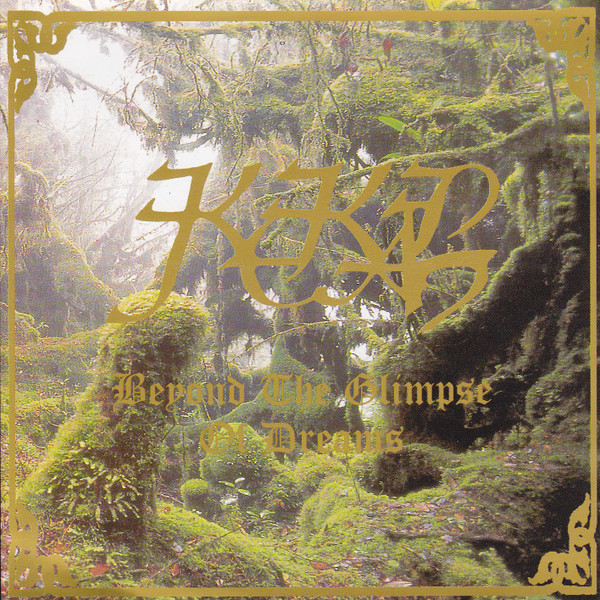
From the Vault Review: Kekal – Beyond the Glimpse of Dreams
Few bands are as enigmatic, as chameleon-esque, and as esoteric as Indonesia’s Kekal. One of the very first acts to play black metal and be openly Christian, Kekal had their work cut out for them. Unlike other black (and unblack) acts at the time, they didn’t exactly come from a black metal hotspot; indeed, if you thought Japan’s Sigh and their connections to the early Norwegian black metal scene via Euronymous were a surprise, imagine a band composed of four guys from Jakarta, Indonesia peddling symphonic black metal with Christian lyrics and propelled by a drum machine.
When Kekal released their debut full-length back in 1998, Christian black metal was still just getting started; Horde had released a definitive unblack metal document with Hellig Usvart, Antestor were enmeshed in all kinds of controversy simply for the fact that they existed in the first place, and others such as Crimson Moonlight and Drottnar were just getting started. Secular black metal had hit the mainstream by this point, with Dimmu Borgir releasing the ultimate pop-black-metal album in Enthrone Darkness Triumphant, Cradle of Filth (whether you consider them black metal or not) were enjoying peak infamy in the wake of their classic Dusk…and Her Embrace, and veteran acts like Darkthrone, Emperor and Immortal shifting their sound into something slightly more palatable. But Kekal were something different entirely, obviously not concerned with popularity, but with the formation of their art, driven by both theological and artistic conviction.
Though Beyond the Glimpse of Dreams is decidedly not even close to being as progressive-minded and genre-mashing as Kekal’s later work would be, that’s not to say that their debut is just a typical black metal record on any level. Kekal, much like Extol, love throwing all kinds of influences and styles into the mix, and this record, in a similar way to the latter’s Burial, does just that all the while maintaining a coherent black metal core.
One thing you’ll probably notice right away is the almost boxy-sounding clatter of the drum machine banging away in the background of every track, mechanical and almost soulless in a way, yet somehow fitting the almost gothic-tinged black metal that it drives forward. The vocalist on this album, simply named Harry (no crazy pseudonyms here!), rocks a very high-pitched raspy shriek reminiscent of the kind you might hear on an early Hecate Enthroned or Merrimack record, but combined with a croaky style more akin to Lord Ekklektus of Golgota, Abbath of Immortal, or Unsadisticoth of Vomoth.
Stylistically, the band is somewhat all over the place, though not like they would be on subsequent releases. While “Behind Those Images” showcases a more traditional style of raw black metal, the album experiments broadly with a multiplicity of influences and stylistic aspects. For example,“Armageddon” sounds like a mash-up of very early Immortal (think Diabolical Fullmoon Mysticism) and Dark Tranquillity circa-The Gallery, “My Eternal Lover” seems to echo In Flames’ “Everlost Pt. 2,” and “Escaping Eternal Suffering” even sees the band utilize My Dying Bride-style death/doom riffing. Beyond the Glimpse of Dreams makes heavy use of lush keyboard work, which will no doubt put some black metal fans off (there is a contingent of hardliners out there who pretty much view keyboards in black metal as anathema), but is probably part of the reason (aside from the high-pitched vocal shrieks) why this particular album is often compared to early Cradle of Filth material. Naturally, a certain sense of the gothic comes into play via the keyboard work, but such elements are also augmented by the clean female vocals provided by three separate singers (simply listed as Julie, Hana, and Vera [who would also do vocal work on the band’s next album, Embrace the Dead]). Hammering drum work in the style of Extol’s “Celestial Completion” is heard on “The Day the Hatred Dies” and “Rotting Youth,” while clean guitar interludes more akin to something you’d hear off of Extol’s self-titled 2013 record make an appearance on “Spirits,” “The Conversion,” and “My Eternal Lover.” From even a cursory listen, Kekal weren’t simply another black metal band; no, the progressive elements were always there even on their earliest work.
Sadly, in my view, Kekal would later morph lyrically and thematically into something entirely different. Though the Christian anarchism angle that later developed was and is not all that shocking – see anything from bands like Borgazur to famous Catholics like Dorothy Day to certain strains in Anabaptist thought – Kekal’s eventual adoption of Gnostic subject matter and themes was too much to stomach for some Christian metal fans (if you’re not sure what the various forms of Gnosticism were all about, the works of St. Irenaeus of Lyons and St. Hippolytus of Rome are great resources in this regard). Thankfully, none of those themes are present from what I can see on this album. Instead, most of the lyrical content here is fairly standard fare for early unblack metal – songs about apocalyptic end times themes, religious hypocrisy, the downfall of satan, and the atonement. Some of it in my view actually echoes similar lyrical thrusts found on songs from the earliest Drottnar era, such as “Doom of Antichrist” (see “Armageddon”) and “Spiritual Battle” (see “The Conversion”). All of that said, the Gnosticism of their later works is thankfully nowhere to be found.
Before Kekal went down the Gnostic route, they were a band whose lyrics were very openly Christian-themed, and a good chunk of their discography reflects that worldview before their later shift into a different theological direction. Though some Christian metal fans chose to part ways with the band due to this shift (especially seen on Quantum Resolution), their earlier records remain classics of highly-experimental Christian extreme metal that are worth checking out if you’re a more daring listener.
If you’re looking for something different in the unblack metal scene to listen to and aren’t afraid of a band that pushes the envelope, Kekal’s debut might be up your alley. It’s a harsh yet melodic work of keyboard-driven black metal that stands out from the rest of the pack, and to my mind, an important work within the history of Christian black metal as well as the wider black metal world as a whole.
For Fans Of: Hecate Enthroned (early), Frost Like Ashes, Inflamed, Bealiah, Golgota, Immortal (early), Extol, Beeroth
About Author
