


Feature: When the Psalmist Screams
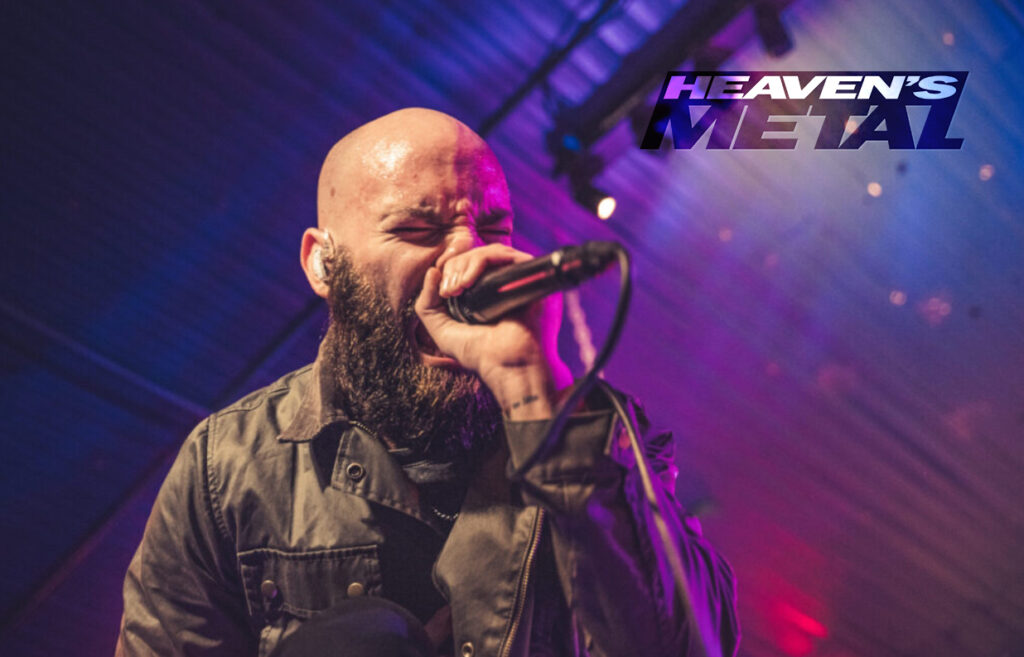
Heal the Hurt photo by Eric Mergens for HM Magazine w Logo.jpeg
By Andy Czaplicki, Heaven’s Metal Magazine
When the Psalmist Screams
Having navigated depression, anxiety, and suicidal ideation during his formative years, Trevor Tyson, frontman of the Christian metalcore band Heal the Hurt, found that heavy music “met him in his pain without making light of it” — a quality he now describes as the core mission of his band (Heal the Hurt, 2024).
Heal the Hurt’s debut EP, released Aug. 23, 2024, opens with a track called “RUIN,” which was featured in Revolver Magazine’s “6 Best Songs Right Now” the week of its release — an acknowledgment from secular music media that the genre’s emotional authenticity transcends theological niche.
Christian metal, far from being a cultural curiosity, represents one of the most effective contemporary vehicles for spiritual resilience among youth. It does this by stepping right into the middle of what young people are actually feeling — the loud, raw, cathartic stuff they’re carrying — and then quietly weaving into that musical world the ancient Christian truths of hope, lament, perseverance, and redemption.
Scholars who have dismissed this genre as aesthetically extreme or theologically irreverent have missed something important: the Psalms were not always quiet.
A History of Holy Noise
Traditional Christian theology has always made room for vocalized suffering. The Psalms — which comprise roughly one-third of the Old Testament — contain more expressions of lament, anguish, and desperate petition to God than any other genre of biblical literature. Psalm 22, which Jesus himself cried from the cross (”My God, my God, why have you forsaken me?”), is one of Scripture’s most visceral demonstrations of raw spiritual pain offered upward as worship.
Charles Spurgeon, the 19th-century Baptist preacher whose “Treasury of David” remains a masterwork of Psalms exposition, described the lament psalms as “the anatomy of the soul” — a place where genuine human suffering meets the living God without pretense.
Eugene Peterson, the pastor-theologian whose “The Message” paraphrase brought Scriptural immediacy to a new generation, argued throughout his work — particularly in “A Long Obedience in the Same Direction” (1980) — that discipleship is not a comfortable ascent but a counter-cultural act of perseverance through suffering. Peterson drew deeply from Psalms 120-134, the Songs of Ascent, to argue that spiritual formation requires moving through difficulty, not around it.
Christian metal, at its best, occupies this terrain exactly.
The breakdowns, the riffs, the selective clean vocal interludes — they articulate what Peterson’ Songs of Ascent articulate: that the journey toward God is steep, grueling, and ultimately triumphant.
Henri Nouwen, in “The Wounded Healer” (1972), articulated a principle that maps directly onto this genre’s pastoral function: the minister — or artist — who has suffered, and names that suffering publicly, becomes a source of healing for those who recognize their own pain within the shared disclosure. When Jake Luhrs of August Burns Red, a devout Christian, founded HeartSupport in 2011 after watching fans confide their darkest struggles to him at post-show meet-and-greets, he was embodying Nouwen’s wounded healer in a festival tent in Pennsylvania. Luhrs has stated plainly that the weight of those encounters — depression, self-harm, suicidal ideation confessed over a merch table — made it impossible not to respond (Luhrs, as cited in HeartSupport, 2024).
Dallas Willard, in “The Spirit of the Disciplines” (1988), argued that spiritual formation is never merely cognitive but must engage the whole person — body, mind, and will — through practiced encounter with God and community. The live Christian metal concert, with its physical intensity, communal energy, and lyrical proclamation, is, by Willard’s own framework, an environment uniquely suited to whole-person spiritual engagement.
Research on Music, Faith, and Youth Mental Health
The empirical case for religiously-oriented music as a mental health resource is substantial. A landmark study published in The Gerontologist (Bradshaw & Ellison, 2014) demonstrated that regular engagement with religious music was statistically associated with decreased anxiety, increased life satisfaction, and elevated self-esteem — findings that held consistently across racial, gender, and socioeconomic lines. While this particular study focused on older adults, its underlying mechanism — music as a conduit for religious meaning-making — is strongly suggestive of parallel processes in younger populations.
A comprehensive systematic review and meta-analysis published in BMC Psychiatry (Wright et al., 2023) examined religiosity and spirituality as factors in the prevention and management of depression and anxiety in young people. Across 49% of the 152 prospective studies reviewed, researchers found at least one significant association between religious and spiritual engagement and improved depression outcomes — a signal that, while modest in effect size, is clinically and pastorally meaningful at a population level. For adolescents already in distress, even incremental spiritual reinforcement can constitute a lifeline.
Research specifically on metal music communities is also quite illuminating.
A study published in the Journal of Community and Applied Social Psychology (Gowensmith & Bloom, 1997, as reviewed in Howe et al., 2015) was among the first to challenge the popular assumption that metal music and its adherents are disproportionately prone to mental health difficulties. A later and more rigorous examination, Howe et al.’s “Contextualizing the Mental Health of Metal Youth” (2015), documented that metal communities function as environments of social protection and identity formation — providing belonging, empathy, and a shared vocabulary for emotional processing. Far from being harmful, the metal subculture frequently serves what Howe and colleagues term a “community for musical empowerment.”
Historian Eileen Luhr’s foundational analysis “Metal Missionaries to the Nation: Christian Heavy Metal Music, ‘Family Values,’ and Youth Culture, 1984-1994” (American Quarterly, 2005) established the scholarly baseline for understanding Christian metal’s intentional mission to reach unchurched youth. Luhr documented how Christian bands of the 1980s and early 1990s deliberately engaged the metal aesthetic in order to enter spaces where the gospel was otherwise absent — arenas, clubs, bars — and to offer an alternative framework to the nihilism that sometimes characterized secular metal. This missional DNA, Luhr argued, was not an accommodation of the culture but a strategic proclamation within it.
Case Studies in Pastoral Metal
Trevor Tyson and Heal the Hurt represent the most recent and perhaps most explicitly therapeutic expression of Christian metal’s pastoral function.
Tyson’s band — launched in May 2024 with the single “Withering,” a song about panic disorder — operates with a declared mission to provide “a lifeline for anyone who’s ever felt alone in their pain” (Heal the Hurt, 2024). The debut EP’s lead track, “RUIN,” confronts spiritual desolation without offering false resolution, which is precisely what makes it theologically honest. Tyson has said of his motivations: “I find so much joy in being able to share those scars that aren’t visible … it feels like I’m able to give a weird gift to the next person that’s struggling” (Tyson, as cited in End Overdose, 2024).
Importantly, Tyson distinguishes between “joyful music” that “feels like salt in the wound when you’re suffering” and music that meets the listener in their actual pain. This distinction — between triumphalist worship music and the incarnational aesthetics of lament — echoes the theologian Brother Lawrence’s description, in “The Practice of the Presence of God,” of meeting God precisely within the mundane and the difficult rather than only in elevated spiritual moments.
Tyson’s approach embodies what Agnes Sanford, in “The Healing Light” (1947), described as the necessity of meeting people at the point of their real need rather than where we wish them to be.
Jake Luhrs and August Burns Red represent the genre’s most institutionally developed case study. HeartSupport, which Luhrs founded in 2011 after his own history of depression, substance abuse, and suicidal ideation, has grown into a formal nonprofit providing peer mental health support to individuals in the music community. HeartSupport now records over 500,000 platform visits per month across digital touchpoints (Luhrs, as cited in Louder Sound, 2020). The 2024 Christmas Burns Red festival, which united bands including The Devil Wears Prada, The Ghost Inside, and Gideon alongside August Burns Red, raised direct funds for HeartSupport while modeling what the organization describes as “healing the scene” — a phrase that functions simultaneously as cultural mission and ecclesiastical vision.
Memphis May Fire’s Matty Mullins, whose public discussions of anxiety and panic attacks at a hospital have been cited by Tyson as a formative influence, further demonstrates the ripple effect of transparency within the Christian metal community.
When artists name their suffering publicly, the effect is not merely cathartic but replicative: listeners feel permission to acknowledge their own.
John Wesley’s concept of “conferencing” — the practice of Christians sharing their spiritual and emotional states openly in community for mutual accountability and growth — finds a modern, if unconventional, expression in the culture these artists have built.
Wolves at the Gate, Demon Hunter, and Islander round out a roster of Christian metal and hard rock artists who have, across multiple albums and years, built lyrical catalogs addressing identity, doubt, mental illness, and redemptive faith with theological depth that rewards close reading. Demon Hunter’s catalog, for instance, returns persistently to themes of spiritual warfare drawn from Ephesians and Romans — not as metaphor but as cosmological reality. Their 2014 album “Extremist” includes tracks that frame personal struggle explicitly within a theology of suffering as refining rather than punishing, a distinction with significant pastoral implications for youth navigating real hardship.
What These Songs Actually Say
A close reading of the lyrical content in this genre consistently reveals what might be called applied soteriology — the lived, experiential implications of salvation and grace — rather than abstract doctrine.
Heal the Hurt’s “Stained Glass” (2024), a collaboration with HolyName, addresses the specific pain of experiencing betrayal and spiritual wounding within a church community. Its framing is not cynical or church-critical; it is lament directed toward restoration — precisely the movement the Psalms model.
Skye Jethani, the co-host of the “Holy Post” podcast and author of “With: Reimagining the Way You Relate to God” (2011), has argued that American Christianity has often reduced faith to a transactional relationship with God — an exchange of good behavior for blessings — rather than a relational dwelling in the presence of Christ through all circumstances. Christian metal, perhaps paradoxically, challenges this transactionalism more aggressively than most contemporary worship music, because it refuses to pretend that following Jesus makes life uncomplicated.
The genre’s theological honesty is, in this sense, not a problem but a correction.
Nü-metal’s contribution to this legacy is often undervalued. Bands like P.O.D., one of the genre’s most commercially successful crossover acts, wove explicit Christology into the nü-metal aesthetic at the height of the genre’s cultural reach in the late 1990s and early 2000s. Their 2001 album “Satellite” sold over four million copies in the United States alone and contained tracks about resurrection, redemption, and spiritual identity that reached audiences who would never attend a Sunday service. P.O.D.’s commercial success represents what Luhr’s research identified as the strategic missionary potential of occupying the aesthetic space that youth already inhabit.
A Genre Worth Taking Seriously
The teenager in a small Georgia town who first heard a Christian metalcore record and felt less alone did not require a theological argument in that moment. He required what all humans require: the experience of being known in his suffering, and the conviction that suffering does not have the final word.
Christian metal — in all its aggressive, dissonant, skull-rattling specificity — provides exactly this. It meets young listeners where they are, in the idiom they already speak, and it speaks the gospel into that space.
The evidence from music psychology, religious sociology, and adolescent development research consistently indicates that religiously-oriented music supports mental health outcomes, that metal communities provide social protection and identity formation, and that transparent artistic disclosure of suffering fosters connection and help-seeking behavior.
The theological tradition, from the Psalms through Spurgeon, Nouwen, Willard, and Peterson, affirms that lament is not the absence of faith but one of its most courageous expressions.
Trevor Tyson’s words bear repeating as a coda: “We write for the ones who feel too broken to keep going.” This is not a secular therapeutic statement. It is a profoundly theological one — an echo of Romans 8:26, which promises that the Spirit intercedes with groanings too deep for words. The genre’s screams, breakdowns, and declarations of hard-won hope are, at their best, those intercessions made audible.
For pastors, youth workers, parents, and educators inclined to dismiss Christian metal as too loud, too aggressive, or too far outside the bounds of sacred decorum, the research and the testimonies assembled here suggest a different posture: listen more carefully.
The noise may be carrying something Holy.
References
Bradshaw, M., & Ellison, C. G. (2014). Listening to religious music and mental health in later life. The Gerontologist, 55(6), 961-971. https://doi.org/10.1093/geront/gnu020
Brother Lawrence. (1982). The practice of the presence of God. Whitaker House. (Original work published ca. 1693)
Christian Metal Group. (2025, March). Choose to live. https://www.christianmetalgroup.com/choose-to-live/
End Overdose. (2024). Metalcore meets meaning: An interview with Heal the Hurt. https://endoverdose.net/news/blog/metalcore-meets-meaning-an-interview-with-heal-the-hurt/
Heal the Hurt. (2024). About. Heal the Hurt official website.
HeartSupport. (2024, February 18). Christmas Burns Red 2024 unites major metalcore acts in fueling mental healthcare. https://www.heartsupport.com/announcements/christmas-burns-red-2024
Howe, T. R., Aberson, C. L., Friedman, H. S., Murphy, S. E., Alcazar, E., Vazquez, E. G., & Becker, R. (2015). Contextualizing the mental health of metal youth: A community for social protection, identity, and musical empowerment. Journal of Community & Applied Social Psychology, 25(5), 436-451. https://doi.org/10.1002/casp.2228
Jethani, S. (2011). With: Reimagining the way you relate to God. Thomas Nelson.
Louder Sound. (2020, July 27). August Burns Red’s Jake Luhrs: Founder of HeartSupport. https://www.loudersound.com/features/august-burns-reds-jake-luhrs
Luhr, E. (2005). Metal missionaries to the nation: Christian heavy metal music, “family values,” and youth culture, 1984-1994. American Quarterly, 57(1), 103-128. https://doi.org/10.1353/aq.2005.0013
Luhr, E. (2009). Witnessing suburbia: Conservatives and Christian youth culture. University of California Press.
Moberg, M. (2012). Religion in popular music or popular music as religion? A critical review of scholarly writing on the place of religion in metal music and culture. Popular Music and Society, 35(1), 113-130.
Nouwen, H. J. M. (1972). The wounded healer: Ministry in contemporary society. Doubleday.
Peterson, E. H. (1980). A long obedience in the same direction: Discipleship in an instant society. InterVarsity Press.
Rademacher, H. E. (2015). Men of iron will: Idealized gender in Christian heavy metal. Sociology of Religion, 76(4), 431-452. https://doi.org/10.1177/0037768615601979
Sanford, A. (1947). The healing light. Macalester Park Publishing.
Solidrockradio.org. (2024). Trevor Tyson of Heal the Hurt on Backstage with Mothership. https://www.solidrockradio.org/backstage-with-mothership/trevor-tyson-of-heal-the-hurt-on-backstage-with-mothership/
Spurgeon, C. H. (1869-1885). The treasury of David (Vols. 1-7). Funk & Wagnalls.
U.S. Centers for Disease Control and Prevention. (2023). Youth Risk Behavior Survey data summary and trends report: 2011-2021. U.S. Department of Health and Human Services. https://www.cdc.gov/healthyyouth/data/yrbs/index.htm
Willard, D. (1988). The spirit of the disciplines: Understanding how God changes lives. HarperCollins.
Wright, J., Dodd, A., & Bhugra, D. (2023). Religiosity and spirituality in the prevention and management of depression and anxiety in young people: A systematic review and meta-analysis. BMC Psychiatry, 23, 726. https://doi.org/10.1186/s12888-023-05091-2
About Author
