


Interview with Autumn Kings
Autumn Kings is a band about empowerment and redemption. Not to sound too pandering, but that really is what this band is about. We fundamentally believe in a sense of optimism.
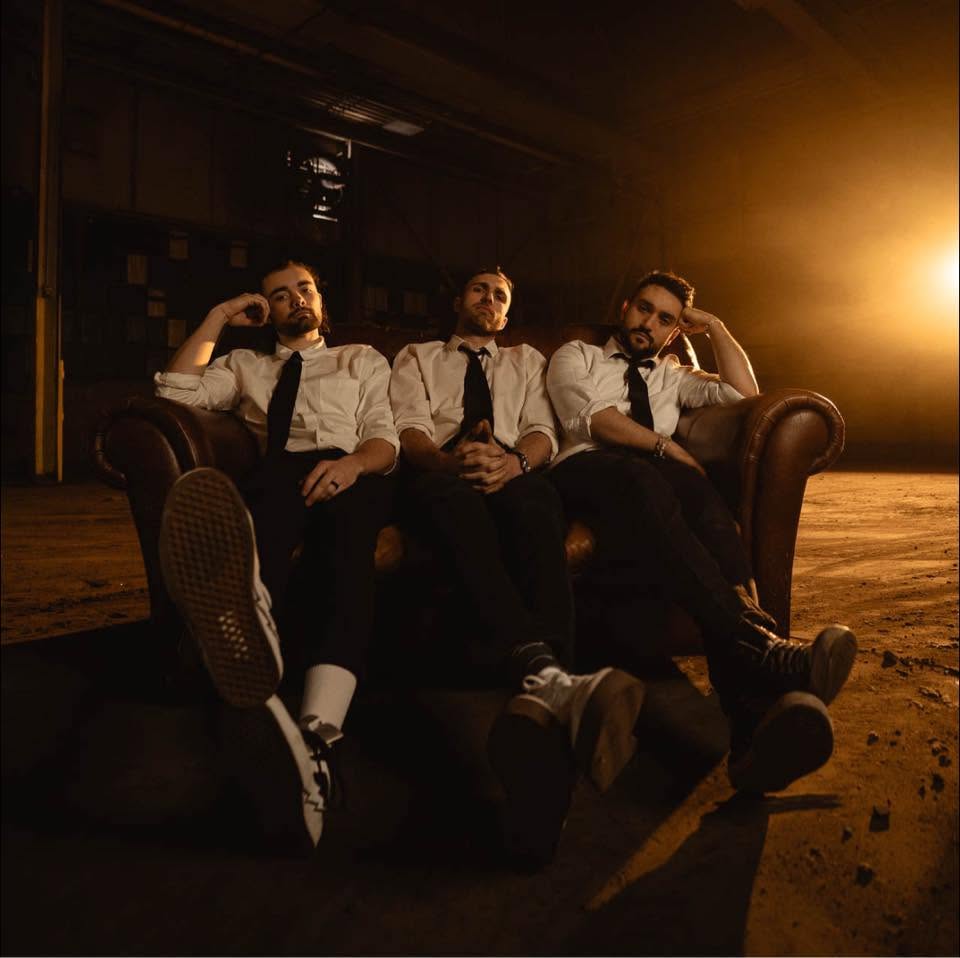
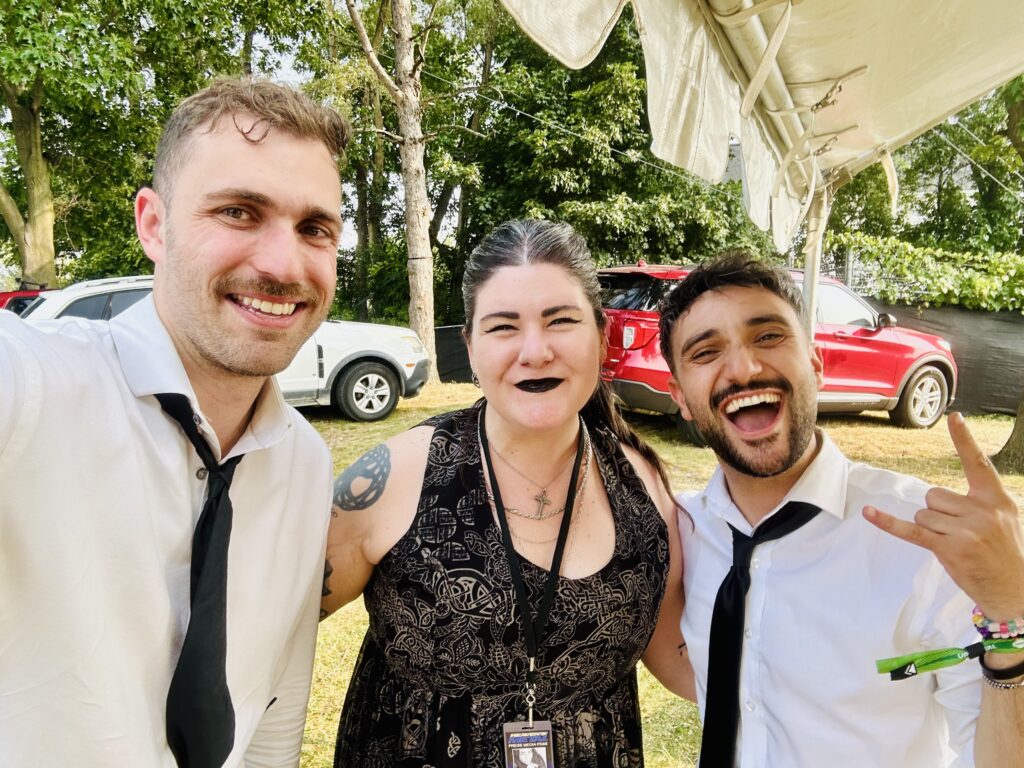
Canadian rock ensemble Autumn Kings, led by co-founders Jake and Joe, have built a dedicated following on a foundation of catchy riffs, big heart enthusiasm, and an optimistic view of life. This band tackles life’s dark moments head-on only to illuminate a path toward hope and healing. Jake and Joe sat down with journalist Ragin Rosie at Upheaval Festival to discuss their evolving sound, who they are as artists, their upcoming album Epiphanies, finding light in heavy music, and the profound connections they share with their fans.
Ragin Rosie: If you had to describe your music to someone who’s never heard you before, your sound, what you’re about—basically, if you could write the first paragraph of your Wikipedia page, what would it say?
Jake: I’d say Autumn Kings is a band about empowerment and redemption. Not to sound too pandering, but that really is what this band is about. We fundamentally believe in a sense of optimism, telling people and reminding them that they have more agency and control over their circumstances than they might give themselves credit for. In this world where you see a lot of people leaning into depression, anxiety, and dark feelings, which are of course valid, we try to steer people in a way where they’re not stuck there, they don’t stay there, let that become their full-time identity, and let it claw at them all day long. So that’s what Autumn Kings lyrically is about, but fundamentally, we’re a fun rock band. We’re a band that likes to leave people going, “I had the best time ever.” We try not to take ourselves too seriously, especially on stage. It’s good vibes, it’s playful. We like to meet all the fans, get to know them, talk about anime and their tattoos…
Joe: Any nerdy thing! But to echo that, yeah, we always try to end our songs with hope, a bit of hope, a little light at the end of the tunnel, so we don’t like to stay too dark. ‘Cause there is too much of that. There really is. We like to be a little bit different.
Jake: Some of our favorite bands like AC/DC and Oasis, they were fun bands. Even though they may have had difficult upbringings, they left you with a great time. Sometimes it doesn’t have to be that deep. Sometimes it can just be an enjoyable moment, and that is the most powerful thing you can do.
Ragin Rosie: Heavy music often explores things like pain and struggle, and these sorts of hardships. Why do you think people are drawn to this music that confronts these particular experiences? What is it about heavy music?
Joe: I think there’s such potent emotion in that, especially pain. There are things you can tap into when you go to that. It’s the same with love, though, too. There is the opposite side of that. I think it’s easier to talk about pain and depression in songs, to be honest, sometimes. It’s harder to find hope and talk about it. But that’s what we always try to do.
Jake: Yeah, it’s interesting. I’m going super deep right now, thinking about people growing up. Half the kids growing up don’t have two parents in the house, and I think that’s a big issue. If you don’t have a father figure or a mother figure, you can get lost inside your head when you’re 13 or 14, maybe embarrassed about it, and you feel like you’ve got no one you can speak to. And then a song like—if I will plug myself like a salesman right now—”Hellbound” or “Become Numb” by Autumn Kings, when people hear those songs, they might think, “Wow, they just articulated how I feel internally in a way that I don’t feel I’ve ever been able to open up to anyone about.” And then they develop this sort of deep, profound, almost crazily intense relationship with the band. What do they call it, parasocial? Is that the right word? Right. So I think that is part of it, too, when people grow up and they can’t express themselves, they don’t have that love and nurturing. We both had two parents in the house, immigrant families, food on the table for breakfast, lunch, and dinner, so we always thought we didn’t have this deep trauma that we could talk about like a lot of other people could, like Eminem could transmute that brokenness into something really deep and profound. For us, for a long time, we were just writing songs that we thought were catchy, but there weren’t lyrical teeth to it until the pandemic happened, and then our will as a band was tested. We gained some real-world experience, heartbreaks, and all of those things in our mid-20s where we could finally start speaking about things from an honest place. I know it’s a long answer to a short question, but…
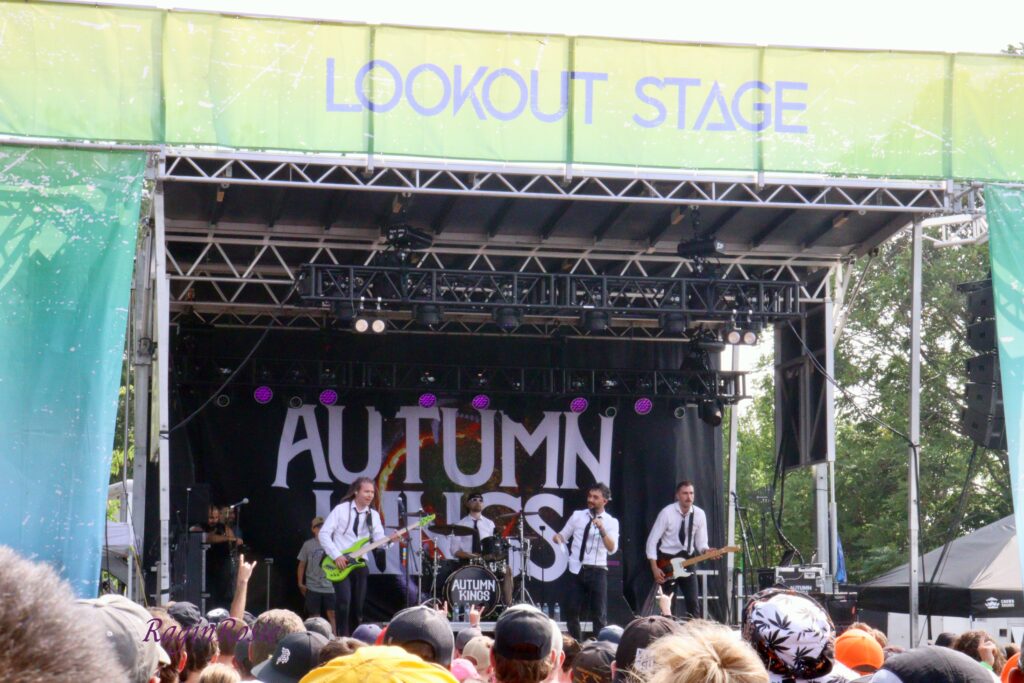
Ragin Rosie: So, then when you say you started at a different place, how would you describe the evolution of your intention as a band?
Joe: I think we just matured as people, as songwriters. I think we looked at this batch of songs as really making statements. The album is called Epiphanies on our next run of songs, and they’re all life lessons that we learned together because after the pandemic, we went through quite a few uphill battles.
Jake: Navigating industry politics, getting rejected, trying to push and be persistent and have some people tell you, “You’re being too pushy. No, we can’t work with you.” Gaslighting, all these things…
Joe: People coming and going. We had a lot of struggles, honestly, in the last 4-5 years.
Jake: Bandmates leaving, lawyers, all of that stuff that you don’t want to talk about as a musician, but those are real things that even as a guitarist and vocalist, you’re dealing with that unglamorous stuff. And so that gave us a real-world, grounded perspective. I don’t think you have to go through deep trauma or pain to be relatable, but I think you can definitely hit a certain shade and emotion that will connect with a big amount of people. What we try to always do with songs like “Hellbound”, “Snake Charmer”, “Become Numb”, all of those songs, if you read the lyrics, they all read dark. They all read seriously. But when you hear the songs, they sound playful and fun and upbeat. We try to keep that dichotomy to let the message seep into people’s heads in a more sly way. We try to be sly guys.
Ragin Rosie: What does redemption mean to you?
Jake: That’s a good question. What does redemption mean? I think redemption means having an aha moment where you realize a lot of this was in your imagination. There’s a Stoic guy who says, “You suffer more in imagination than reality.” I think that is a real thing for a lot of people. To me, redemption is when you go through something really difficult that you didn’t know how or when you would get through it, and then you feel like you move on to that next step where you regain your footing. I’ll say something controversial. I hear a lot of—and I’m a Christian, so I’m very biased about it—I hear a lot of people say, “I trust the universe,” okay? I say I trust God. For me, it’s that I trust God. I trust Jesus in those moments. Because for a long time, you have to find it within you, you’ve got to find a way through your own thing. I think that risks breeding a level of selfishness or narcissism where you think, “I have the answer to all of my own problems.” They even study this with people who go through drug addictions and get into rehab: believing in some sort of thing that’s bigger or beyond you is one of the most potent tools to getting through those difficult times. So for me, I used to think if I’m competent and capable enough, and we’re a good enough band, and we say the right things, and we’re effective with navigating the industry, then we’ll be successful. But I kept feeling anxious, I kept feeling these burdens. Until I said, “Well, I’m going to trust God,” and truly let go—the hardest thing to do, easy to say, very hard to do. As soon as I did that, I felt like a weight lifted off my shoulders that I hadn’t before. I know we got into the woods there, but…
Ragin Rosie: Going back to what you’re saying, the absence of community, absence of a parent, whatever it may be, everyone’s going to search to fill the void. And if that pressure is on you personally to find that answer and it’s all internal, you are not feeling it because we can’t carry it all on our own…
Jake: Nobody can. Yeah, it is interesting. One thing that you’re saying that got my brain thinking is, I look at a lot of things through the lens of God and heaven and hell, and some people have noticed this on social media, they’ll comment there are religious undertones in our music. But what we do, I mean, we both grew up Roman Catholic. We try not to be—it sounds so funny, but when I hear Christian music, most of it makes me want to crawl in a hole! When they’re screaming “Jesus” riding five notes on the melody, I want to crawl in a hole as a believer who goes to church! So, we try to keep it open enough that if you’re not a believer, there’s still a place for you in Autumn Kings’ world. Not to pander, but because even from our standpoint, it doesn’t feel like it’s the best way to preach what we actually believe to be true.
Joe: Sometimes it’s what’s not said, right? It’s what you interpret, right? And that’s the fine line we as artists always try to ride on, so yeah.
Jake: Like our song “Gone”, the new single right now, you can’t really tell on the surface, but it’s actually a religious song. It’s about someone grappling between the good and evil inside of their heart. The devil is telling you you’re worthless, you should end it all. The angel’s saying, “Never lose faith when you’re living in fear.” And then by the chorus, the turnaround is, “It’s time for me to take what’s mine, leave the rest to the Great Divine.” So, we didn’t say leave the rest to Jesus, leave the rest to God, but it’s open enough that there’s an implication, but people can fill in the blanks and come to their own conclusions and go through their own journey.
Ragin Rosie: So after all the years you’ve spent making music, has your understanding of hope or meaning changed? We kind of touched that with the evolution of the band, but maybe these clear objectives you guys have had, where you started, where you are now, what’s maybe been the biggest change?
Joe: Oh, man. I think we’re more honest now, especially in our writing and what we want to talk about. Before, like you were saying, Jake, it was like, “What sounds cool? What’s a cool rock song? What can we—ah, it’s a fun one.” But now we really pay attention to what we’re saying and who we’re saying it to.
Jake: Yeah. I would say two things to echo off what Joe is saying. Now we’ve kind of refined our intuition to where we can write really hooky songs. We can write a song that sounds like it could be on the radio in like 20 minutes, most of the time. That part of it’s easy. What’s hard is a lyric that sticks. So instead of spending all day long on guitar riffs and melodies, ’cause we’re already locked into that, we look at: what are we saying in a song that hasn’t been said by any other artist before? Or maybe it’s been said, but not said quite like that—that’s where we really look for the magic. I get goosebumps talking about it.
Joe: It’s about finding—I was literally just talking about this with somebody—it’s about finding emotion in those lyrics. A lot of times we write, we’re just spitting out ideas. I like to call it ping-pong. “Hey, you have an idea, I have an idea.” And then something hits, and we both can feel it. I think we built that muscle after these 10 years, and we both know when this lyric and this emotion and these chords are going to affect somebody the right way, the way we want them to.
Jake: Aside from music, just on a personal level, when we started this band, we tried to carry the burden of everything ourselves. Book your own shows, be your own publicist, be your own manager, produce everything, write everything, know everything, all the time. And we had so many rejections by people that we had admired in the business at first. Joe’s got a way of letting it just roll off his shoulder. For me, I will think about it for three years! I’m so competitive! Joe’s best asset is his memory—he just lets it go. But the last few years, after so many rejections, it’s like James Bond, right? Like he’s been shot at so many times, when he walks out on the streets, it’s just another day.
And so as far as hope goes, last night’s a perfect example. We’re in Cadillac, Wisconsin. Van breaks down. We’re stranded. This isn’t St. Paul or Denver or LA where you can find a U-Haul like that. A wonderful man, 60-year-old Hillbilly, the best dude you could ask for, Ernie. And he’s like, “You guys need some help?” Chit-chatting, the mechanic said it’s going to take two days to fix the van. I’m like, “Oh, shoot, we got to get to Upheaval.” He’s like, “Why don’t you guys just take my car?” Literally, that’s Ernie!
Joe: We have his car.
Jake: A stranger, right? To me, that’s divine. How can someone be that kind at that moment? We stayed up all night—see how hyped up we are talking about this? We didn’t sleep!
Joe: We’re riding for about 40 minutes, an hour of driving. Three of us in that U-Haul truck and three of us in Ernie’s car, and we’re here!
Jake: The van is still in Wisconsin. But not for one second did my heart beat in panic yesterday. It would have been 5 years ago, because we thought everything was the end of the world. Now we’re like, whatever, we’ll figure it out.
Joe: It’s resilience. Resilience, and I would go back to what you were talking about, the community we surround ourselves with in our crew. Everyone was like that. Everyone was kind of almost laughing it off, like, “We’re going to figure this out, guys. There’s hope. We will get there, we will get there.” So, it is finding your people, too.
Jake: And you realize nothing’s that big of a deal, truly.
Ragin Rosie: Many fans describe live music as kind of a transformative or spiritual experience. Is that something that you think of while you’re either cultivating or performing, any stage of your art? Is that concept in mind?
Jake: For me, it’s not necessarily in mind when we’re prepping for the live show. That is just, to be blunt, grueling work. It’s just work crafting the light show, the backing tracks, all of our gear being intact. But I feel those micro-moments of something greater when we’re playing. Not only are people singing the words, but they’ll look at their friends and family and sing the words to “Hellbound” to each other—that’s when I feel like there’s something… that’s the magic. That’s what we live for.
Joe: That’s what I was going to say. You can see people lose themselves in the lyrics, just letting the music wash over them, and that’s the community that we were just talking about. There’s this connectedness that you feel when you’re on stage. The stage shouldn’t even be higher than them, like we’re all together at that moment, to be honest. I love seeing that moment wash over them, it’s awesome.
Jake: Where you came from, how you grew up, rich, poor, what are your political views or religious beliefs, all experiencing that moment together.
Joe: Yeah, powerful emotion.
Ragin Rosie: That was felt. So, what do you hope someone walks away with from seeing you live?
Jake: I think one of two things. The first would be the simple answer, which is just a great time where they’re walking out of the festival smiling with their friends, looking at the pictures they took and the picks that they got, and just being entertained, taken away from their mundane 9-to-5 or whatever it is. So, that’s the more simple surface level. I think deeper is someone truly getting through a hard time. A few months ago, we played in Denver and we had a woman come up to me and say, “I’m a cop, I’ve had suicidal thoughts for the last many weeks, and your song ‘Power’, that chorus lyric ‘Through the darkest of hours, I’m going to take back the power’, saved my life.” You’re like, “Oh! That’s deep stuff.” She’s going to California to get treated for her PTSD, and the fact that our lyrics and music can help them get through something so difficult, that is also one of the great feelings. We try not to make it so that it has to be that serious, but if it is, great. If you simply just leave with a great time, that’s cool, too. One of those two for me.
Joe: You nailed it, that’s exactly it, and that’s what we focus on when we write, too. Like you said, put in your own emotion, and we’re right there with you the whole way.
Ragin Rosie: Any last thoughts you’d like to share about this idea of redemption or hope?
Jake: I would say, it sounds hokey, and I’ve felt what it’s like to be down in the dumps before, and you don’t think there’s help. Your brain psyops you into thinking, “There is no hope. I’m walking in the middle of the cornfield, and I don’t know which direction I’m going.” But there truly is hope, and I think as soon as you realize the burden does not fall on you—again, this is my Christian bias, my Christian slant talking, however you want to figure that out for yourself—when you realize there’s something greater than you, you get out of your own ego, and you can figure it out. There, of course, in rare instances, are biological or chemical issues that have to be dealt with, but I will say another polarizing thing, I think for 99% of people, it’s not. I think you can seriously get through it with the right social support, with the right person to talk to, and with just mental toughness and saying, “I don’t care how I feel, I’m going to get through it.” Like, that’s it. Even if you don’t know how or where, with time, you eventually can in most cases, and we want people to know that you don’t have to stay victimized to what your past was.
Joe: Agreed, totally agree.
About Author
