


Let Us Sing: Who Are the Great Rock Vocalists? (Part 5: They are Canadian, Right?)
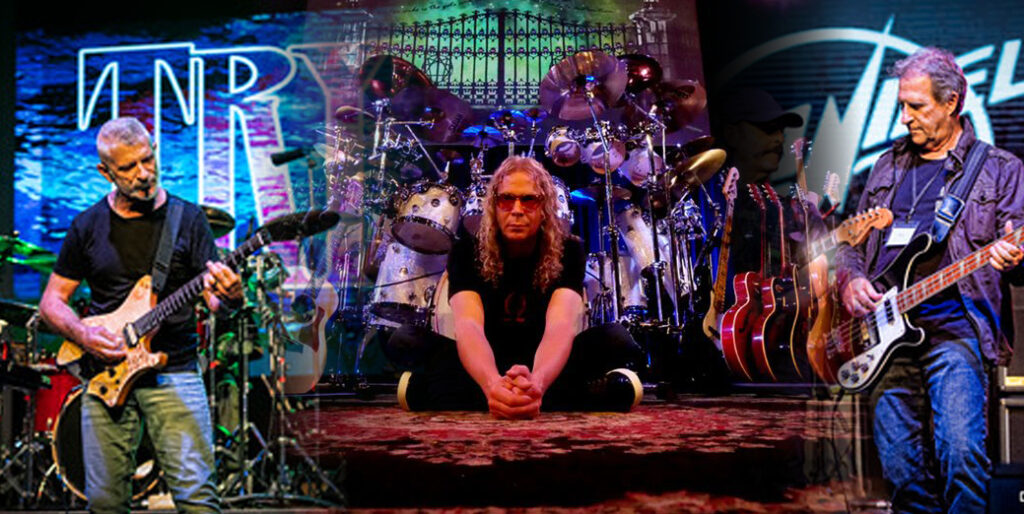
Somewhere closer to the Hemispheres where the northern lights hum with electric Anthem, a distinct strain of Christian hard rock took shape, carried on voices that feel like distant echoes of 2112 and the soaring resolve of Allied Forces. From Chicago to Seattle to Toronto, Lary Dean, Paul Roraback, and Dan McCabe share more than just a similar latitude. Each one sings with a tone and phrasing that could pass for straight out of the Great White North, as if they all grew up chasing the same Limelight under the same cold skies, even though only one truly calls Canada home. There is a Subdivisions precision in their delivery, a Spirit of Radio clarity, and at times a Fly by Night lift that mirrors the unmistakable influence of Rush and Triumph. This is a shared instinct, a Magic Power that cuts across borders, driving them to Hold On and Fight the Good Fight with conviction. In moments that feel like A Farewell to Kings, their voices rise with a unified character that proves you do not have to be Canadian to sound like it.
Lary Dean
Similar to: 1970s Geddy Lee, Rik Emmett
Overview:
Lary Dean, like every gentleman featured here, refuses to be confined to the title “vocalist.” He is also a guitarist of the “did‑he‑really‑just‑play‑that?” variety, tossing out shredding leads and thick, crunchy rhythms as casually as most people check their email. His piercing tenor sits right in the sweet spot of his biggest influence, and it slices cleanly through Trytan’s sonic storm.
His range stretches from the high‑octane drive of Mr. Electric to the soulful lift of Revelation Song. And while people love to slap the “Rush clone” label on any band with a high tenor and a time signature that isn’t 4/4, Trytan is far more than that. You can hear the heavier leanings of Dream Theater, the melodic instincts of Journey, and the compositional ambition of Kansas all swirling in the mix.
Defining Song: “The Descender” (Blood of Kings)
Best Album: Blood of Kings
Hidden Gem: “Mr. Electric” (Celestial Messenger)
Dan McCabe
Similar to: 1980s Geddy Lee, Rik Emmett
Overview:
Dan McCabe’s Daniel Band is exactly what you’d expect from musicians raised in Toronto during the era when Rush and Triumph were basically part of the municipal water supply. Their influence runs through the band’s DNA, but Daniel Band manages to stop just short of imitation and instead delivers something heavy, heartfelt, and surprisingly thoughtful within the Christian rock and metal scene.
The group features two vocalists, but Dan is the one who sounds the most unmistakably Canadian. His delivery leans toward Rik Emmett’s full‑throated clarity and away from Geddy’s more nasal, “I‑just‑saw‑a‑ghost” upper register. Dan also handles bass duties with authority, and naturally, he plays a Rickenbacker because of course he does. It’s practically a citizenship requirement.
Defining Song: “Run from the Darkness” (Run from the Darkness)
Best Album: Run from the Darkness
Hidden Gem: “One” (Bonus track on Running Out of Time)
Paul Roraback
Similar to: 1990s Geddy Lee, Rik Emmett
Overview:
PJ Bostic is the creative banner multi‑instrumentalist Paul Roraback uses when releasing music. The name gives him the freedom to appear as a full band or as a solo act, depending on how many versions of himself he feels like being that day. His solo work showcases his instrumental command, introspective lyricism, and earnest, heartfelt vocals.
At his core, Paul is a world‑class drummer. His playing is so musical that his drum kit should probably get its own songwriting credit. Any discussion of his style inevitably leads to Neil Peart, whose influence is woven into Paul’s compositional approach. And just to keep things unfair, he is also a formidable bass player and guitarist.
As a songwriter, Paul blends complexity with accessibility. His lyrics explore a wide range of themes through the lens of his deep faith, and his arrangements often lean toward the intricate while still delivering hooks that lodge themselves in your brain for days.
Vocally, Paul channels a distinctly 1990s Rush vibe. He never strains, never overreaches, and never sounds like he’s trying to summon a falcon from a mountaintop. Instead, he stays comfortably in his range, delivering a powerful, crisp tenor with clean enunciation and a confident, grounded presence.
Defining Song: “Blue Light Gaze” (Faith of Least Resustance)
Best Album: Hope in the Winter Stage
Hidden Gem: “Sloof Lirpa” (Single)
Let Us Sing: Who Are The Great Rock Vocalists? (Part 4: The Hair Thing)
Let Us Sing: Who Are The Great Rock Vocalists? (Part 6: Pioneer Women).
About Author
