


Feature: Engaging Immolation – Theological Reflections
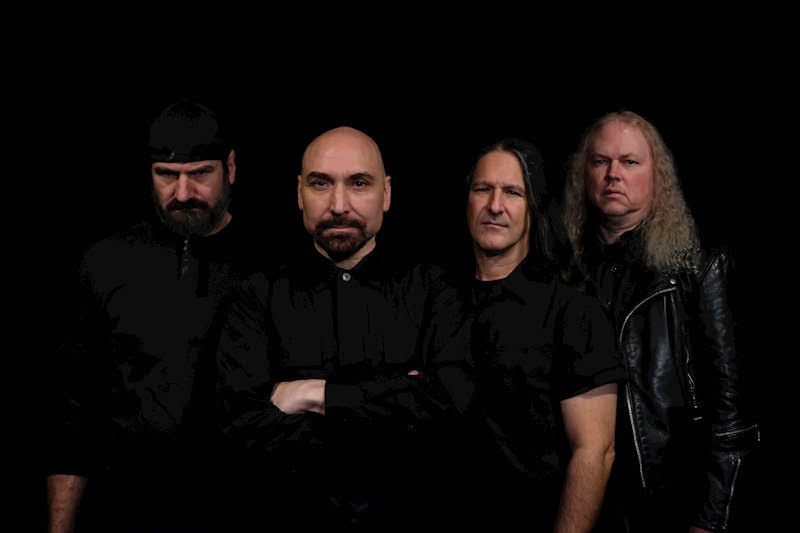
Immolation, veterans of the New York death metal scene and icons of the death metal style in general, have just released their latest album, Descent. Known for their violent yet technical approach to brutal death metal, Immolation remains a highly respected band within the secular death metal world, and for good reason. Few bands have lasted as long as they have and released such consistently lauded material. Without a doubt, Robert Vigna is one of the most talented and riveting-to-watch guitar players in the metal world, approaching his craft like a mad composer hellbent on somehow controlling chaos. With classic death metal albums like Dawn of Possession and Here in After, the band became one of the most respected in the death metal scene, and also some of the most vocal critics of Christianity in the death metal scene at the same time.
So why on earth am I writing about a band like this for a Christian metal magazine? Because Immolation’s Descent asks the questions that Christians shouldn’t be afraid to answer.
Descent, the band’s 12th (!) full-length release, features a cover that, to me, riffs on the classic old image of a woman near drowning in stormy waters and clinging to a stone cross amidst the tempest. Here, we have a woman clinging to something stone-like (maybe they’re wings?), but her body is disintegrating behind her into a murky fire below. It’s a depiction of what was thought to be certainty and safety being gradually lost to an overwhelming, destructive force. Open up the insert for the album, and you get the full picture – this soul is trapped between hell and heaven, and hell is pulling her downward. It’s a powerful image, no doubt about it.
Part of the key to Immolation’s message, I believe, lies in the insert for their third full-length album, Failures for Gods. The album cover featured what appears to be the devil standing before what looks like a crowd of leprous and withered worshippers, their faces full of terror and awe. But open the album insert, and what’s inside? A picture depicting the same scene from the worshipper’s point of view. The devil is seen from their view as a frightening Christ-like figure, replete with a crown of thorns, towering above them. At his feet, seemingly cast down, is a massive cross with the crucified Christ upon it. In many respects, it could be understood as a depiction of the antichrist pretty easily, but I think what the band is going for here is something different. My take on it is that, from the band’s perspective, Christ (as perpetuated by Christianity, in their view) is evil, much in the same way that a Gnostic or a Marcionite might view the “Old Testament God” as wholly different from (the Demiurge) and/or incompatible with the Christ of the New Testament. This was how I understood it as a young 20-something, and how I felt about Christ at the time. Frankly, it’s sometimes easy to fall into such a trap, especially if one’s theology is misinformed and/or malformed. But it’s a common pitfall for many, I think.
The image may also have summed up the band’s view of Christianity more in the vein of viewing it as a historical phenomenon and Christ as a figure as being completely incompatible. The standard things come to mind here – the Inquisition and the Crusades right on down to someone being judgmental about a newcomer’s appearances on an average Sunday. You name it, I’ve probably heard it brought up in casual conversation somewhere.
I can’t speak for Ross Dolan as a lyricist, but what I see in his lyrics at times speaks to me as someone who was put through a tremendous amount of pain via his Catholic upbringing. And frankly, I think it’s not exactly a far stretch for a Christian to identify with much of Immolation’s criticism of corruption and evil within the Christian world. Further, it’s no stretch at all to agree with Immolation that humanity is corrupt, that something is deeply, deeply wrong in this world and with us in particular.
With Descent, Immolation grapples with the seeming hopelessness of the human predicament and the God who either won’t or can’t do anything about it. On the title track, the band talk about
“The dark, the fear
The sins, the lies
The rage, the pain
This hell we all create.”
It’s a kind of Epicureanism, really – God doesn’t care, we’re surrounded by pain and suffering, and we’re contributing to it all continually, so what do we do? The band claims in “The Ephemeral Curse” that “God’s design is flawed” and that inevitably, “the frozen sun will cast death upon us all” (obviously referring to our Sun eventually dying out, and with it, all life on Earth). “God’s Last Breath” states that “the saints left us abandoned” and “Attrition” states that there is “no help from God” as humanity continues to live out its Sisphyian struggles. With “Bend Towards the Dark” and “False Ascent,” the band laments religious hypocrisy in much the same way that you’ll find many Christian bands doing as well, from Impending Doom to Flesh Incineration.
In the end, the solution the band offers is a kind of hopeless rebellion, as detailed in “Adversary.” Anyone who remembers and perhaps had as their motto that famous Darkthrone lyric – “With my art, I am a fist in the face of God” (from the track “To Walk the Infernal Fields” off of Under a Funeral Moon) will get the gist of this song.
Here’s the positive take away from it all, however. Any of these lyrical themes offer an opportunity for conversation between Christian and non-Christian metal fans when discussing this album. Unlike many other bands that simply revel in blasphemy or anti-Christian lyrical assaults, Immolation are actually thoughtful about why they are against Christianity as a religion per se. Note, I said as a religion; Ross Dolan himself stated in an interview from way back in 1999 that “we don’t hate Christians” and that “we’re definitely -not- a Satanic band, we’re basically anti-religion, but we’re just anti-control, really.”
Now, with Descent, I wouldn’t say that Immolation has softened their approach and their criticisms. But they are asking the right questions in many respects, and I don’t think that Christians, and in particular, Christian metal fans, should be avoidant when it comes to giving an answer to their lyrical concepts, and engaging with their ideas. After all, most of Immolation’s language is already presupposing the concept of evil and the idea of morality in the first place, and that allows for a basis for discussion, perhaps an opportunity to point out that what’s being critiqued isn’t Christianity, but corruption; isn’t the Church per se but evil people within it. This isn’t a metal band pretending to be evil for shock value, nor is it a band that actually worships evil/chaos/the devil like others, nor is it a band simply indulging in surface level horror movie violence; they’re a band railing against what they see as evil, and that is predominantly religion, with much of the focus being on Christianity. Immolation are thoughtful in their approach, and despite my disagreements with their position when it comes to Christianity, they’re a band that make me think. Iron sharpens iron.
Look, I’m not saying that Christian metal fans should go out and listen to Immolation, no matter how awesome they are musically. But I am saying that we should be okay to engage the ideas that they put forth. Unlike Incantation, whom they are often mentioned in the same breath with, Immolation’s approach at its best is thoughtful, reflective and agonized. Instead of demonic goats and blasphemous, gory montages like the other band, Immolation’s art reeks of a far more cerebral approach; one rooted in a somewhat theologically informed (or, from my point of view, misinformed), intellectual, and personal atheistic approach. This again gives room for common ground. After all, the greatest argument for atheism (in my view) was given by Dostoevsky, himself a devout Orthodox Christian (see the chapter entitled “Rebellion” in The Brothers Karamazov). And as far as criticizing corruption, scandal and sin in the Church, Christians have always done that; as St. John Chrysostom once said, “I do not think there are many among Bishops that will be saved, but many more that perish.”1
In other words, it’s important, I think, for Christian metalheads to not hide away within their own Christian metal fortress and simply preach to the choir. Though some may hate the notion, Christians are metalheads too, and part of the wider metal subculture. We need to be unafraid to deal head on with what the wider metal world is saying about our faith. Who knows whose life and mind you might change in the process?
Footnotes:
1 – “Homily 3 on the Acts of the Apostles,” in Nicene and Post-Nicene Fathers, First Series: Vol. 11, trans. J. Walker, J. Sheppard, H. Browne (Buffalo: Christian Literature Publishing Co., 1889), https://www.newadvent.org/fathers/210103.htm.
About Author

Very thought-provoking and well-written, Jason!
Bravo!
Great article, Jason.
Which reminds me, I’m so proud and grateful to be part of such a great team here at Heaven’s Metal Magazine. Y’all are rockin’ it. Thanks for being you.